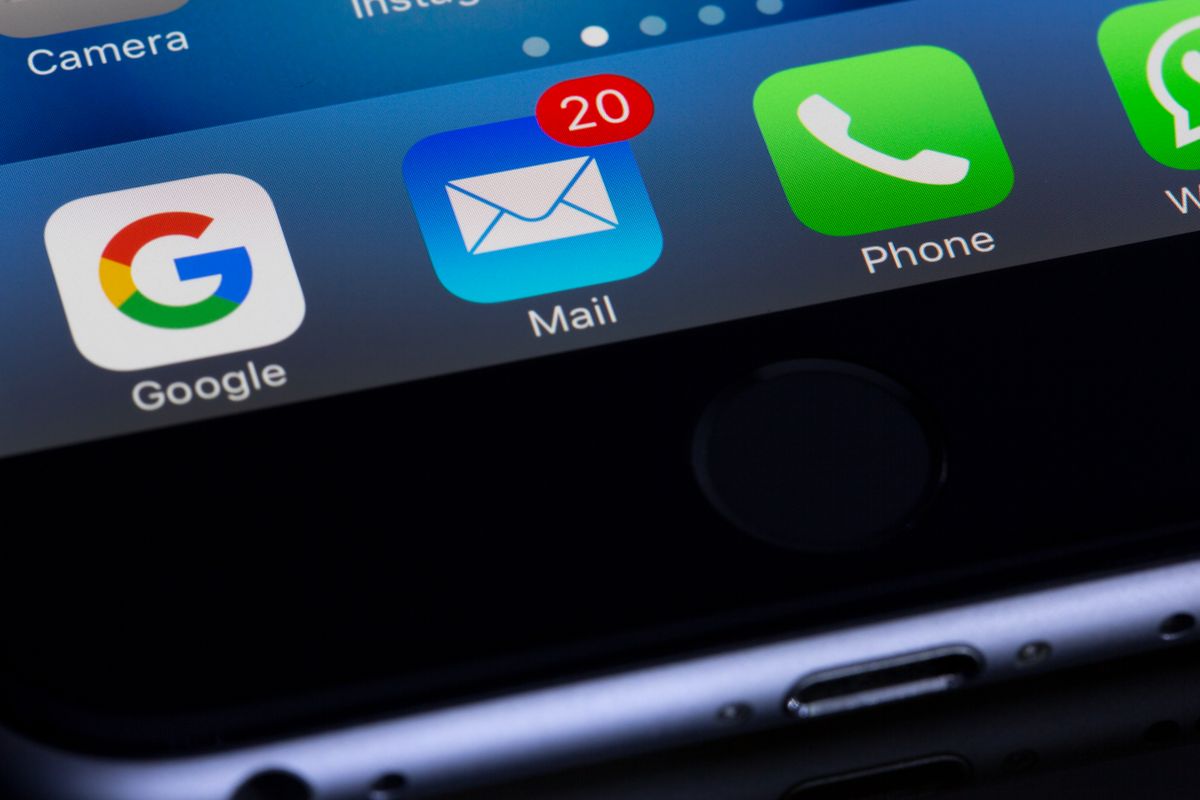
A med spa owner sent us a proud message last spring. Her monthly newsletter had hit a 41 percent open rate, way above the 20 something she had read was normal, and she wanted to know if that was as good as it looked. So we asked one follow up question: how many appointments did that email book? Long pause. She had never checked. When we pulled it up, the answer was two. A gorgeous open rate sitting on top of an email that barely moved the schedule. And the open rate itself, it turned out, was mostly a lie Apple had told her.
Open rate is the first number almost every practice owner learns to watch. It feels like the scoreboard of email: high means people love you, low means they do not. It is also, as of a few years ago, one of the least trustworthy numbers in all of marketing. So let us define it, put the real healthcare benchmarks next to it, explain the change that broke it, and then get to the parts that actually tell you if your patient emails are working.
What email open rate actually measures
Open rate is the percentage of people who opened your email out of everyone it reached. Send to 1,000 patients, 250 open it, that is a 25 percent open rate. Simple enough. The catch is how email tools know an email was opened. They hide a tiny invisible image, a tracking pixel, in every message. When your email app loads that image, the tool counts an open. No pixel load, no counted open.
That method worked well enough for years. It told you, roughly, how appealing your subject line and sender name were, because those two things are all a person sees before deciding to open. A healthy open rate meant your subject lines were landing and your list still cared. That was the whole value of the metric: a quick read on whether people wanted to hear from you.
Then the ground shifted, and most practice owners never got the memo.
The real healthcare benchmarks (and why they feel low)
Here are the numbers people search for. For years, the most cited email benchmarks came from Mailchimp, which analyzed billions of emails across millions of accounts. Their data put the average open rate for health and healthcare emails right around 21 to 23 percent, with an average click rate near 2 to 3 percent. So historically, if your patient newsletter opened at 22 percent, you were dead average, and comfortably above that was strong.
Those numbers feel low if you are used to seeing 40 percent in your dashboard today, and that gap is the whole story. The old benchmarks measured real human opens. Your inflated new number does not. Same activity, different measuring stick, which is exactly why comparing today's open rate to yesterday's benchmark leads owners to wildly wrong conclusions in both directions.
Why Apple broke the open rate
In September 2021, Apple rolled out something called Mail Privacy Protection with iOS 15. For anyone using the Apple Mail app on an iPhone, iPad, or Mac who turned it on, and most people tapped yes without reading, Apple now preloads that tracking pixel automatically. It fires the pixel whether the person opened your email or not, and even routes it through Apple servers so you cannot see the real device or location.
The result: your email tool counts a pile of opens that never happened. And this is not a small slice of your list. Apple Mail is one of the most used email clients in the world, often close to half of all opens for a US consumer audience, which patients absolutely are. So overnight, reported open rates across the industry jumped into the 30 to 40 percent range and higher. Not because anyone's emails improved. Because a huge chunk of opens are now automatic and fake.
The quick version
Since 2021, Apple auto opens your emails for a big share of your patients whether they read them or not. That inflates your open rate and makes it a weak scoreboard. A high open rate no longer proves people are paying attention. A click, a call, and a booked appointment still do.
So what is a good open rate now? Honestly, there is no clean benchmark anymore, and anyone who quotes you a precise one is behind the times. A reasonable rule of thumb: with today's inflated counting, many healthy practice lists land somewhere in the 30 to 45 percent range, and if you are sitting well below 20 percent even with the inflation, something is wrong, most likely poor deliverability, a stale list, or emails landing in spam. But the number itself is a soft signal now, not a verdict.
The numbers that actually tell you the truth
Open rate is the top of a chain, and every step below it is more honest than the one above, because Apple cannot fake a real human action. Follow it down.
- Open rate: did they open it? Now heavily inflated by Apple, so treat it as a rough trend at best, useful only compared against your own past sends.
- Click rate: did they click a link inside? A real action a machine does not auto perform. Historical healthcare benchmark is roughly 2 to 3 percent, and this is now your most reliable engagement number.
- Conversion: of the people who clicked, how many actually did the thing, booked, called, filled the form? This is where the money is, and it depends on where the click lands. We wrote about what a good conversion rate looks like.
- Booked and reactivated patients: the only number that pays your bills. How many appointments, and how many sleeping past patients came back because of the email?
Notice how far the open rate is from money. Two steps down, a patient has to click. A step below that, they have to book on the page they land on. That med spa owner won at the very top of the chain, a beautiful open rate, and lost everywhere below it. Two appointments from a list of a thousand people. The open rate never told her that. The bookings did.
How to actually improve the numbers that matter
You cannot control Apple, but you can absolutely lift the honest metrics. Here is what moves clicks and bookings, which is what you should be chasing anyway.
Write the subject line for a busy human. Even with opens inflated, the subject line still decides whether real people read you. Clear beats clever. A specific promise, "your teeth cleaning is due, grab a summer slot," beats a vague "Newsletter, July edition." Say what is inside and why they should care.
Send from a name they recognize. Patients open email from Dr. Lee's Office or from Sofia at Riverside Dental. They ignore no reply at some string of letters. A real, familiar sender name is one of the biggest levers you have, and most practices waste it.
Keep the list clean. Remove people who have not clicked anything in months. A bloated list of dead addresses drags you toward the spam folder, where your best emails never even reach the inbox. A smaller, engaged list beats a huge, ignored one every time. This is also why buying or scraping email lists is a losing move for a practice.
Give one clear thing to click. Every email should have an obvious next step, a single button that goes somewhere useful: book now, claim the offer, read the guide. That click is the metric you can trust, so make it easy and make it one choice, not five.
Point clicks at a page built to convert. The best email in the world dies if it sends people to a slow, confusing page. The click has to land somewhere that books, or all that work leaks out at the last step.
Our honest take
Here is where we plant a flag. Open rate used to be a decent gauge. Apple turned it into a mood ring. It still moves, it still feels meaningful, and it mostly tells you nothing you can bank on. If you are running your email off the open rate, you are steering with a broken instrument, and you will make bad calls, killing good emails that booked patients and celebrating pretty ones that booked no one.
The bigger truth is that email is one of the most underrated tools a practice owns, and most owners barely use it. Your patient list is people who already know you, already trust you, and already paid you once. Reaching them costs almost nothing. A single well timed recall email to patients overdue for a visit, or a reactivation note to leads who never booked, can bring back more revenue in a week than a month of cold ads. We say this constantly: the cheapest new patient is an old patient you already have. Email is how you get them back, and we go deep on this in our guide to reactivating past patients and leads. Just do not grade that work by the open rate.
How EtherealMinds thinks about your patient email
When we run patient acquisition and retention for a practice, email is part of the machine, not an afterthought, and we build it around actions, not opens. Real subject lines from a real sender, clean lists, and one clear thing to click in every message. We watch clicks and, more importantly, the appointments each email produces, so you know which sends actually filled chairs.
Those clicks land on a website built to convert, fast and focused on booking, so the interest your email created does not die on a slow page. And when a patient replies, calls, or lands after hours, our AI receptionist answers instantly and books the appointment, because an email that sparks interest and then hits a full voicemail box is wasted work. A connected system ties it all together, so you see the whole path from send to booked patient, not just a lonely open rate.
So, what is a good email open rate for a medical practice? Once upon a time, around 21 to 23 percent. Today, thanks to Apple, more like 30 to 45 percent and largely meaningless. The real answer is that a good open rate is one you have stopped worshiping, sitting on top of emails that get clicked and book patients. Watch the opens if you like. Just never let that be the number that decides anything.
See what your patient email is really doing
Book a free strategy call. We will look past the open rate at the numbers that count, clicks, bookings, and reactivated patients, and show you how to turn the list you already own into a steady stream of appointments. Clear numbers, no jargon, no pressure.
Book a free strategy call →