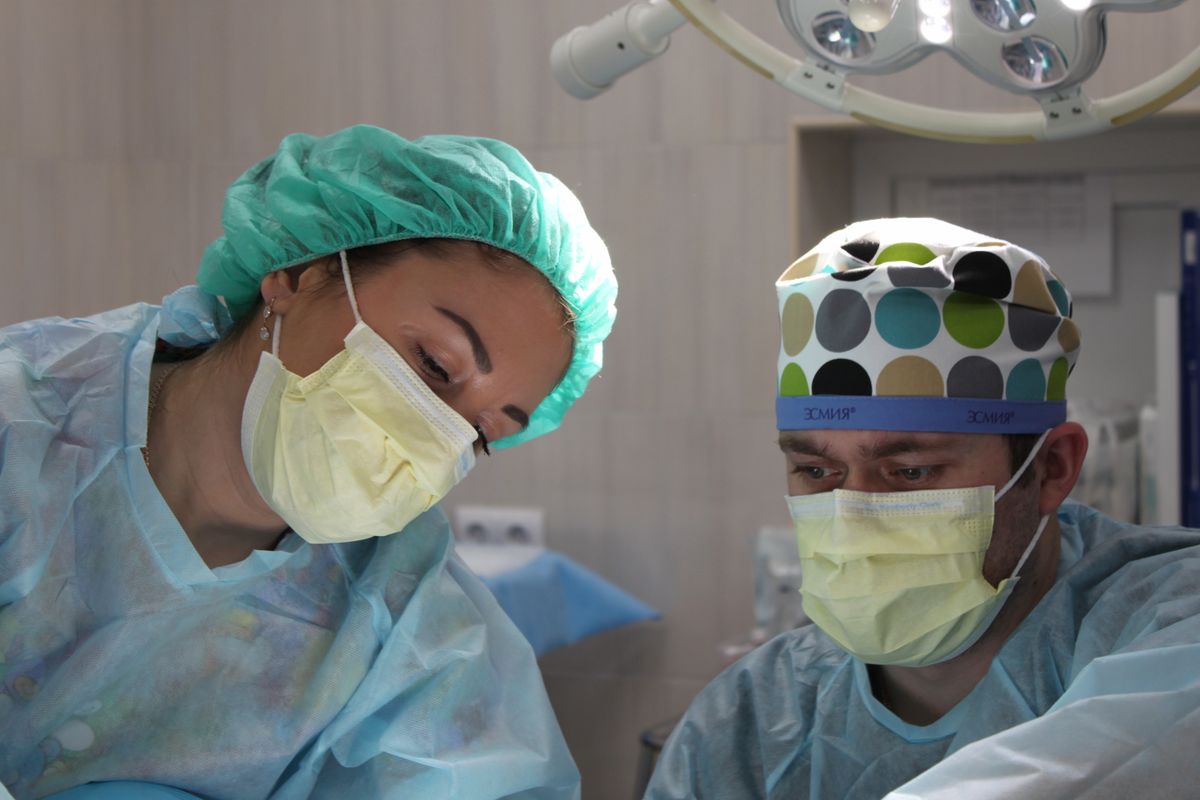
In August 2026, Houston Methodist published something most health systems only talk about: proof that AI actually grew the business, not just the paperwork. In a 15 room cardiothoracic operating suite, surgical case volume rose about 7 percent after the hospital deployed an image based AI platform. That is roughly 25 more surgeries a month, with no new rooms, no new staff, and no longer days.
What makes this one worth reading is how careful the proof is. Researchers did not run a simple before and after. They built a synthetic control, a data driven virtual twin of the suite made from 11 other Houston Methodist sites that had not adopted the tool, then compared the two across more than 120,000 cases from 2024 and 2025. The study, led by Chief Innovation Officer Roberta Schwartz, was published in the peer reviewed Journal of Imaging, and it is believed to be the first peer reviewed evidence that an ambient AI platform increases operating room capacity. Healthcare IT News covered the results here.
The detail everyone skips
Here is the part that matters for anyone who does not run a cardiothoracic suite. The case mix stayed the same. The operative minutes per case stayed the same. The surgeons did not go faster inside the operation. What changed was the time between cases: turnover times fell, so the same operating hours fit more surgeries. The AI did not help anyone cut. It found the dead time around the work and gave it back.
Read that again, because it is the whole lesson. A huge, well run hospital discovered it had 7 percent more capacity already paid for and sitting idle, hidden in the gaps between cases. If a system with that many operations managers had that much slack, your practice almost certainly has more.
Your practice has its own 7 percent
You do not have a 15 room OR suite. You have something that leaks capacity the same way: a schedule and a phone line. The dead time in a medical practice does not look like turnover minutes between surgeries. It looks like this:
- The phone that rings out. A patient ready to book calls during lunch, or at 6:10pm, or while your one front desk person is checking someone in. No answer. Most of those callers do not leave a voicemail. They call the next practice on the list.
- The no show slot. A chair sits empty because someone did not come and did not tell you in time to refill it. That hour is gone the same way an idle operating room hour is gone.
- The slow follow up. A new patient fills out your web form at 9pm. Nobody sees it until the next afternoon. By then they have already booked elsewhere, because the practice that called back in five minutes won.
- The booking that needs a phone call. Someone wants a Tuesday appointment but your site only has a "request an appointment" form, so they have to wait for a callback. Friction added, patient lost.
None of that is a demand problem. The demand already showed up. It knocked, got no answer, and left. That is your version of the hidden capacity Houston Methodist just measured, and recovering even part of it can add the equivalent of a provider's worth of visits a month. We wrote about this squeeze from the practice side in the demand and capacity crunch, and about the specific after hours leak in whether you are losing patients after hours.
Growth AI is not the same as clinical AI
Most of the AI headlines in healthcare right now are about what happens inside the visit: scribes, note writing, imaging reads, decision support. That is real and useful. But it is easy to buy a shiny clinical AI tool and still bleed patients out the front door, because that tool was never pointed at the leak. A scribe does not answer your phone at 7pm. An imaging model does not refill a canceled slot.
The AI that grows a practice works before and around the visit. It answers every call when your front desk cannot. It books patients straight into real open slots. It texts the person who just canceled and offers the time to the next patient. It follows up with a new inquiry in minutes, not the next afternoon. We pulled apart this difference in AI for doctors versus AI for growing your practice, because practices keep spending on the first kind while the second kind is where the lost patients actually are.

How to find your hidden capacity this month
You do not need a six figure platform to start. You need to measure three leaks, because what you measure is what you can plug:
- Unanswered calls. Ask your phone system how many inbound calls went unanswered or to voicemail in the last week, and how many of those came after hours. Almost every practice is shocked by this number the first time they look.
- No show rate. What percentage of booked visits simply did not show up last month? In an August 2026 MGMA poll, 32 percent of medical groups said their no show rates were higher this year than in 2025, so this leak is widening, not shrinking.
- Inquiry response time. From the moment a new patient submits a form or a message, how long until a human responds? If the honest answer is "hours," that is a stack of booked visits walking away.
Those three numbers will usually point at more bookable demand than your next ad budget would buy. The move is to plug the biggest leak before you spend more to pour in leads you are not catching yet. That order matters: filling the schedule you already have is cheaper and faster than buying a bigger one.
Where EtherealMinds comes in
We build patient acquisition systems and websites for one industry in one country: medical practices in the United States. And the leaks above are what we spend our days plugging, because they are where growth is cheapest and fastest.
It starts with a website built to convert, where booking is a few taps into real open slots instead of a request form that waits on a callback. Then our AI receptionist answers the calls your front desk cannot, any hour, books patients, texts anyone who cancels so the slot refills, and follows up with new inquiries in minutes. That is the turnover time of a practice, the dead space between demand and a booked visit, and closing it is exactly the kind of gain Houston Methodist measured in the OR. All of it runs inside the patient acquisition system we operate for practices, and it pairs with the no show side we cover in how AI plus human support cuts no shows.
Our honest take
The Houston Methodist story got written up as an AI win, and it is. But the real headline is older and simpler than AI: a serious operation found 7 percent of its capacity was already there, unused, hiding in the gaps. Most practices are sitting on a bigger number than that and reaching for more ads to fix a problem that is not about demand at all.
Before you spend another dollar bringing new patients to the door, count how many are already knocking and getting no answer. Plug that first. It is the cheapest growth you will ever buy, and like the hospital, you already paid for it.
Find the capacity you already paid for
Book a free strategy call. We will look at how your calls, bookings, and no shows work today, find where patients are leaking out before they ever become a visit, and show you how to recover that hidden capacity with a website and an AI receptionist built for it. No pressure, just a clear plan for a fuller schedule.
Book a free strategy call →