Read enough about AI and you start to feel two things at once. Excitement, because it clearly does real work now. And a low hum of dread, because the word artificial makes it sound like the plan is to replace you. If you own a practice, that dread has a specific shape: patients come to you for a human, and you do not want a robot answering the phone and scaring them off.
Here is the thing that should calm you down. The largest physician organization in the country made a deliberate choice years ago and has stuck to it. The American Medical Association does not say artificial intelligence. It says augmented intelligence. Same letters, AI, completely different promise.
One word, and it changes everything
Artificial suggests a machine that thinks instead of you. Augmented suggests a machine that helps you think faster and reach further. The AMA picked augmented on purpose, to keep the clinician and the staff at the center and put the technology where it belongs: underneath, carrying the load, never in charge.
That is not a soft PR move. It is a policy stance about how these tools should be built and used in medicine. The human stays responsible. The human stays in the room. The AI handles the repetitive weight so the human has more time and energy for the part only a person can do. Once you hear it that way, the fear loosens its grip, because the goal was never to replace your team. The goal is to stop your team from drowning.
This is not a someday problem
It is tempting to file AI under things to worry about later. The money says otherwise. Fierce Healthcare's 2026 fundraising tracker is full of AI companies raising rounds most practices could not dream of, including agent based startups pulling in over one hundred million dollars at a clip. Universities are opening AI centers for research and drug discovery. Hospital systems are already running it inside their walls.
All of that big money is chasing the same idea the AMA named: software that augments people. And the part of it that touches your practice most directly, AI that answers calls and books appointments and follows up with patients, is not locked behind a hospital budget. It is affordable and working for independent practices right now. The competitor across town who feels a little more responsive lately did not hire five people. They probably just stopped letting the phone go unanswered.
Where the fear is actually pointed
When practice owners tell us they are nervous about AI, they almost never mean diagnosis or clinical decisions. They mean the front of the house. They picture a cold robot voice greeting a scared patient, and they would rather do nothing than risk that. We get it. We would feel the same.
But look at what the fear is protecting, and then look at what is actually happening at the front desk today. Calls ring out during lunch. Voicemails pile up. After five o'clock the phone is a wall, and a patient in pain at nine at night hits it and moves on to the next office. Studies of medical practices keep finding that a large share of inbound calls go unanswered during business hours, and most people who hit a voicemail never call back. That is not a warm human experience you are defending. That is a leak. We wrote about that exact moment in how your front desk loses patients on the phone.
Augmented intelligence, done right, does not replace the warm human. It replaces the busy signal. It catches the call your two staff members physically could not reach because they were checking someone in.
The simple test for good healthcare AI
Ask one question of any AI tool a vendor pitches you: does a human stay in the loop and in control? If the answer is yes, and the AI is covering overflow, after hours, and routine tasks while handing anything sensitive to a real person, that is augmented intelligence and it is worth a look. If the answer is that it fully replaces your people and hides that it is a machine, walk away. We broke down the rest of the checklist in how to tell if healthcare AI is any good.
What augment actually looks like at the front desk
Strip away the buzzwords and augmented intelligence at a practice is pretty concrete. It means the AI does the parts that are repetitive and time sensitive, and your people do the parts that need a heartbeat.
The AI carries this
- Answering every call, including the ones after hours and during the lunch rush, so nobody hits a voicemail and leaves.
- Booking routine appointments at midnight when the patient is finally on their couch and ready to commit.
- Answering the same five questions on repeat: your hours, your address, your parking, whether you take a plan, what a first visit costs.
- Texting reminders and following up on the leads your team meant to call back and never got to.
Your people keep this
- The nervous patient who needs a real voice and a minute of reassurance.
- The complicated case, the upset caller, the judgment call that needs context.
- The relationships and the front desk warmth that make people stay with you for years.
That is the whole design. The machine takes the volume, your staff keeps the humanity. It is also why we think standalone AI gadgets bolted onto a practice tend to fail: an AI that is not wired into how you actually book, follow up, and hand off to a human is just another disconnected tool. Augmented means connected.
Two honest rules so you do not get burned
We will plant a flag here, because this is where the augmented idea earns its keep. First, keep a human in the loop, always. The AMA framing is not decoration. The second an AI is making real decisions with no person able to step in, you have left augmented and entered a place healthcare should not go. Your patients and your license both depend on that line.
Second, be honest with patients. If AI answers the phone, a patient should be able to tell it is AI and reach a human when they want one. That honesty is not a weakness, it is trust, and trust is the whole game in healthcare. We made the full case in should you tell patients when AI answers and in what AI does to patient trust. Patients are far more forgiving of AI than most owners fear, as long as nobody is trying to trick them.
How EtherealMinds thinks about this
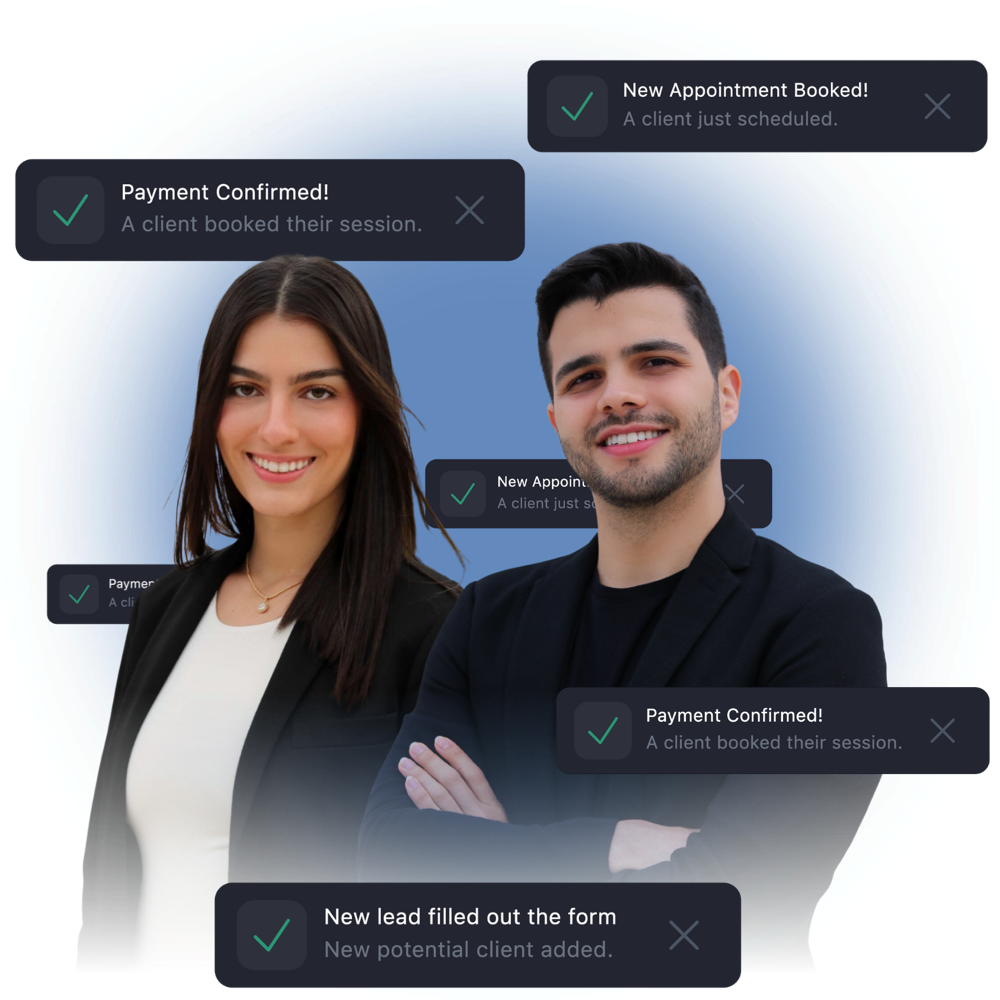
We build the boring, useful kind of AI, the kind the AMA is describing. When we set up a patient acquisition system for a practice, the AI piece is not there to look futuristic. It is there to plug the leak. Our AI receptionist answers every call, books the routine ones any hour of the day, greets people warmly, and hands anything sensitive straight to your team. It is wired into your website and booking flow and your marketing, so the patient it catches at eleven at night actually lands on your schedule, with a record of where they came from.
You can go try it yourself before you ever talk to us. Have a conversation with it, see how it sounds, and decide whether it feels like a replacement or a helper. We built it to be the second one.
So when the headlines make AI sound like a threat, remember the word the doctors themselves chose. Not artificial. Augmented. The point was never to swap out your people. It was to give them back the hours they lose to a ringing phone, and let them spend those hours on the patients in front of them.
Bring in AI the way the AMA means it
Book a free strategy call. We will show you where your practice is losing patients, and how an AI receptionist that augments your team, not replaces it, catches every call and books it, day or night. No hype, no jargon, no pressure.
Book a free strategy call →