Walk into most practices and the booking options are the same as they were twenty years ago: call during office hours, or fill out a form and wait for a callback. Meanwhile the patient sitting on their couch at 9pm, finally dealing with that nagging thing, does not want to call anyone. They want to send a text, get an open time, and be done. The gap between how patients want to reach you and how you let them is one of the most overlooked ways a practice loses new bookings.
Let us answer the question head on, then walk through how text booking actually works, what the law says, and where it goes sideways.
The short answer: yes, and patients increasingly expect it
Patients can absolutely book an appointment by text, and the demand is not small. The 2026 State of Patient Communication report from Sinch found that about 90 percent of patients now prefer to get healthcare communication by text, far ahead of email at 59 percent, patient portals at 55 percent, and plain phone calls at 34 percent. More than 75 percent say they would rather text a practice than call it. This is not a fringe preference anymore. It is the default.
There is a practical reason behind the preference. Texts get opened roughly 98 percent of the time, usually within minutes, while a large share of calls to medical offices go unanswered and most people who hit voicemail never leave a message. A text does not require a patient to catch you during a nine minute window between meetings. They fire it off whenever, and you reply when you can. We dug into why patients lean this way in our piece on whether patients prefer texting over calling your practice, and the pattern is pretty one sided.
What does booking by text actually look like?
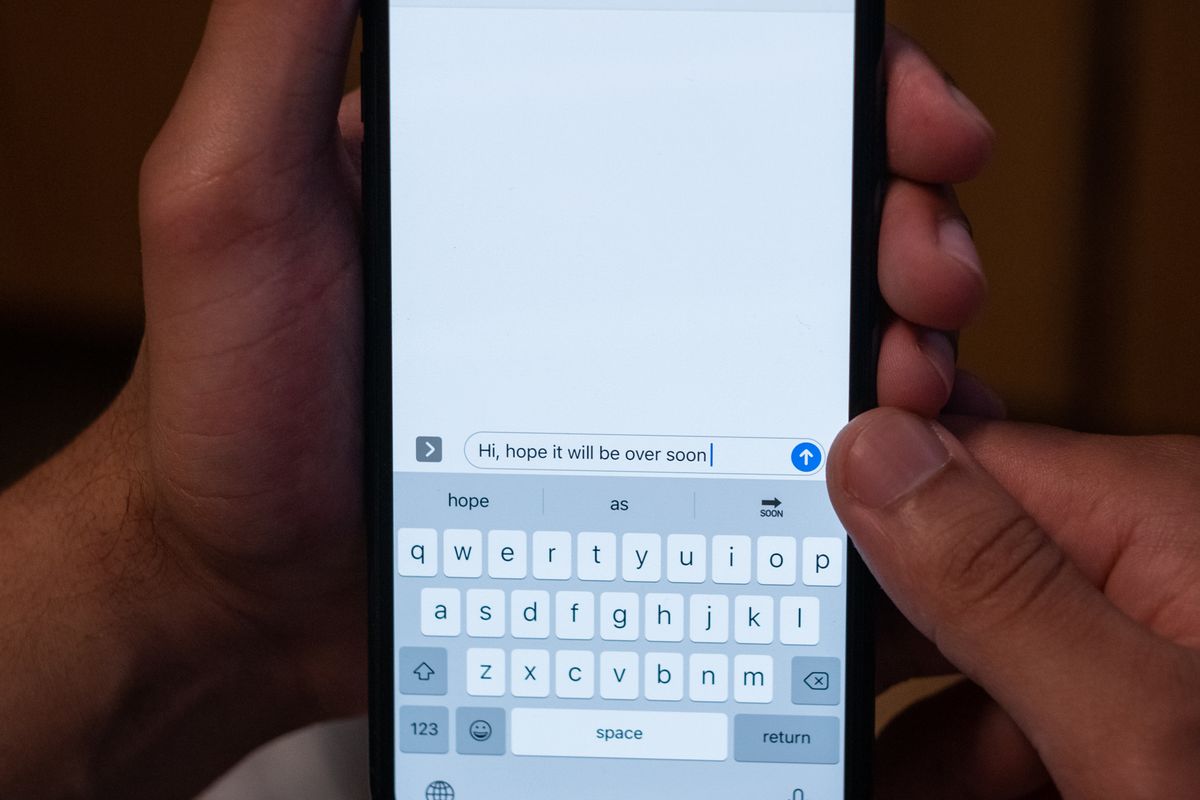
It is simpler than it sounds. A patient texts your practice number something like "Hi, can I book a cleaning next week?" From there one of two things happens:
- A real person replies. A staff member sees the text in a shared inbox, offers two or three open times, and confirms the one the patient picks. The whole exchange takes a minute and the patient never had to call.
- An automated system handles it. The patient gets an instant reply with open times, picks one, and the appointment drops straight into your calendar. No one at the desk has to touch it until they want to.
Either way, the booking lands in your schedule exactly like a phone booking would. The difference is the patient got to do it on their own terms, at their own time, in the app they already check fifty times a day. This is what people mean by two way texting: patients can text your number and get a real reply, not just receive one way reminders they cannot respond to. Around 68 percent of patients say they want exactly that.
Where the text can start
Patients do not just magically know your number accepts texts. You have to tell them, in the spots where they already look:
- Your website. A "Text us to book" button or a simple click to text link next to your phone number. On a website built to convert, the text option sits right beside call and online booking, so every kind of patient has a path that feels natural to them.
- Your Google Business Profile. Patients can message some businesses straight from search and maps.
- Your Instagram and Facebook. A booking link or "DM to book" in the bio, which for many practices funnels into the same inbox as texts.
- Your appointment reminders. A reminder that says "reply to reschedule" turns a one way text into a two way door.
Try the one line test this week
Add "Text us to book: (your number)" to your website header, your Instagram bio, and your Google profile. Then watch for two weeks. If texts start coming in, especially outside office hours, you just found a pile of patients who were never going to call. It costs nothing to test and it tells you fast whether your patients want this.
Is it legal? Yes, with consent
This is the part that makes owners nervous, and it should be handled properly, but it is not complicated. Two rules matter.
First, the Telephone Consumer Protection Act, or TCPA. In general you need a patient's permission before you text them, and you must give them an easy way to opt out, almost always by replying STOP. The good news: when a patient texts you first to book, that act itself signals consent to reply about their request. The place practices get in trouble is blasting marketing texts to people who never agreed. We broke down the permission side in detail in whether you need consent to text patients, and it is worth a read before you turn anything on.
Second, HIPAA. Keep booking texts light on protected health information, "see you Tuesday at 10" rather than clinical detail, and use a compliant platform instead of a staff member's personal cell phone. A proper patient communication system handles consent logging, opt outs, and secure records for you, so your team is not managing any of that by hand. Done right, text booking is both legal and genuinely safer than sticky notes and personal phones.
Where it goes wrong
Text booking fails in exactly one way: a patient texts and nobody answers. An empty "text us" promise is worse than no promise, because the patient took the step you asked for and got silence. The other common mistake is running it off one person's phone, so when that person is out sick, the whole channel goes dark and patient messages pile up unseen.
The fix is to treat texting as a system, not a side task on someone's personal device. That means a shared, compliant inbox the whole team can see, clear ownership of who replies, and ideally automation that catches the after hours and overflow texts so nothing waits until morning. A text that sits unanswered for six hours is the same lost patient as a call that rang out, just in a different format.
Where EtherealMinds fits, honestly
If your front desk already replies to patient texts fast and books them without friction, you are in great shape and you do not need us for this. Where we help is when the demand is clearly there but the practice has no clean way to catch it. We set up text booking as one piece of a complete patient acquisition and retention system, with two way texting, online booking, and reminders all connected to one calendar, so a patient can reach you the way they prefer and actually end up on your schedule.
For the after hours and overflow texts, an AI receptionist can read an incoming message, answer common questions, offer open times, and book the patient directly, day or night, without a staff member touching it. The routine booking texts get handled instantly, and anything sensitive or complex gets handed to your team. You can try ours live to see how it reads a real message and books a time. The point is simple: the patient who texts at 9pm should be booked before you open, not waiting in a queue.
Our honest take
Can patients book an appointment by text? Yes, and the data says most of them wish you would just let them. Texting has passed email, portals, and phone calls as the way patients want to reach their providers, and a practice that still forces every booking through a daytime phone call is leaving its most convenient door locked. You do not need to rip out your phones or your online booking. You need to add one more path, the one patients already use for everything else, and make sure someone or something actually answers it. Start with one line on your website this week. The patients who have been hanging up on your voicemail will show you fast that they were there all along.
Want patients to be able to text you and actually get booked?
Book a free strategy call. We will look at how patients can reach you today, where text booking fits, and how to turn it on without creating a mess for your front desk or a compliance headache. No pressure and no package pushed on you, just a clear read on where your growth is leaking and what it would take to catch it.
Book a free strategy call →