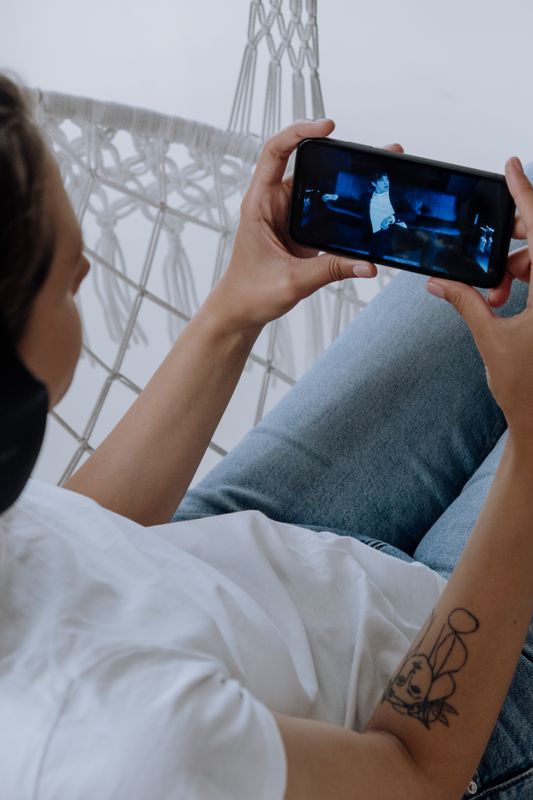
A dermatology office asked us this last month, almost apologetically, like it was a silly question. Their web guy wanted to drop a big video on the homepage. A friend told them video was the whole reason her business was booming. But their nephew, the one who is good with computers, warned them it would make the site crawl. So which is it? Does a video actually bring in more patients, or is it just a shiny thing that slows everything down?
The honest answer is that both people were right, and that is exactly why this is confusing. A video can lift your bookings. A video can also tank them. It depends almost entirely on what the video is, how it loads, and where you put it. So let us skip the hype and walk through when a homepage video earns its keep and when it costs you patients instead.
The case for video, with real numbers
Start with why people push video so hard. It is persuasive in a way text is not. In Wyzowl's 2025 State of Video Marketing report, 89 percent of people said watching a video has convinced them to buy a product or service. Nine in ten. And 78 percent said a short video is how they would most like to learn about something new. People would rather watch you explain a first visit for 40 seconds than read three paragraphs about it.
For a medical practice that matters more than for most businesses, because healthcare runs on trust and nerves. A new patient is often a little scared. They are picking a stranger to look at their skin, their teeth, their body. A short clip of the actual doctor, in the actual office, saying who they help and what to expect, does something a paragraph cannot. It puts a calm human face on the decision. The patient thinks, oh, that is who I would see, and a lot of the fear drains out before they ever pick up the phone.
That is the real win. Not some magic conversion multiplier from a marketing blog, but trust built faster. A patient who feels they already met you is far more likely to book than one reading a page that could belong to any clinic in the country.
The case against, which nobody mentions until it is too late
Here is the part the video salesperson skips. A heavy video is one of the fastest ways to slow your website down, and speed is not a nice to have. It decides whether people stay.
Google's own research found that as a mobile page's load time goes from one second to three seconds, the chance a visitor bounces climbs 32 percent, and from one to five seconds it jumps around 90 percent. Their widely cited benchmark study put it bluntly: most mobile sites are too slow, and every extra second bleeds visitors. When a giant unoptimized video sits on your homepage and every single visitor has to wait for it to load, you are trading a trust boost for a speed penalty, and the speed penalty usually wins. We dug into this exact tradeoff in how website speed affects patient bookings, and the pattern is always the same: the practice added something heavy, the page got slower, and bookings slid without anyone connecting the two.
Then there is autoplay with sound, which deserves its own warning. Someone opens your site during a lunch break at their desk, or in bed at 11pm, and your homepage suddenly starts blasting music and a voiceover. They do not scramble for the mute button. They close the tab. You did not build trust. You ambushed them.
So does it get more patients? It depends on five choices
The reason this question has no clean yes or no is that the outcome lives entirely in the details. Get these five right and a video helps. Get them wrong and it hurts.
1. Make it real, not stock
A video of your actual doctor and your actual front desk beats a slick reel of anonymous smiling models every time. Patients recognize stock footage instantly, and once they clock one fake thing, they start doubting the rest of the page. The same reason real photos beat stock photos applies double to video. A plain, honest clip filmed on a decent phone in your real office outperforms an expensive production that could be any clinic anywhere.
2. Keep it short
Thirty to sixty seconds. Long enough to say who you help and what a first visit feels like, short enough that a nervous person will actually watch to the end. A three minute practice tour feels like homework. Nobody finishes it. If you have more to say, that is what the rest of the site is for.
3. Do not let it slow the page
This is the technical part, and it is not optional. Compress the file. Host it on YouTube or Vimeo, or serve it properly, rather than dumping a raw file on the page. Load it only when the patient hits play, not automatically for everyone. Done right, a video adds almost nothing to your load time. Done lazily, it is the anchor that drags your whole site under the three second line.
4. Do not autoplay with sound
If you want motion at the top of the page, a short muted looping background clip is fine, as long as the file is tiny. Anything with sound should wait for a tap. Give the patient a clean still frame and an obvious play button, and let them choose. People who choose to watch are far warmer than people you forced to watch.
5. Never bury the booking button behind it
The single biggest mistake is treating the video as the star of the homepage. It is not. The star is the path to booking. Your headline, a line on who you help, and a clear book now button above the fold should be right there the second the page loads, before the patient touches the video at all. The video supports the decision. It does not stand in front of it.
What actually moves the needle
Here is a truth that will save you time. A video will not rescue a homepage that is broken in other ways. If your page is slow, confusing, missing a clear booking button, or hiding your reviews and hours, adding a video is like putting a nice rug in a house with no front door. The rug is not the problem.
Most practice websites lose patients for boring, fixable reasons long before video enters the picture. The average site books only a small slice of the people who visit, and it is usually because the path from interested to booked has friction in it, not because it lacked a video. If your homepage is not converting, start with what a good conversion rate looks like and fix the leaks first. Then a video becomes an amplifier on something that already works, instead of lipstick on something that does not.
And if you do invest in filming, get more than one use out of it. A good 45 second welcome from the doctor is not just a homepage asset. Cut it into pieces for social media, use it in ads, and pair it with real patient video testimonials when you have written consent. One afternoon of filming can feed your whole marketing for months if you plan it that way.
Our honest take
Yes, a homepage video can get you more patients. But not because video is magic. It works when it is a short, real, fast loading clip of you, placed to support booking rather than block it. In that form it builds trust quickly and gives a nervous patient a reason to say yes. In any other form, autoplaying, bloated, stock footage, front and center over the booking button, it is a liability dressed up as a feature, and it will cost you more bookings than it earns.
So do not add a video because a blog told you to. Add one because you have something honest to show a patient, and add it in a way that respects their time and their phone. That is the difference between a video that books patients and one that scares them off.
How EtherealMinds helps
We work only with healthcare practices in the United States, and we build websites that convert and load fast, with or without video, as part of a full patient acquisition system. When a video makes sense, we help you keep it short, real, and light, and we wire the page so the booking path always comes first. When it does not, we tell you straight, instead of selling you a production you do not need. The goal is never a prettier homepage. It is more patients booked from the visitors you already have.
If you are staring at your own site wondering whether a video would help or just slow it down, we can look at it with you and give you a plain answer.
Not sure if your homepage needs a video?
Book a free strategy call. We will look at your actual site, tell you whether a video would help or hurt, and point out the faster wins that turn more visitors into booked patients. Plain English, no pressure, no jargon.
Book a free strategy call →