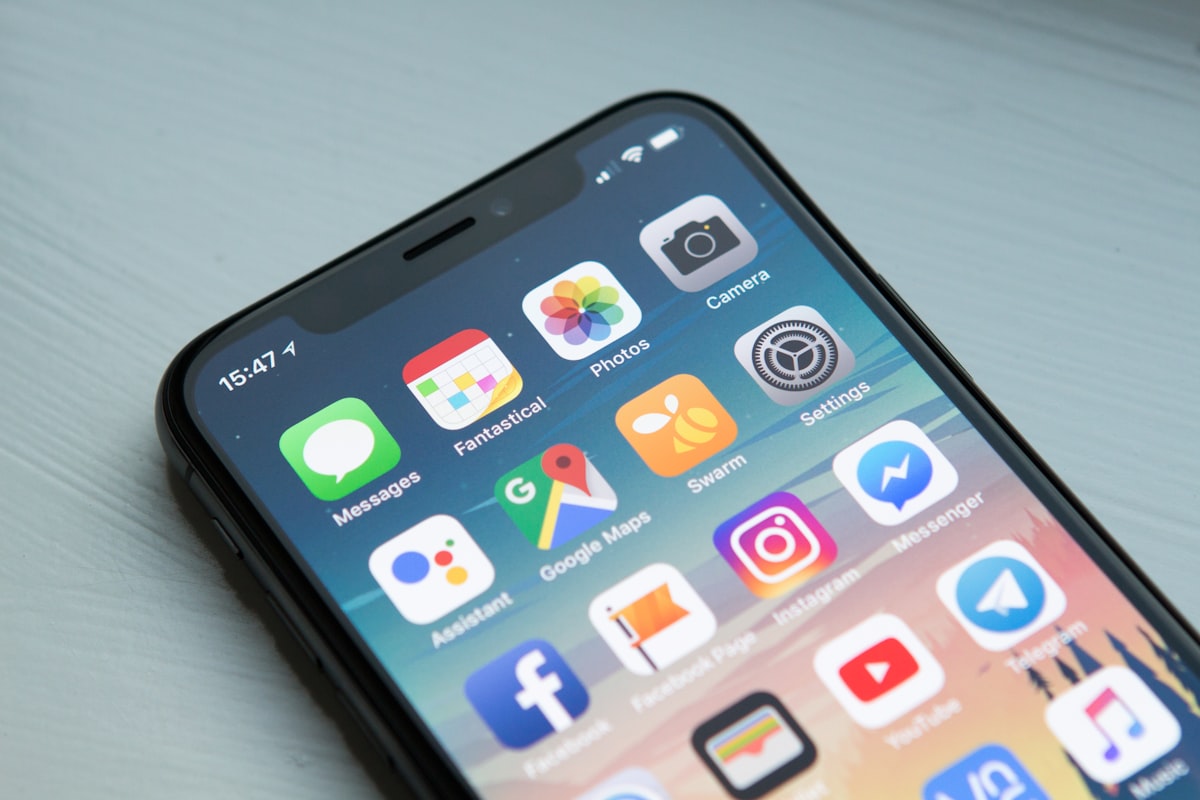
Let us answer it straight, because you are busy: almost no independent practice needs its own app. We have had this conversation with dentists, med spas, derm clinics and orthopedic groups, and the pitch always sounds the same. A custom app, your logo on the home screen, push notifications, loyalty points, the works. It feels modern. It feels like what a serious practice should do. And for the vast majority of practices, it is one of the easiest ways to set fire to a marketing budget.
That is not anti technology talk. We build the digital side of practices for a living. It is just that an app solves a problem most practices do not have, while costing a fortune and ignoring the thing patients are actually trying to do: find you and book a visit without a hassle.
The brutal truth about app downloads
Here is the wall every practice app runs into. People are extremely stingy with their phone's home screen, and they have every reason to be. The average smartphone owner uses about 10 apps a day and 30 in a month, and even though most phones hold dozens of apps, research finds roughly 60 percent of installed apps go unused in any given month. New downloads are even rarer. The classic comScore studies that TIME reported on found the majority of smartphone users download zero new apps in a typical month. Zero.
Now picture your patient. They see you for a cleaning twice a year, or a skin check once a year, or a knee that flares up every so often. You are asking them to go to the app store, search your name, download, install, open, and create an account with a password they will forget, all so they can do a thing they do three times a year. Most will simply not bother. And of the few who do, about one in five abandon an app after a single use. You paid for an icon that sits in a folder called "Other," gathering dust.
What an app really costs you
The download problem would be easier to swallow if apps were cheap. They are not. According to 2025 and 2026 development pricing guides, a basic custom app starts around 25,000 to 45,000 dollars, and a mid level app with user accounts, scheduling and payments runs 60,000 to 120,000 dollars. And that is just to launch it. Ongoing maintenance typically costs about 15 to 20 percent of the build price every single year, because phones, operating systems and app store rules never stop changing. Skip the upkeep and the app breaks, which is exactly how most practice apps end up dead in the app store.
So the real number is not "build an app." It is "build an app, then keep paying thousands a year to keep it alive, to reach the handful of patients willing to download it." Put that same money into the channels patients actually use and it works far harder. We did a similar honest breakdown of where the dollars go in our guide on how much a practice should spend on marketing.
The math nobody runs before signing
Say an app costs 40,000 dollars to build and 7,000 a year to maintain. In year one that is 47,000 dollars. To get even a few hundred patients to download and use it, you would also have to advertise the app itself. Now compare that to a fast website with online booking that every single visitor can use with no download at all. Same goal, a tiny fraction of the cost, and it reaches everyone instead of the rare few who install software for a clinic.
What patients actually want (it is not an app)
Strip away the shiny pitch and ask what a patient is really trying to do when they think about your practice. It is short and boring: find your hours, see if you take their insurance, and book a time without calling. They want to do it on the phone in their hand, right now, in under a minute. None of that requires a download.
The healthcare data backs this up. When patients access their health information online, most still do it through a browser, and surveys consistently show people prefer to book by simply picking a time from a website rather than installing yet another app. The federal ONC health IT data shows portal and online access is mainstream, but the access patients reach for is the easy, no commitment kind. A web page that loads fast and lets them tap "Book now" beats an app they have to go find and install every time.
And speed matters more than people think. Google found that 53 percent of mobile visitors leave a page that takes longer than three seconds to load. If a patient will not wait three seconds for a website, they are certainly not waiting two minutes to download an app. The winning move is to remove friction, not add a whole installation step in front of the thing they came to do.
The rare practice that does benefit
To be fair, an app is not always wrong. It can make sense when patients interact with you almost daily and the relationship is ongoing, not occasional. Think a large medical weight loss program where people log meals and check in constantly, a chronic care or remote monitoring program, or a membership model built around frequent touchpoints and a community. In those cases the app is the service, not a brochure, and people open it often enough to keep it installed.
Even then, most groups start with a mobile website and a patient portal, prove that people will actually engage, and only build an app once the demand is obvious. If your practice is a typical dental office, clinic, med spa or specialist where patients come a few times a year, you are almost certainly not that exception. And if you already have a patient portal through your records system, you have effectively already given the app lovers their app.
Where the app money should go instead
Here is what we tell every owner who comes to us asking about an app. Take that budget and build the things patients actually touch:
- A fast, mobile first website where booking is the first thing they see, not buried three clicks deep. Most of your traffic is on a phone, in a hurry, sometimes in pain.
- Online booking with no account required. Let them pick a time with a name and a number. Collect the rest after they show up. Every extra step loses someone.
- Text reminders and confirmations. Texts get read. They live in the app every patient already has and uses all day: their messages.
- Local SEO so you show up the moment someone searches "dermatologist near me," because that search is how new patients find you, not the app store.
- A real human, or a smart assistant, answering fast when the patient does reach out, so the interest you worked to create actually turns into a booked visit.
That stack costs a fraction of an app, reaches everyone instead of the few willing to install software, and it directly produces booked patients. An app, for most practices, produces a nice screenshot for a vendor's case study.
How EtherealMinds thinks about this
We work only with healthcare practices in the United States, and we will happily talk you out of spending on things that do not move the needle. Instead of an app almost no one downloads, we build websites that convert and rank: fast, mobile first, with online booking front and center and local SEO so patients find you when they search. No download, no password, no friction between a curious patient and a booked appointment.
And because the booking is only half the job, the site plugs into a full patient acquisition system with ads and social media feeding it, plus our AI receptionist catching every call and message the instant it lands, day or night. That is the modern, high tech setup a practice actually needs in 2026. It just does not happen to be an app.
So, does your medical practice need an app? For nearly everyone reading this, no, and being honest about that is one of the cheapest, smartest decisions you can make this year. Spend the money where patients actually are, and watch it come back as booked visits instead of a forgotten icon.
Not sure where your money should actually go?
Book a free strategy call. We will look at how patients find and book you today, where you are leaking them, and the highest return moves for your practice, no app upsell and no jargon.
Book a free strategy call →