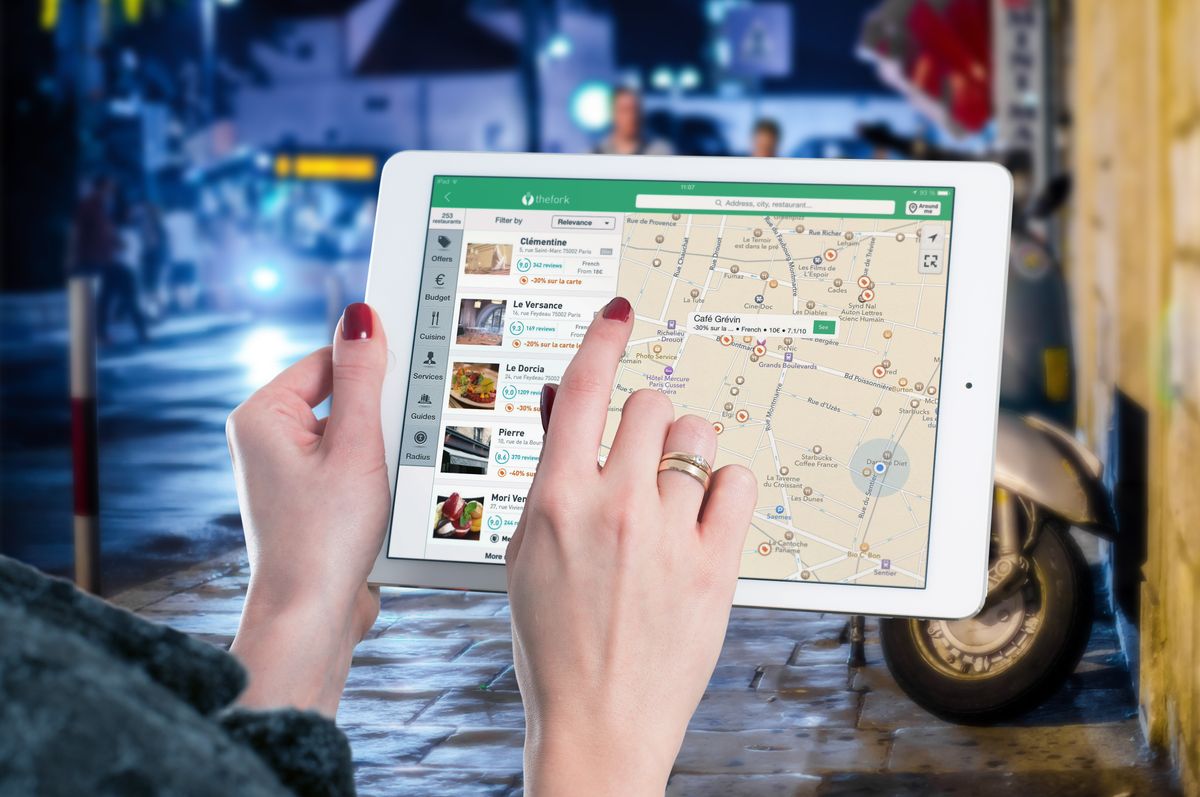
A med spa owner once told us her website was finally done and she was proud of it. Fair enough, it looked great. So we ran a quick test together. We pulled out a phone, searched the kind of treatment she sells in her own city, and watched what a real patient sees. Three competitors popped up on the map with photos, glowing reviews and a tap to call. Her practice was nowhere near the top, and her beautiful website was on page two, where almost nobody looks. She had spent months on the room and forgotten the front door.
That front door is your Google Business Profile, the free listing that shows your practice on Google Search and Google Maps. It is also the most common question we hear from owners once they understand it matters: how do I actually get my practice to show up on Google Maps and get those calls? This is the full answer.
Why your profile matters more than your website now
Here is the shift a lot of owners have not caught up to yet. Patients used to search, click your website, read it, then call. Now they often never reach your site. They search, see a little box of three practices on a map with stars, photos and hours, and they pick one right there. Google calls that box the local pack, and for a practice it is the most valuable real estate on the internet.
Think about how you choose anything local yourself. You search, you glance at the ratings, you check that it is open, you look at a photo or two, and you tap. The whole decision takes seconds, and it happens before a single website loads. Your Google Business Profile is what feeds that box. It is not a nice extra. For local healthcare, it is the main event. We say this often: your Google profile is your homepage now, so treat it like one.
None of this replaces a good website, to be clear. The two work as a team, and we will get to that. But if you have to fix one thing first, fix the thing patients see first.
Step one: claim and verify it, then lock it down
You cannot improve what you do not control. The first move is to claim your profile and verify that you own it, usually through Google Search or the profile dashboard. If a listing for your practice already exists that you never set up, that is normal, Google often creates them automatically, and you need to claim that one rather than make a duplicate.
While you are in there, get the basics exactly right, because this is the boring stuff that decides everything anyway:
- Name: your real practice name as it appears on your sign and your website, nothing stuffed with extra keywords. Google can penalize keyword stuffing in the name, and patients trust a clean one.
- Address: precise and formatted the same way everywhere you appear online.
- Phone: a local number you actually answer, ideally a tracked one so you know which calls come from Google.
- Hours: accurate, including holiday hours. A patient who drives to a locked door because your hours were wrong leaves a one star review on the way home.
- Website link: pointing to a fast, relevant page, not a slow homepage that takes five seconds to load.
That last point on consistency has a name in local SEO: NAP, for name, address and phone. When your details match perfectly across your website, your profile and the dozens of directories you are listed on, Google trusts you more and ranks you higher. When an old listing shows a wrong suite number or a disconnected phone, that mismatch chips away at your ranking. It is unglamorous and it moves the needle.
Step two: pick the right categories
This is the single most overlooked lever, and it is free. Google asks you to choose one primary category and lets you add several more. The primary one carries the most weight for what searches you show up in, so choose the service that matters most to your growth.
Then add the others that genuinely fit. Most practices stop at the primary and leave money on the table. A dental office that only lists Dentist misses people searching for an emergency dentist, cosmetic dentistry or dental implants, even though it offers all three. Add the categories that match the services you actually want more of, and you suddenly surface for searches you were invisible for the day before. One rule: only add what is true. The right categories are a gift. The wrong ones confuse Google and erode trust.
Match your categories to your real searches
Open Google and type the treatments patients actually search for in your town, the specific ones, like lip filler near me or pediatric dentist or TRT clinic. Notice the exact words. Then make sure your categories and your services list use that same language. Patients do not search for comprehensive care. They search for the one thing they need, near them, today. Speak their words and you become findable.
Step three: make it look like a place patients want to walk into
A complete profile beats an empty one every time, and the gap is mostly photos and detail. Google has said that businesses with photos get meaningfully more requests for directions and more clicks to their websites than those without. For a practice, photos do something extra: they calm nerves. A patient who is anxious about a procedure relaxes a little when they can see a clean, bright, real office instead of a gray blank.
So fill it out properly:
- Real photos, not stock: the waiting room, the front desk, the exterior so people can find the door, and the providers themselves. Patients google your doctor by name before a first visit, and a warm, real photo builds trust fast.
- A genuine description: write who you help and what you treat, in plain words, using the terms patients use.
- Your services listed out: every treatment as its own line, so each one can match a search.
- Attributes: details like wheelchair accessible, accepts new patients, language spoken and online booking. These answer real questions before the patient has to ask, and they help you appear in filtered searches.
If you serve a community where many patients speak Spanish, say so here and back it up on your site. We wrote about why that matters in reaching Spanish speaking patients, and the profile is the first place it pays off.
Step four: reviews are the engine, so feed it
If categories decide what you show up for, reviews largely decide how high you show up and whether anyone picks you. Review count, your average rating, and how recent and steady your reviews are all feed both Google's ranking and the patient's gut call in the same second.
A few things most owners get wrong here. First, recency beats a perfect average. A profile with fresh reviews arriving every month tends to outrank one with a slightly higher star average that has not had a new review since last year. Steady wins. Second, a flawless five point zero can actually scare people off, because researchers have found ratings in the low to mid four star range often convert best, since a few honest imperfections make all the praise believable. So do not panic over one fair four star review. Third, the words matter: a review that says best Invisalign in town helps you rank for that exact search, so when you ask, gently nudge patients to mention what they came in for.
And reply to every review, the good and the bad. A calm, professional reply to a tough review reassures the next reader far more than the complaint worries them, just keep it HIPAA safe and never confirm someone was a patient. We laid out exactly how to handle the hard ones in responding to negative reviews without breaking HIPAA, and the simple playbook for getting more in how to get more Google reviews.
Step five: keep it alive
A profile is not a set and forget chore. Google rewards activity, and so do patients, who check whether the lights are on. Patients really do look at the date of your last update and assume the worst if it is months old. A little ongoing effort keeps you fresh:
- Post updates: a new service, a seasonal reminder, a welcome for a new provider. It does not need to be daily. Regular beats perfect.
- Answer questions: the questions and answers section is public, and patients ask real things like do you take my insurance or do you see kids. Answer them, or a stranger might answer wrong for you.
- Add fresh photos: a few new ones now and then signals an active, real practice.
- Fix the map pin: get directions to your own office and make sure the pin lands on your front door, not the alley behind the building. A wrong pin sends patients circling the block, late and annoyed before they arrive.
Where this connects to the rest of your marketing
Here is our honest take. A great Google Business Profile is the highest return marketing most local practices can do, and it is free, which is exactly why it gets ignored. It feels like admin, not marketing. But this listing is doing the work of a salesperson who never sleeps, and most practices have left that salesperson half dressed.
That said, the profile is one piece, not the whole machine. It wins the first impression, but two things have to be ready behind it or the patient still slips away. The first is your website. The profile gets the click, and a fast, trustworthy site closes it, while also feeding Google the signals it uses to rank your profile in the first place. If your site is slow or built like a brochure, you lose people who were ready to book. That is the whole reason we build websites that convert and rank instead of just look pretty.
The second is what happens when the phone rings. A patient who finds you on Google, loves your reviews and taps to call, only to hit a voicemail at lunch, is a patient you paid nothing to attract and still lost at the final step. Studies of medical offices keep finding that a large share of calls go unanswered in business hours, and most of those callers never try again. So before you celebrate a higher ranking, make sure someone, or something, answers. If your team cannot catch every call, our AI receptionist picks up day or night, answers questions and books the appointment while the patient is still interested.
And if you are wondering why your practice does not show up on the map even after all this, we wrote a companion piece on the usual culprits in why your medical practice is not showing up on Google.
How EtherealMinds handles this for practices
When we run patient acquisition for a practice, the Google Business Profile is one of the first things we fix, because it is fast, free and pays back quickly. We claim and clean it up, choose the categories that match how patients actually search, fill out photos and services, fix your name, address and phone across every listing so they match, and build a steady review engine so new ones keep coming in instead of arriving in one awkward burst. Then we connect it to a website and a phone setup that finish what the profile starts. The listing brings the patient to the door. The rest of the system makes sure they walk through it.
So how do you optimize your Google Business Profile? Claim it, get the basics exactly right, choose the right categories, fill it with real photos and services, feed it fresh reviews every month, and keep it alive. Do that, and the next time a patient searches for what you do in your town, you are the practice on the map they tap, not the beautiful website on page two that nobody ever sees.
Want to own the map in your town?
Book a free strategy call. We will pull up your Google Business Profile live, show you exactly where you are losing local patients, and lay out the fastest path to ranking above your competitors and turning those searches into booked appointments. No jargon, no pressure.
Book a free strategy call →