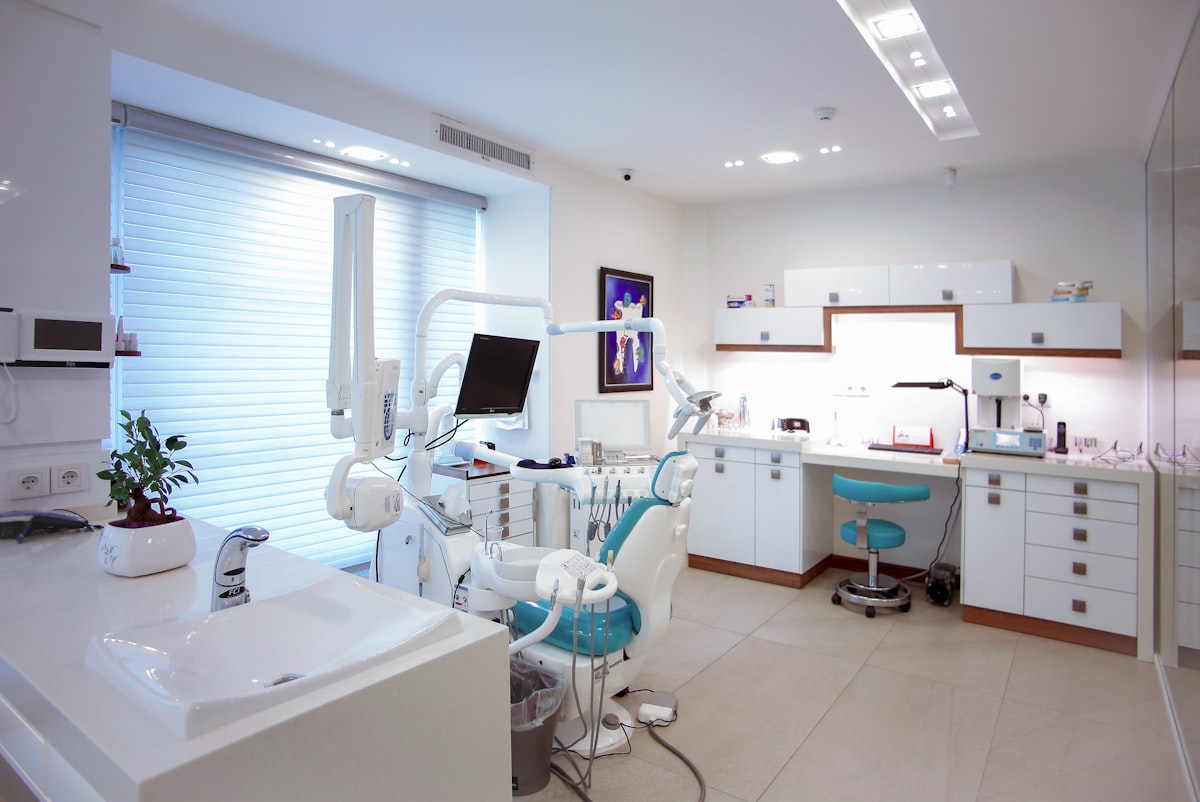
A physician called us a while back, a few weeks after opening her own practice. She had spent fifteen years inside a big group, saved for years, and finally built the office she always wanted. Bright rooms, good equipment, a front desk person she trusted. She sent us a photo. It looked like the picture above. Then she admitted the part nobody warns you about: the phone was not ringing, and she was starting to panic.
That is the strange thing about opening a practice. You spend all your energy and money on the clinical side, the buildout, the licenses, the staff, and then one Monday you open the door and realize the hardest problem is not medicine. It is that no one in your city knows you are there. You are not competing with a bad reputation. You are competing with a blank one.
The cold start problem
An established practice has things a new one does not, and they are easy to underestimate. Years of Google reviews. A website that has aged into some search authority. Patients who refer friends without being asked. A Google Business Profile with hundreds of photos and questions answered. All of that is invisible until you do not have it.
A new practice starts at zero on every one of those. And here is the part that stings if you came from another office: none of it comes with you. You cannot pack up your old reviews and move them across town. The goodwill you built stays attached to your former employer's name. On day one you are, in the eyes of Google and of a stranger searching for a doctor, brand new and unproven.
That is not a reason to panic. It is a reason to be deliberate. The practices that fill up fast are not the ones with the biggest budget. They are the ones that do the right things in the right order.
First, build the foundation before you spend on ads
The most common mistake we see from new owners is pouring money into ads before there is anywhere solid to send the clicks. It is like running commercials for a restaurant that has no sign, no menu, and a locked front door. The demand shows up and then leaks straight out. Fix the foundation first. It is not glamorous, but it is what every other dollar depends on.
A website that says what you do, fast
Your website is the first impression for almost every patient, including the ones referred to you by another doctor. A new patient will judge whether you seem legitimate in a few seconds, and a slow, confusing, or generic site sends them right back to the search results to pick someone else. It does not need to be fancy. It needs to load fast, work on a phone, say clearly what you treat and where you are, show real photos, and let someone book without friction. This is the single highest leverage thing you can build in month one, and it is the core of what our healthcare websites are made to do: look trustworthy and turn visitors into booked patients.
A claimed and complete Google Business Profile
The other half of the foundation is free. Claim and verify your Google Business Profile the day you can, choose the most accurate primary category, add your services, set real hours, and load it with photos of the office, the team, and the entrance. Google has said listings with photos earn more clicks and more direction requests than bare ones. For a new practice this profile is often the very first thing a nearby patient sees, and a complete one signals a real, open, active practice instead of a question mark.
The order that matters
Website and Google profile first. Reviews and ads second. Referrals and reputation third, building underneath the whole time. Skip the foundation and everything you spend after it works harder for less. Nail the foundation and every ad dollar and every review lands somewhere that actually converts.
Turn on demand fast, because SEO takes months
Here is the honest tension of a new practice. The cheapest patients over time come from search rankings and reviews, but those take months to build. A new site does not rank on page one in week two. As we cover in how long SEO takes for a medical practice, real local ranking is usually a matter of several months of steady work, not weeks.
You cannot wait that long with an empty schedule and rent due. This is exactly why new practices lean on paid ads early. A well built Google or Meta campaign can put you in front of ready to book patients within days of launch, filling the schedule now while your organic presence grows underneath it. Think of ads as the bridge that carries you across the slow months, not a permanent crutch. We break down the trade off in SEO versus Google Ads for medical practices, and running both together is usually the right call for a launch. Our patient acquisition system is built to run that paid engine and the organic foundation at the same time, so the practice fills up while the long game compounds.
Collect reviews from your very first patient
Reviews are where a new practice can catch up shockingly fast. Surveys of local consumers consistently find that people read online reviews before choosing a healthcare provider, and many will not even consider a business below a certain star rating. An established competitor might have two hundred reviews, but plenty of them have a stale profile no one has touched in a year. You can pass a surprising number of them in your first few months simply by asking.
So make it a system from patient number one, not something you set up later. After a good visit, text the patient your direct Google review link while the experience is fresh. Ten or fifteen honest five star reviews in your first weeks will do more for a stranger's trust than any tagline. The full playbook is in how to get more Google reviews for your medical practice. The practices that struggle are almost always the ones that meant to start asking eventually and never built the habit.
Do not waste the patients you worked so hard to reach
This is the leak that kills new practices. You spend on a website and ads to make the phone ring, and then a lead fills out your form at nine in the morning and nobody calls back until three. By then they have booked with whoever answered first. Speed matters enormously here. Research on sales lead response has long shown that contacting a new lead within the first few minutes dramatically raises the odds of connecting compared to waiting even half an hour. A new patient inquiry is a hot stove. Wait an hour and it is cold.
For a new practice with a thin schedule, every single lead is precious, so treat the follow up as seriously as the marketing that created it. Answer the phone. Call web leads back within minutes. Make it easy to book online at midnight when someone is finally sitting still. We dig into the speed problem in how fast should you respond to a new patient inquiry, and into the booking side in online booking for medical practices. The fanciest ad campaign in the world cannot survive a front desk that lets leads go cold.
Build referrals, but do not build only on them
Plenty of new owners plan to grow entirely on referrals, whether from other physicians or from happy patients. Referrals are gold, and you should absolutely cultivate them. But building a whole practice on them alone is fragile. They grow slowly, they hinge on relationships you do not fully control, and here is the part people miss: even a referred patient almost always looks you up online before they book. The referral gets your name in the door. Your website, your reviews, and your Google profile decide whether they actually call.
That is why the foundation work pays off twice. It wins strangers searching on their own, and it closes the referrals you already earned. Leaning on a single source of patients is a risk we wrote about in when a practice is too dependent on referrals. A new practice should treat referrals as one strong channel inside a wider plan, never the entire plan.
Show up where patients are already looking
A new practice also has to become findable in the places people scroll and search every day. A simple, consistent presence on the platforms your patients actually use, a few real photos of the office and team, a post when you add a service, all of it builds the sense that you are established and real long before you actually are. It does not require going viral. It requires showing up steadily so that when a patient hears your name and checks, there is something there. This is the other half of what our social media management for healthcare handles for new practices, so the owner is not learning content scheduling at eleven at night after a full day of patients.
Our honest take
The first year of a practice is the one time where doing marketing well genuinely separates the practices that thrive from the ones that stall. An established office can coast for a while on its old reputation. A new one has no cushion. Every week the schedule sits half empty is real money and real stress, and the temptation is to grab whatever feels like action: boost a random post, run an ad with nowhere good to send it, buy a directory listing. Motion is not progress.
The practices that fill up fast are boring in the best way. They build a fast, honest website. They complete their Google profile. They ask every patient for a review from day one. They run ads to bridge the slow months, and they answer the phone. None of it is a secret. It is just done in the right order, consistently, while everyone else is waiting for something to catch fire on its own.
How EtherealMinds launches new practices
We work only with U.S. healthcare practices, and launching a new one is some of our favorite work, because the order of operations matters so much and the upside is so clear. We build the website that makes you look established from week one, set up and fill out your Google Business Profile, put a review system in place so you are collecting from your first patient, and turn on paid campaigns that bring in booked patients while your search rankings and reputation grow underneath. Then we watch the numbers and shift the budget toward whatever is actually filling the schedule. The goal is simple: get you off zero fast, and lower your cost per patient every month after that. If you are opening soon or you just did and the chairs are emptier than you would like, that is exactly the problem our team is built to solve.
Just opened, or about to?
Book a free strategy call. We will look at your market, your website, and your Google presence, and hand you a clear first year plan to fill your schedule in the right order. You keep the plan whether you work with us or not.
Book a free strategy call →