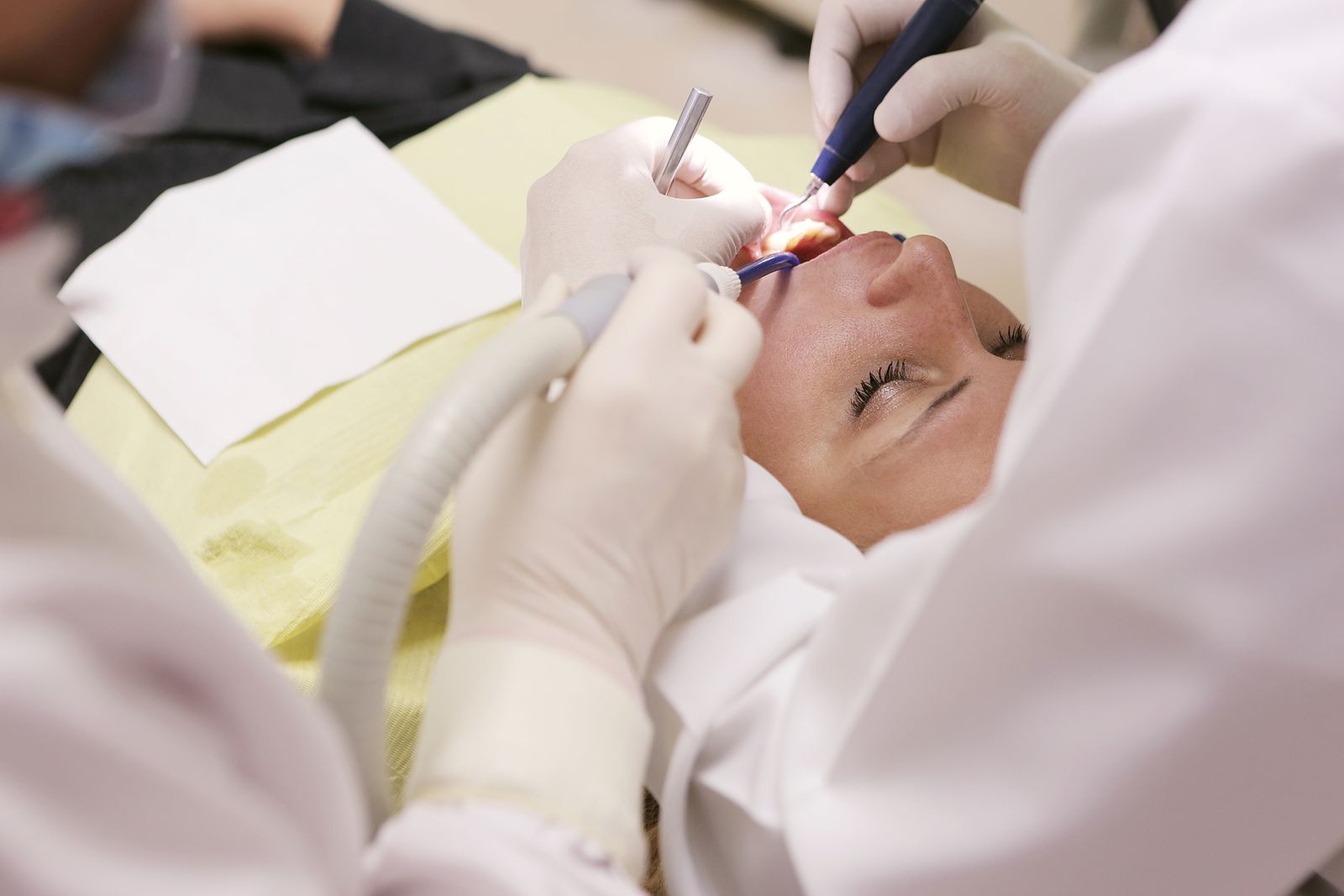
Most dental specialties have it easier than you in one specific way: their patients hurt. A cracked molar throbs. An abscess sends someone searching at midnight. But gum disease, the thing you spend your days treating, is famous for one cruel trait. It does not hurt until it is bad. So the person who needs you most is often sitting at home with bleeding gums they have decided is normal, and they are not searching for anything.
That is the marketing problem at the center of every periodontics practice, and it is a different problem than the one a general dentist or an oral surgeon has. The demand is enormous. It simply does not announce itself. According to the CDC, nearly half of US adults 30 and older have some form of periodontitis, and among adults 65 and older it rises to about 60 percent. Tens of millions of people. Almost none of them wake up thinking they should see a gum specialist.
Your real competitor is not another periodontist
It is easy to assume your competition is the perio office across town. Usually it is not. Your biggest competitor is the belief, held by millions of people, that bleeding when you brush is no big deal. Every patient who thinks their symptoms are normal is a patient who will not book with anyone, you or your rival. The market you are actually fighting for is attention, not preference.
This flips the usual marketing advice on its head. A lot of dental marketing is about being chosen over the other guy. For a periodontist, a huge share of the work happens one step earlier: convincing someone that the vague thing they have been ignoring is worth a visit at all. That means your content, your social posts, and your website cannot just say where you are and what you charge. They have to translate silent symptoms into a reason to act.
Name the signs plainly and often. Gums that bleed when brushing or flossing. Gums that have pulled back so teeth look longer. Bad breath that will not quit. A tooth that feels slightly loose or has shifted. Put those in front of people in your city, again and again, and you become the practice that connected a symptom they had to a name they now remember. A little social media built for a periodontist is perfect for this, because these are exactly the posts people stop scrolling for and send to a spouse who has been complaining about their gums.
The systemic angle is your most honest hook
Here is a piece of education most patients have never heard, and it happens to be true and well documented. Gum disease does not stay in the mouth. The CDC and a large body of research link periodontitis to conditions like diabetes and heart disease, and the connection runs in both directions. Poorly controlled blood sugar makes gum disease worse, and severe gum disease makes blood sugar harder to control.
People will ignore a warning about their gums. They pay attention when you tell them their gums might be connected to their heart and their blood sugar. Same disease, completely different urgency.
This is not a scare tactic. It is one of the most legitimate reasons a person should take gum disease seriously, and almost nobody is telling them. A periodontist who becomes the local voice on the mouth body connection is doing real public health work and building a brand at the same time. That is the sweet spot this blog is always chasing: marketing that is also just true and useful.
The referral pipeline is real, and slowly getting thinner
For decades the periodontal model was comfortable. General dentists spotted gum disease or needed an implant placed, and they sent the case to you. Plenty of practices still run almost entirely on that. The trouble is that the pipeline is narrowing in a way that is easy to miss until it bites.
More general dentists and dental groups are keeping cases they used to refer out. Implant systems have gotten more turnkey, continuing education has made placement feel approachable, and the revenue is attractive, so a growing number of GPs place their own implants and handle milder periodontal work in house. None of that is an attack on you. It is just economics. But if three or four offices provide most of your referrals and one of them starts keeping implant cases, you feel it in your schedule fast, and you may not even know why at first.
We have written before about how dangerous it is when a practice leans too hard on referrals it does not control. The answer is never to burn the referral bridge. It is to stop being a single relationship away from a slow quarter by adding a channel patients enter on their own.
Own the searches patients and dentists actually type
Even with a silent disease, real searches happen every day, and most periodontists are invisible for them. A patient finally spooked by bleeding gums types gum disease treatment near me. Someone told they need teeth replaced searches dental implants and starts comparing. A person quoted a frightening number for gum surgery goes looking for a second opinion. And referring offices themselves often search your name to check your reviews before they trust you with a patient.
Showing up for that mix is the job of local SEO built for periodontists and a Google Business Profile that is complete, accurate, and stacked with recent reviews. Ranking for procedure terms like periodontal treatment, gum grafting, and dental implants in your area, and for symptom searches like bleeding gums and receding gums, turns hidden demand into booked consults with no referral required. Implants deserve their own attention here, and our guide on marketing a dental implant practice goes deeper on capturing that specific high value search.
Scary procedures need answered fears, not hidden ones
Say the words gum surgery to an average person and watch them wince. Deep cleaning, scaling and root planing, grafts, flap surgery, bone regeneration. To you these are routine. To a patient who has only heard the terms in a horror story from a coworker, they sound like something to avoid at all costs, which means avoiding you.
Your website has a job a general dentist's does not: it has to disarm that fear before the person picks up the phone. Explain in plain language what a procedure actually involves, how many options today are more comfortable and less invasive than their reputation, what recovery genuinely looks like, and, crucially, what happens if the disease is left alone. The honest answer to that last one, tooth loss, is often the push a hesitant patient needs. A website built for a periodontist should lead with reassurance and real patient stories, not bury them under a services menu. Nothing calms a nervous patient like a recent review from someone who was just as nervous and came out fine.
Answer the phone, because these cases are worth too much to miss
Here is a hidden leak that costs periodontists more than any ranking ever will. A patient finally works up the nerve to call about a consult, or a referring office phones to send a case, and they hit a voicemail because it is lunch, or after hours, or the front desk is slammed with patients in the operatory. High value implant and surgical cases do not leave a message and wait patiently. They call the next name on the list.
This is exactly where a reliable intake system beats a busy or closed front desk. When someone calls to ask whether their bleeding gums are serious or to book an implant consult, our AI receptionist answers in a natural voice, calmly walks them through what to expect, and books them into the first open slot instead of letting the call die. For a specialty where a single case can be worth thousands and the patient is already hesitant, being reachable is not a nicety. It is the whole ballgame.
Keep your referring dentists, and make sending you easy
Building direct demand does not mean neglecting the general dentists who feed your practice. It means treating that relationship as an asset to earn rather than an entitlement to assume. Make the referral itself frictionless with a simple online form and a clear line for offices. Close the loop fast with a clean report the same day, because the dentist who feels kept in the picture keeps sending. And stay visible to those offices with tasteful posts that show your work and your team, so your name is the one that comes to mind when a case needs to go out. Do this well and you are not just protecting your base, you are earning a bigger share of the cases those offices could keep but choose to trust you with.
Where EtherealMinds fits
Look at the pattern across all of this. The periodontist's growth problem is almost never a shortage of disease to treat. It is that the need is silent, the referral pipeline is narrowing, and the highest value cases slip away at the exact moments the practice is not set up to catch them. That is the gap we build systems to close.
Our patient acquisition system for periodontists is designed to do several things at once: turn silent symptoms into demand with real education, own local search for the symptom and procedure terms patients use, keep reviews fresh so referring offices and patients both trust what they find, and make sure every call gets answered. We work only with healthcare practices in the United States, so we understand the referral dynamics, the implant competition, and the compliance lines a periodontist actually operates under. The goal is simple: keep the referrals flowing, and make sure the year one of them dries up, it is an inconvenience instead of an emergency.
The honest takeaway
Periodontics sits on top of one of the largest untreated conditions in the country, and that is both the opportunity and the trap. The need is massive, but it stays hidden, and hidden demand does not fill a schedule on its own. The practices that will thrive are the ones that stop waiting for patients to feel something and start teaching them what those small signs mean, showing up when they finally search, calming the fear that makes them delay, and answering the phone the moment a valuable case is ready to book. Do that, and a silent disease becomes a full calendar.
Turn hidden demand into a full schedule
Book a free strategy call. We will look at how concentrated your referral sources are, how you show up when someone searches their gum symptoms, and how many high value calls you are missing, then build the system that keeps your chairs full without leaving your practice at the mercy of a few referral pads.
Book a free strategy call →