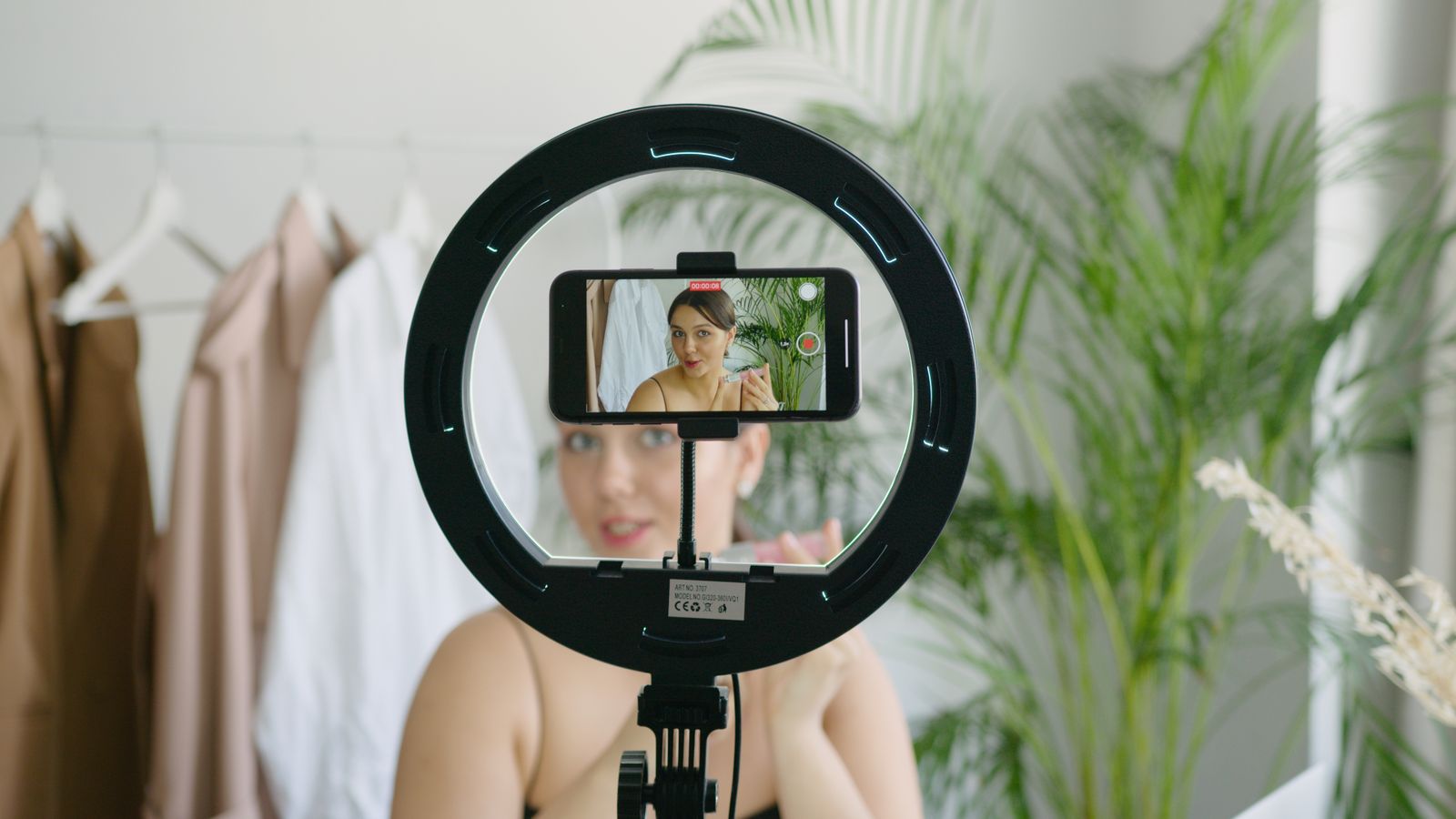
A dermatologist we work with sent us her old ad a while back, half proud, half puzzled about why it never worked. It looked great. A crisp stock photo of a woman with flawless skin, a soft gradient, her services listed in a clean font. It could have run in a magazine. It also booked almost nobody. So we tried something that made her nervous. We had her stand in her own treatment room, phone propped on a shelf, and talk for thirty seconds about the one skin problem patients ask her about most. No script, one take, a little awkward. That clip, with her real face and her real voice, booked more consults in two weeks than the polished version had in two months.
This is the question a lot of practice owners privately wrestle with. Do I really need to be on camera? Can I not just buy a nice image and keep myself out of it? You can. It is just usually the more expensive choice, because it costs you the one thing an ad has to earn before anything else happens: trust.
Your brain decides who to trust before you finish reading
Humans are wired for faces. There is a patch of the brain, the fusiform face area, whose main job is recognizing them, and it fires before the thinking part of your mind catches up. Princeton researchers Janine Willis and Alexander Todorov found that people form a judgment of how trustworthy a face is in about one tenth of a second, and that snap judgment barely changes when they are given more time to look. A stranger scrolling their feed decides whether they feel good about you almost instantly, and a face is what gives them something to decide about.
A stock photo cannot do this, because on some level the viewer knows it is not real. It is a model who has never worked at your practice, standing in a room that is not yours. People are better at spotting that than we give them credit for. The image reads as generic, the eye slides past, and no trust gets built. A real face, even an imperfect one shot on a phone, says the opposite: there is an actual person here, and this is who you would be trusting with your care.
The data: real people beat stock photos
This is not just a feeling, it shows up in the numbers. A 2026 study in the Journal of Medical Internet Research, part of the HEALing Communities Study, tested digital health ads across communities and found that ads featuring photographs of real local people drew more engagement than the same campaigns using stock photography. The researchers noted the likely reason plainly: stock images tend to be read as less authentic and more staged, so people engage with them less.
The pattern holds outside of clinical research too. When the video ad platform Billo looked across more than eighty thousand Meta video ads, health and beauty content actually grabbed attention better than most industries, with viewers watching at a higher rate than the cross industry average. But that same content lost people at the moment of the click, and their read was that it points to a trust problem, not an attention problem. People watch, they consider, and then they decide they do not quite believe the ad. Authentic content from a real person is what passes that credibility check, in a way a polished brand image cannot.
That is the whole game in healthcare marketing. Getting attention is the easy part. Getting a nervous stranger to believe you enough to hand over their phone number is the hard part, and a real face is one of the few things that reliably moves it. This is the same reason patient reviews and real video testimonials outperform any claim you make about yourself.
Why the doctor specifically, and not just any face
A face helps. The right face helps more. In most local practices, the person patients are actually choosing is the provider. They are not booking a brand, they are booking you, the human who will look at their skin, adjust their spine, or explain their labs. So when your face is the one in the ad, the ad and the appointment match. The person they trusted on their phone is the person they will meet in the chair.
This is your single biggest edge over the big chains and the faceless telehealth apps. A national brand cannot show a local face because it does not have one. You do. When your ad shows the actual doctor, in the actual office, talking like a normal person, you are offering something a corporate competitor structurally cannot: a real, specific human being in your town. Do not hide that behind a stock model. It is the most valuable thing you have.
What a face forward ad actually looks like
It is simpler than owners fear. The doctor or a team member, framed from the chest up, looking at the camera, in the real office. If it is video, thirty seconds answering one question a patient always asks, in plain words. Good lighting and clear sound matter more than a fancy camera, a window and a calm room will do. The goal is not perfect, it is real. A slightly awkward, genuine clip beats a flawless one that feels like an actor reading lines. Show the person, then make the next step obvious: one clear offer, one button to book.
When to be careful, and how to do it right
Faces work, but there are a few honest rules that keep you out of trouble and keep the ad believable.
- Patient faces need written permission, every time. A patient's photo and the fact that they see you are protected under HIPAA. Before any patient face, name, or before and after photo goes in an ad, get a signed authorization and let them choose exactly what is shown. Your own team's faces are free to use, which is why they should carry most of your creative. We covered the consent side in how to get testimonials without breaking HIPAA.
- Do not fake authenticity. Hiring a model to pretend to be your doctor is worse than a plain stock photo, because if a patient walks in expecting that person and meets someone else, the trust you borrowed turns into doubt. Real means real.
- Consistency beats a one time shoot. One good clip is a start. The same face showing up again and again, across your ads, your social feed, and your website, is what makes a stranger feel like they already know you before they ever call.
- Put the face where the click lands too. If someone clicks a Google search ad, the ad itself is text, but the page it opens should show the real provider and team. A landing page with a genuine face reassures the visitor they reached a real local practice, not a call center.
How EtherealMinds puts your practice on camera
Most owners do not avoid being in their ads because they think stock looks better. They avoid it because getting decent footage of themselves feels like one more thing on a full day. So we make it painless. When we run ads and patient acquisition for a practice, part of the setup is a simple content plan that gets the provider and team on camera in short, low effort sessions, the kind you can shoot in the office between patients. We handle the framing, the questions, and the editing, so all you have to do is talk about the work you already know cold.
Then that real footage does double duty. It becomes the hook in your paid campaigns, and it feeds your social media so the same trusted face keeps showing up in the feed. We make sure the landing pages your ads point to show that face too, so the trust built in the ad carries all the way to the booking form. And when a patient does reach out, an AI receptionist answers right away, day or night, so the interest a real face earned does not leak out while your front desk is with someone else. If you are still weighing where to put your effort first, our take on boosting posts versus running real ads is a good next read.
So, should the doctor's face be in your ads? For most practices, yes, and it is one of the cheapest upgrades you can make. You do not need a studio, a script, or a perfect on camera personality. You need to be visible and real, because that is what a person trusts, and trust is what turns a scroll into a booked appointment. The stock photo was never protecting you. It was just hiding the best thing your practice has to offer, which is you.
Want ads that show the real you and actually book patients?
Book a free strategy call. We will look at your current ads, show you where a stock image is costing you clicks, and lay out a simple way to get your face and your team on camera without eating your week. Healthcare only, no jargon, no pressure.
Book a free strategy call →