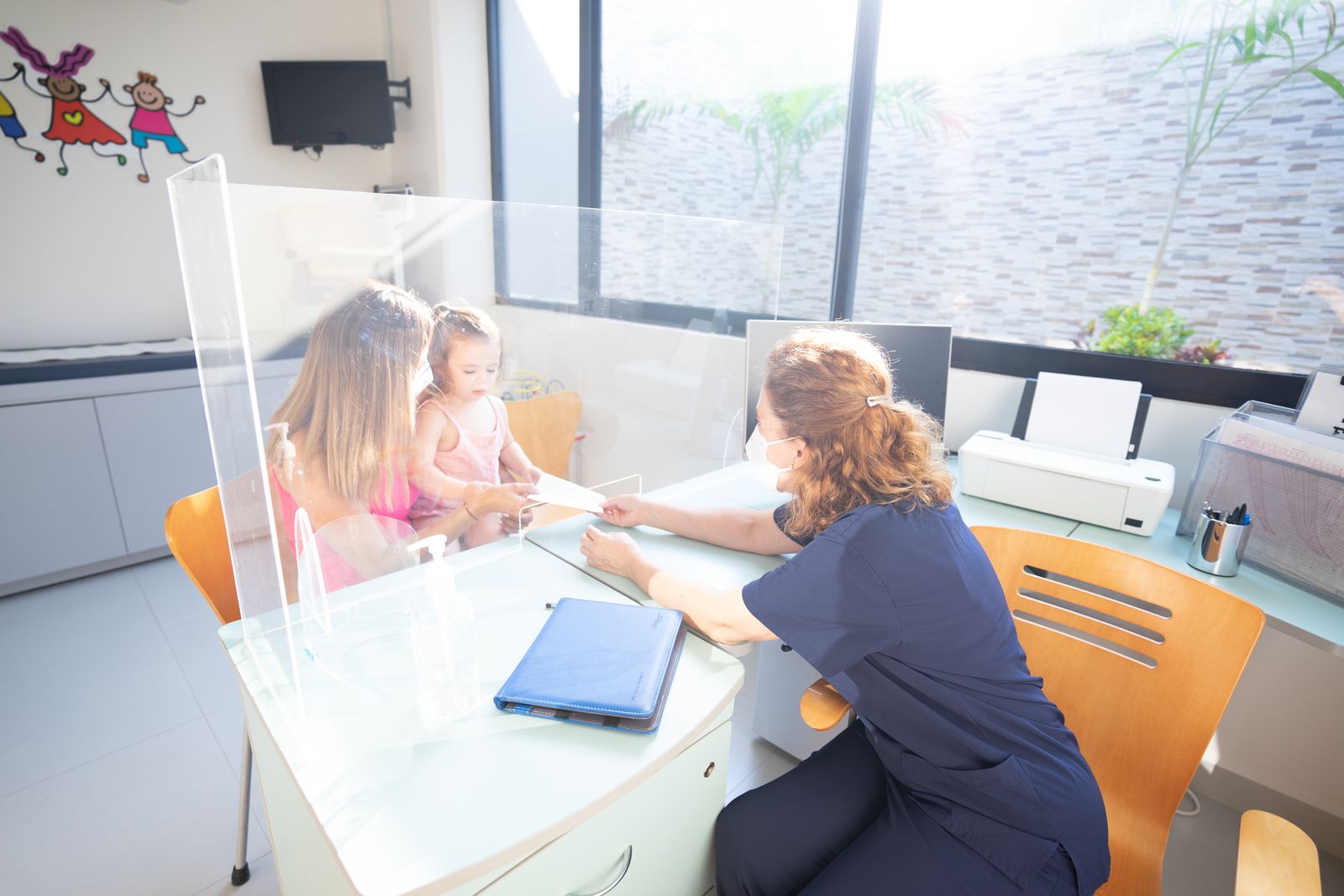
A woman in your town has a knot in her stomach and a kid with a fever. She opens her phone and searches for a doctor nearby. She finds three. Two of them have websites that are all in English, with a form she cannot fully read and a phone number that, last time, put her on hold with someone who could not understand her. The third has a simple line near the top that says hablamos español, plus a page that explains the visit and a button to book. Guess who she calls.
This is not a small niche. It is one of the largest groups of patients in the country, and it is one that most independent practices skip without even realizing it. So let us answer the question honestly: does your medical practice website need to be in Spanish? For a lot of you, the answer is a clear yes, and the reason is not politics. It is math and trust.
First, the numbers most owners have never seen
Start with the size of the group. According to the US Census Bureau, more than 42 million people speak Spanish at home, which makes it by far the most common language in the country after English. That is not spread thin across the map either. In many cities and towns it is a huge share of the local population, the exact people a nearby practice depends on.
Now the part that matters for care. About 26 million people in the US have limited English proficiency, and Spanish is the top language among them, according to KFF. These are not people who refuse to learn English. They are people who, when they are sick, scared, and reading about a medical condition, are far more comfortable and far more accurate in Spanish. Health is exactly the moment where a language gap turns into a real problem.
And they know it. Research from the Urban Institute found that about 83 percent of Spanish speaking Hispanic adults said it was important that their provider speaks their language or offers translation, and roughly 1 in 4 reported having trouble finding a provider who does. Read that again. A quarter of a massive group is actively struggling to find someone like you who simply makes it clear they can help in Spanish. That is not a marketing problem. That is an open door.
When a patient cannot tell whether you can help them in their language, they do not call to find out. They assume no and move to the next name. Silence reads as a closed door.
Why this shows up as lost patients, not complaints
Here is the trap. Nobody calls your front desk to say I did not book because your website was only in English. They just go elsewhere, the same way patients leave when your reviews look thin or your insurance is not listed. You never see the miss, so it feels like it is not happening. Meanwhile a competitor two miles away added one Spanish page and is booking the family you never got to meet.
It also compounds. Spanish speaking patients who find care in their language tend to be loyal and they refer heavily inside their community. Word travels fast about the office where mom got treated with respect and understood every word. Miss that first patient and you miss the twelve friends and relatives they would have sent you. Win her, and you win a pipeline that no ad budget can buy.
The clinical side backs this up too. Studies of language concordant care, where the patient gets care in their preferred language, consistently show higher satisfaction, better follow through on treatment, and fewer missed appointments. Patients who understand their instructions show up and do what they are told. That is good medicine and good business at the same time.
But is a translate button enough?
This is where a lot of well meaning owners stop short. They slap a Google Translate widget on the site, call it done, and move on. It is better than nothing, barely, but it is not the answer, for three reasons.
First, quality. Auto translation still mangles medical terms and produces stiff, sometimes wrong sentences. When someone is deciding whether to trust you with their body, a page that reads like a broken robot does the opposite of building confidence. Second, it often breaks your layout, pushing text out of buttons and boxes so the page looks sloppy. Third, and this is the one owners miss, a translate widget does almost nothing for search. Google ranks real pages, not a button a visitor clicks after they already found you. If you want to show up when a patient searches for care in Spanish, you need actual Spanish pages that exist on your site.
The fix is proper bilingual pages, written by a human who knows both the language and the medical context, built right into your site so they load fast and read naturally. That is a core part of how we build websites that convert and rank for healthcare practices: not a bolted on gadget, but real pages that speak to the patient and to the search engine at the same time.
The SEO win nobody is fighting for
Here is a bonus that makes this an easy decision. Most of your competitors have zero Spanish content. That means the searches happening in Spanish in your town, dentista cerca de mí, quiropráctico que acepte mi seguro, are wide open. When you publish real Spanish pages that answer those exact questions, you can rank for terms almost nobody else is targeting. It is some of the least crowded space left in local search.
The same rules that win English search apply here. Clear pages that answer the real questions, correct information, and a Google Business Profile that reflects it. If your practice already struggles to appear at all, start with the basics we cover in why your practice is not showing up on Google, then layer Spanish pages on top. This is the kind of local and AI search work our healthcare SEO is built for, because getting found by a patient who is ready to book is the whole game, in any language.
It is not just the website
A Spanish page gets the patient to call. What happens next decides whether they book. Nothing kills the goodwill faster than a beautiful Spanish landing page that leads to a voicemail nobody can understand. So the website is step one, but round it out:
- A bilingual voicemail greeting, so a patient who calls after hours hears they are in the right place.
- Someone at the front desk, or an assistant, who can answer basic questions in Spanish.
- Intake forms and appointment reminders available in Spanish.
- A booking flow the patient can complete without needing to make a stressful phone call at all.
That last point is why so many practices pair a bilingual site with a smarter front door. Our patient acquisition system and our AI receptionist can greet and help patients in Spanish at any hour, answer their questions, and put them on the calendar instead of dropping them into a voicemail they will not leave. The patient never hits a wall, and you never lose them at 9pm when your office is dark.
What about the legal side
Worth a quick note. Many practices that take federal funds fall under Section 1557 of the Affordable Care Act, which requires meaningful language access for patients with limited English proficiency. The details vary and you should check with your own advisor, so treat this as a reason to look into it, not legal advice. But honestly, the compliance angle is the least interesting part. Even if no rule applied to you at all, reaching tens of millions of patients your competitors ignore is one of the smartest, lowest cost moves in local healthcare marketing. The law is a nudge. The opportunity is the point.
Where EtherealMinds fits
We work only with healthcare practices in the United States, and we see this gap constantly. A practice sits in a community that is 30 or 40 percent Spanish speaking, runs ads and posts on social, and wonders why growth is slow. The traffic is coming. It just hits an English only wall and bounces. Fixing that does not require a rebrand. It requires meeting those patients where they already are.
So we build bilingual sites where the Spanish pages are real, not a widget, tuned to actually convert visitors into booked patients. We set up Spanish local SEO so you show up for searches nobody in your area is answering. And we connect it to a booking and reception system that can carry the conversation through in Spanish, so the patient goes from search to scheduled without ever hitting a language barrier. One honest, well built Spanish presence can open a door that has been sitting closed for years.
The honest takeaway
You do not have to translate your entire world overnight. But if a real slice of your town speaks Spanish and your website acts like they do not exist, you are losing patients you will never see leave. Start with one strong Spanish page: who you are, what you treat, the insurance you take, and a clear way to book. Add a bilingual voicemail. Grow from there. It is a small, cheap change that says something big to a huge group of people: you are welcome here, and we can help. In most towns, that practice is the one that gets the call.
Want to reach the patients your competitors ignore?
Book a free strategy call. We will look at how much of your community speaks Spanish, what shows up when they search for care, and build the bilingual website, local SEO and booking system that turn that overlooked audience into booked patients.
Book a free strategy call →