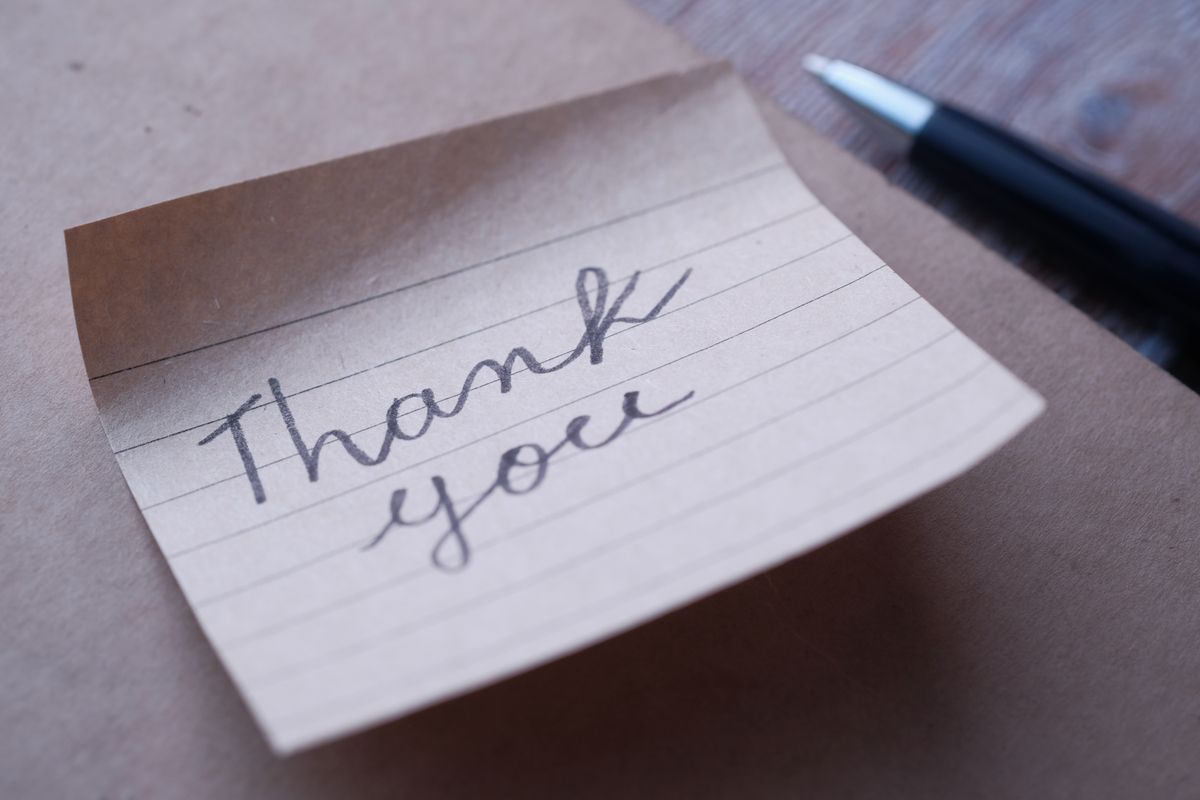
Think about the last time a business genuinely thanked you. Not a receipt that said "thank you for your order," a real one. Someone who remembered you, meant it, and asked for nothing in return. You probably still remember it, and you probably told someone. That reaction is free, and most medical practices leave it sitting on the table every single day.
Here is what usually happens instead. A patient finishes a visit, walks out, and hears from the office again only when there is a bill, a reminder, or an automated message begging for five stars. Nothing in between says "we are glad you came in." So let us answer the question a lot of owners wonder about: is a thank you note really worth the bother? The short answer is yes, and the reasons are better than you might think.
The math nobody runs
Every practice obsesses over new patients. Ads, SEO, referrals, the whole machine is pointed at the front door. Far fewer owners think about the patients already walking out the back. That is a mistake, because the numbers are lopsided.
Keeping a patient you already have costs a fraction of what it takes to win a new one. And the payoff from loyalty compounds. In research that became one of the most cited findings in business, Bain and Company's Fred Reichheld showed that a small lift in customer retention can raise profits by 25 to 95 percent. A returning patient does not need to be found, convinced, or sold. They already trust you. A thank you is one of the cheapest ways to protect that trust, and almost nobody sends one.
Why a thank you works on the brain
This is not soft stuff. Two well documented pieces of human psychology are doing the work.
The first is reciprocity. When someone does something kind for us with no strings attached, we feel a pull to give something back. Robert Cialdini built a career documenting it. The famous version is the restaurant study where servers who left a small piece of candy with the check earned noticeably bigger tips. A thank you to a patient is the same lever. Give a little warmth freely, and people want to return it, with loyalty, with a referral, with a review they offer on their own.
The second is the peak end rule, from the work of psychologist Daniel Kahneman. People do not remember an experience minute by minute. They remember the most intense moment and how it ended. A warm message landing right after a visit becomes the ending your patient keeps. It can rescue an otherwise ordinary appointment and make the whole thing feel caring in hindsight. Miss that moment and the last thing they remember might be the parking lot, or the copay.
The short version
A thank you is cheap, patients almost never get one, and two forces, reciprocity and the way we remember the end of things, turn it into loyalty and referrals. The only way to get it wrong is to make it feel automated or to sneak a sales ask inside it.
What a good thank you actually says
A thank you note is easy to ruin. The second it reads like a template or pivots into a pitch, the magic is gone. A few simple rules keep it real.
- Make it short. Two or three sentences. A wall of text feels like a form letter. A quick, warm line feels like a person.
- Be specific when you can. "Thank you for trusting us with your knee" beats "thank you for your visit." One real detail proves a human wrote it.
- Thank, do not sell. If the whole message is really a review request wearing a costume, patients feel it. Give the gratitude first and freely.
- Sign it like a person. From the doctor, the nurse, or someone at the front desk by name. Not "the team at" a logo.
- Point to what is next, gently. "We are here if anything comes up" or a reminder of when they are due back. Helpful, not pushy.
If you do want reviews out of it, and you should want reviews, let the thank you stand on its own and make the ask a soft, separate step. We walked through the timing and wording of that in how to ask for reviews by text or email. Lead with gratitude, and the stars tend to follow on their own.
Handwritten, text, or email?
Owners get stuck on the channel, but the channel matters less than the sincerity. Each has a place.
A handwritten card is the heavyweight. Almost nobody sends mail anymore, so a real card stands out and gets kept on a fridge. The catch is it does not scale. For a practice seeing forty patients a day, handwriting every one is a fantasy. So save the cards for the moments that earn them: a first visit, a scary diagnosis handled with care, a patient of fifteen years, a family that just referred three friends.
For everyone else, a quick personal text or a short email sent the same day does the job beautifully, and it reaches people where they already live. A patient who gets a warm message an hour after leaving feels looked after. The point is not the paper. It is that a human from your office took a moment to say thanks.
The trap: do not make it robotic
Here is where good intentions go to die. An owner reads an article like this, sets up an automated "Thank you for your visit!" blast, and congratulates themselves. Patients get the same seven word message everyone gets, recognize it instantly as a machine, and feel nothing. That is worse than sending nothing, because it tells them you went through the motions of caring without actually doing it.
The fix is not to drop automation. It is to automate the discipline, not the sincerity. Let a system handle the hard part, making sure every patient is followed up with at the right moment and that nobody falls through the cracks on a busy day. But keep the words human, and flag the patients who deserve a personal line instead of the default. This is the same principle behind keeping people from drifting away in the first place, which we covered in why new patients do not come back after the first visit. Silence after a visit is a leak. A thank you plugs it.
Where EtherealMinds fits
We work only with healthcare, and the practices that grow the fastest are rarely the ones with the biggest ad budgets. They are the ones that make every patient feel like more than a slot on a schedule. The follow up is where that happens, and it is the step almost everyone skips because the front desk is drowning.
That is exactly what our patient acquisition and retention system is built to carry. It handles the timing, the reminders, and the gentle nudge toward a review, so a thank you actually goes out while the words stay personal and sound like your office, not a robot. New patients are expensive. The ones you already have are the cheapest growth you will ever find, if you stop letting them walk out in silence. And when some drift off anyway, a warm, honest message is still the best way to earn them back, which we get into in how to win back lost patients.
So, should your practice send patients a thank you note? Yes. Not as a marketing trick, but because people remember who made them feel valued, and they bring their friends. It is the rare growth move that is also just a decent thing to do.
Want patients who come back and bring friends?
Book a free strategy call. We will show you how a simple, genuine follow up fits into a system that keeps patients loyal and turns them into referrals. Healthcare only, no jargon, no pressure.
Book a free strategy call →