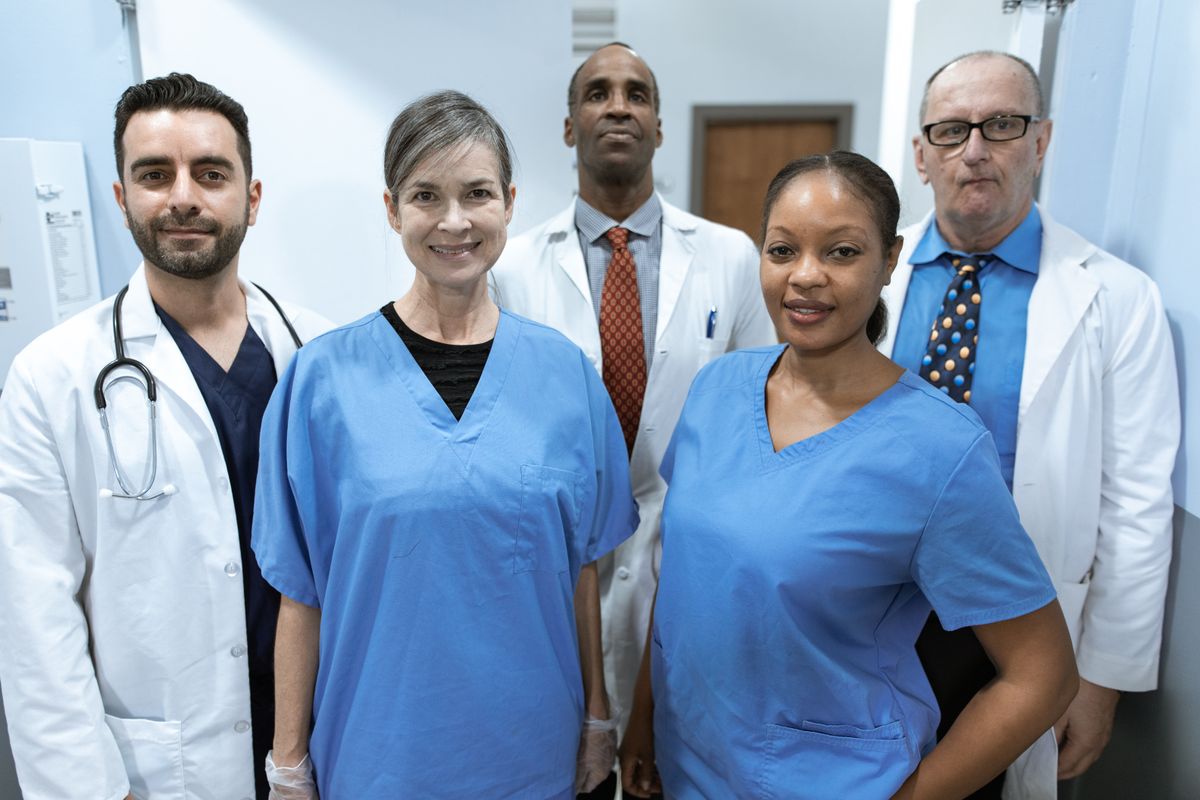
A dermatology office asked us to look at why their website got plenty of visits but few calls. We opened it and within ten seconds saw the problem. There was not a single real face on the whole site. The homepage had a stock photo of a smiling model who had clearly never worked there. The about page talked about "our commitment to excellence." Nowhere could you find out who the doctor actually was, what she looked like, or who would greet you at the door. The site was clean, fast, and completely anonymous. And anonymous is the one thing a patient will not book.
Here is the thing owners forget. Choosing a doctor is one of the most personal decisions a person makes, and they make most of that decision alone, on your website, before they ever call. They are not comparing services. They are really asking one question: can I trust this person with my body, my kid, my face, my fear. A page full of stock photos and corporate language answers that question with a shrug. A real team, shown plainly and warmly, answers it with a yes.
The data is not subtle
This is one of those questions where you do not have to guess, because patient behavior has been measured closely. In Zocdoc's What Patients Want research, the share of patients who read a provider's bio before booking jumped from 76% in 2018 to 92% today. Over the same window, the share who look for photos and visual content climbed from 50% to 77%. Patients are not skimming less. They are digging in more, and they expect to find a real person when they do.
The photo itself pulls its own weight. Analysis of provider profiles has repeatedly found that a listing with a photo gets viewed about twice as often as one without, and provider profiles with photos see roughly 60% more patient interactions. In work summarized by AHA Media Group on how patients choose doctors, a real, warm photo often beat a higher star rating: a majority of patients picked the provider with a genuine photo over a higher rated provider who had none, and that preference climbed among parents choosing a pediatrician and among younger patients. Read that again. A face can outweigh a better review score. That is how much people want to see who they are trusting.
Why a face works when words do not
None of this is a trick. It is human. When someone is scared, or embarrassed, or just tired of feeling like a number, a photograph of a calm, kind looking human does something a paragraph never will. It lowers the fear of the unknown. The patient thinks, that person looks like someone who would listen. By the time they call, they are not calling a clinic. They are calling Dr. Rivera, who they already feel like they sort of know. That head start is worth more than any tagline.
It also answers the questions people are too polite to ask out loud. Will the doctor look like they get me. Is there someone here who speaks my language. Does this place feel like a warm small office or a cold factory. A team page answers all of that in one glance, honestly, before a single word is exchanged. This is the same reason what makes patients trust your medical website comes down to real signals over polish, and why patients so often choose a doctor on feel long before they weigh credentials.
The mirror test
Open your own website right now and pretend you are a patient with a worry, seeing it for the first time. Can you find a real photo of the doctor in under ten seconds? Can you tell who will greet you at the door? Does the person in the hero image actually work there, or is it a model you licensed for 12 dollars? If a stranger cannot find a single real human on your site, they are not learning who you are. They are learning that you would rather not say.
What a great team page actually looks like
Showing your team is not the same as slapping stiff corporate headshots on a page. The practices that win with this get the details right:
- Real, consistent photos. Friendly, professional, and shot the same way so the page reads as one team, not a ransom note of mismatched selfies. This is one place a real photographer earns their fee, which is why we make the case for professional photos over stock every time.
- Bios that sound like a human. Lead with warmth, not a resume. What they treat, one thing patients love about seeing them, and a small human detail, a hometown, a reason they got into medicine, what they do on a Saturday. Credentials matter, but they go after the warmth. Our full take lives in how to write a doctor bio that books patients.
- The whole team, not just the doctor. Include the front desk and the clinical staff, because those are the people a nervous patient meets first. Seeing the face that will actually check them in is oddly reassuring.
- Nobody who does not work there. No stock models in lab coats. Patients spot a fake team instantly, and a fake face does the exact opposite of building trust. It tells them the rest of the site might be staged too.
And keep it current. A team page that shows a doctor who left two years ago, or a face a patient never meets at the visit, breaks the trust it was supposed to build. When someone leaves, update the page. It takes ten minutes and it protects the thing that makes the page work.
Do it on social too, where it compounds
Here is the part most practices miss. The same faces that build trust on your website work even harder on social media, because that is where people scroll looking for real humans, not brands. A thirty second clip of your doctor answering a question patients always ask, a warm welcome to a new hire, a quick behind the scenes moment at the front desk. That does more for a local practice than a glossy ad ever will, because it is real and it is a person.
The magic is consistency across every place a patient meets you. When the person they saw on Instagram is the same one smiling on your team page and the same one who walks them back at the visit, that unbroken thread is what turns a stranger into a patient who stays and sends friends. That is exactly the loop we build inside social media management for healthcare: put the real people front and center, everywhere, on purpose.
Where EtherealMinds fits in
When we build websites that convert, the team page is never an afterthought bolted on at the end. It is one of the first things we plan, because it is one of the pages patients actually read before they book. We help you get real photos that look like one team, write bios that sound human instead of robotic, and place them where a hesitant patient runs into them at exactly the right moment on the way to the booking button. Then we carry those same faces into your social content so the trust you build on the website keeps compounding in the feed.
It is a small change with an outsized return. You already have the thing patients want most: real, caring people. Most practices just hide them. Stop hiding them, and you turn your website from a brochure nobody trusts into the front door of your practice, staffed by the exact faces a patient hoped to find.
Our honest take
Should you show your team on your medical website? Yes, without hesitation, and it is a little surprising how many practices still do not. Patients are reading bios and hunting for faces more than ever, a real photo can beat a better star rating, and the whole decision to trust you is often made on a page you left blank. Put your real people, your real names, and your real warmth where patients are already looking. It costs almost nothing and it wins you the appointments your competitors keep leaving on the table by staying anonymous.
Want a website that actually shows why patients should trust you?
Book a free strategy call. We will look at your current site through a patient's eyes, show you exactly where trust is leaking, and map out a team page and a plan that turns visitors into booked patients. No pressure, just a clear look at what is working and what is costing you.
Book a free strategy call →