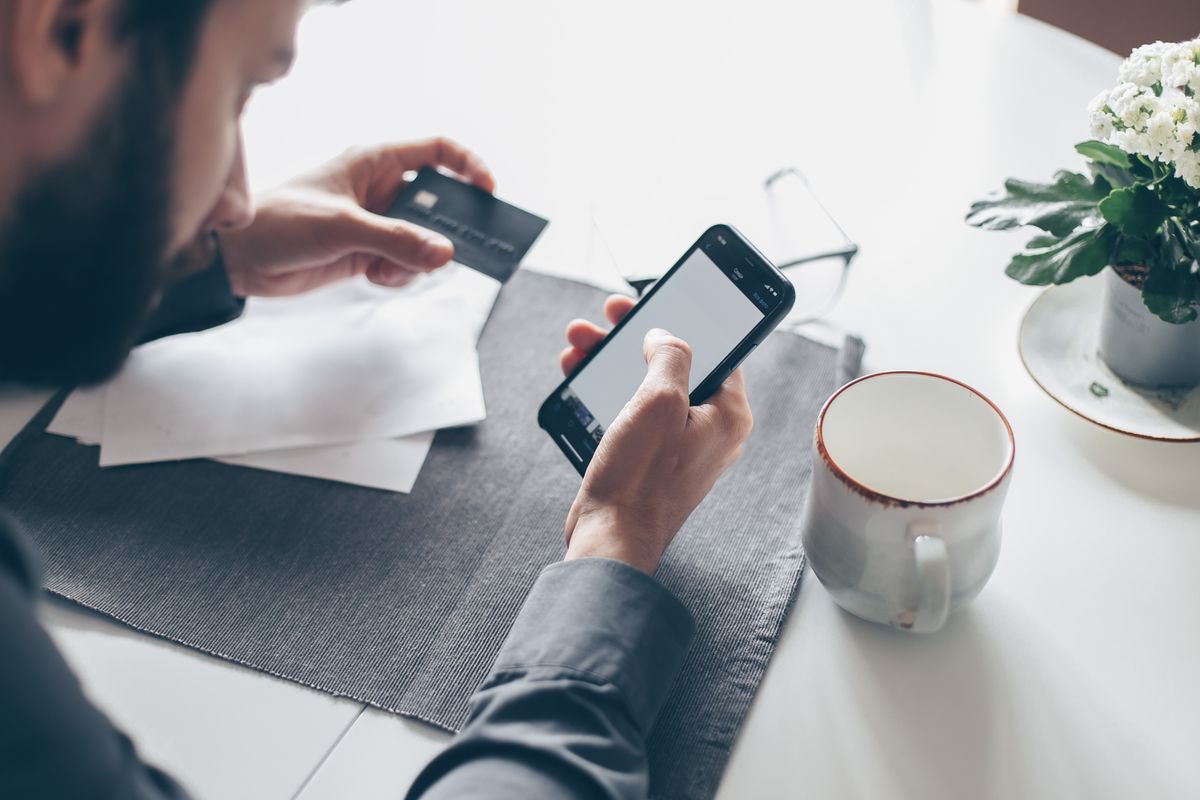
A dermatology office we work with had a drawer full of what the front desk called "the pile." It was reprinted statements, second notices, and sticky notes with phone numbers to call about balances nobody had paid. Their billing person spent most of a day every week on it. When we asked how patients actually paid, the answer said everything: most of them meant to, forgot, lost the envelope, and only paid when they got a second letter or a call. The money was not gone. It was just stuck in a slow, leaky pipe.
That pile exists in almost every practice, and it is expensive in ways that do not show up on one line of a report. It is money collected 40 days late, staff hours burned on reminders, balances written off for good, and a billing experience that leaves a sour last impression on patients who otherwise liked you. Text to pay is one of the simplest fixes for all of it, and 2026 is the year it stopped being a nice to have.
What text to pay actually is
Text to pay is exactly what it sounds like. Instead of mailing a paper statement, you send the patient a short text saying a balance is ready, with a secure link. They tap it, see what they owe on a clean page, and pay in seconds with a saved card or a digital wallet. No envelope, no stamp, no portal login they forgot months ago.
The important detail for a medical practice: the card information never travels through the text. The message carries a link to a secure, protected payment page. The text itself says something neutral like "You have a balance ready to view," never a diagnosis or treatment detail. Set up that way, it is no more sensitive than the appointment reminders you already send. If two way texting is still new to you, we broke down the basics in our guide on whether your practice should use two way texting.
Why the speed gap is so wide
The whole case for text to pay comes down to one thing: people open texts, and they ignore mail. Text messages get opened about 98% of the time, and roughly 90% are read within minutes. A mailed statement gets opened somewhere between 30 and 50% of the time, if it gets opened at all before it slides under the car keys.
That difference shows up directly in your bank account. Vendors in this space report that practices collect balances in roughly 5 to 8 days with text to pay, compared to the 35 to 45 days a paper statement cycle drags on. Automated text payment reminders have been tied to collection rate improvements around 30%, per industry reporting. You are not squeezing patients harder. You are just reaching them where they actually look, at the moment they are able to act.
The math most owners miss
A balance that gets paid in week one almost never becomes a write off. A balance that drifts past 60 days often does. Speed is not just convenience, it is collection. Every day a bill sits unopened is a day it gets less likely to ever be paid.
Patients are already asking for this
This is not a trend you are pushing on people. It is one they have been asking for. In a widely cited look at patient payments, 74% of consumers said they prefer to pay medical bills online, and surveys have put the preference for electronic payment methods as high as 91% (MedCity News). Yet the Medical Group Management Association found 77% of practices still send paper bills even though a majority of patients would rather pay electronically. That is a huge gap between what patients want and what offices deliver.
It matters more than it looks, because the billing experience shapes whether patients come back. A 2023 patient payment report from Salucro, which surveyed more than 1,500 healthcare consumers, found 78% of patients consider the billing process at least somewhat important when choosing a provider, and 53% of patients who had a bad financial interaction said they left a negative review over it (Urology Times). A clunky bill does not just delay a payment. It can cost you the patient and ding your reputation at the same time, which is a theme we dug into in our piece on how billing complaints drag down your reviews.
The honest downsides
We are not going to pretend text to pay is magic. There are real things to get right, and skipping them creates its own mess.
- It has to be HIPAA safe. The text can carry a payment prompt and a link, never clinical detail. The bill itself lives behind a secure page, and you need a business associate agreement with whoever handles the data. This is not hard, but it is not optional.
- Not everyone wants it. A slice of your patients, often older ones, genuinely prefer paper. The answer is not to force text on everyone. It is to make text the default because it collects fastest, and keep mail available for those who ask.
- It is only as good as your data. Wrong cell numbers and messy balances make any system look broken. Clean contact info and accurate statements have to come first.
- Over texting backfires. A payment nudge is welcome. Five of them in a week feels like harassment. Cadence matters, something we covered in are you texting patients too much.
Get those right and the downsides shrink to almost nothing. Get them wrong and you have traded a slow problem for an annoying one.
Where this fits in the bigger picture
Text to pay is not really a billing tool. It is part of how a modern practice communicates with patients from the first search to the last payment. The same system that texts a new lead back in minutes, confirms the appointment, and sends the review request after the visit is the one that should send the balance and collect it. When those live in one place, the patient gets a smooth, human experience and your front desk stops juggling five disconnected tools. That is the whole idea behind the patient acquisition and communication system we build, and it starts with a website that already lets patients pay and book online instead of calling during office hours.
If you already offer general online bill pay but patients are not using it, the problem is usually not the payment page. It is that nobody is pointing them to it at the right moment. We get into that distinction in our guide on whether your practice should offer online bill pay. Text to pay is the nudge that makes the page you already have actually get used.
Our honest take
If your practice still runs on mailed statements and phone calls about balances, text to pay is one of the highest return, lowest drama upgrades you can make this year. Patients want it, it collects money in days instead of weeks, and it leaves a better last impression than a second notice ever will. The only wrong way to do it is sloppily: a clinical detail in a text, no business associate agreement, or blasting reminders until people mute you. Do it cleanly, keep paper as a fallback for the few who want it, and you turn that drawer full of unpaid statements into money that shows up on time. Most owners are surprised how fast the pile disappears.
Tired of chasing unpaid balances?
Book a free strategy call. We will look at how your practice bills and collects today, tell you honestly whether text to pay would move the needle for you, and show you how to set it up the safe way. Clear steps, no jargon, no pressure.
Book a free strategy call →