
If you only read healthcare headlines this June, you would think AI was about to take over the exam room. On the same few days, two stories ran side by side. Fierce Healthcare reported that Assort Health raised a 120 million dollar Series C to scale a voice AI agent platform for healthcare. And Marketplace ran a piece on why nurses' unions are fighting for AI guardrails, worried that software is being trusted with calls it has no business making.
At first they sound like opposite stories, hype on one side, fear on the other. They are not. Read together, they draw a clean line that every practice owner should pay attention to, because it tells you precisely where to use this stuff and where to keep it far away.
The line everyone keeps missing
Here is the line. There are two completely different jobs inside your practice, and they should never be confused.
One is the clinical job: deciding what is wrong with a patient, what to do about it, when something is an emergency. That belongs to licensed, trained, accountable humans. The nurses pushing for guardrails are right to plant a flag here. When a union nurse says she does not want an algorithm overriding her judgment on a sick patient, she is protecting people, and any practice owner who has been in the room knows it.
The other is the administrative job: answering the phone, telling someone your hours, booking a cleaning, reminding a patient about Tuesday, calling back the lead who filled out your form at midnight. None of that requires a medical license. Most of it is repetitive, it happens at the worst possible times, and it is the exact work that falls through the cracks at a busy practice every single day.
The 120 million dollars is flooding into that second job. That is the honest version of the news. Investors are not betting that AI will replace your physician. They are betting that the phone, the front desk and the schedule are a mess at most practices, and that a voice agent can fix it. On that, they are not wrong.
Why the phones are the real problem
Walk into the average independent practice and the bottleneck is almost never the doctor. It is the front desk. One or two people are trying to check patients in, handle billing questions, scan insurance cards, and answer a phone that will not stop ringing, all at once. Something has to give, and it is usually the phone.
The numbers back up what you already feel. Industry research on small businesses keeps finding that a large share of inbound calls go unanswered, and the majority of callers who hit voicemail do not leave a message and never call back. In healthcare that is brutal, because a missed call is often a brand new patient who was ready to book, calling once, getting voicemail, and dialing the next office on the list. You never see them. They just never show up.
It gets worse after hours. A huge share of people finally have a free minute to call about their health in the evening or on the weekend, exactly when your desk is empty. The call you most want to catch arrives when nobody is there to catch it. That gap is not a staffing failure. It is just math. A human can only be in one place, during open hours, doing one thing at a time.
A two minute test
Call your own practice from a number your team will not recognize, on a busy weekday afternoon. Did a real person pick up in under a minute? Now call at 7pm and again on a Saturday. Every time it went to voicemail is a moment a ready to book patient decided to try someone else. That is the gap voice AI is built to close, and it is fixable this month.
What a voice AI actually does on the phones
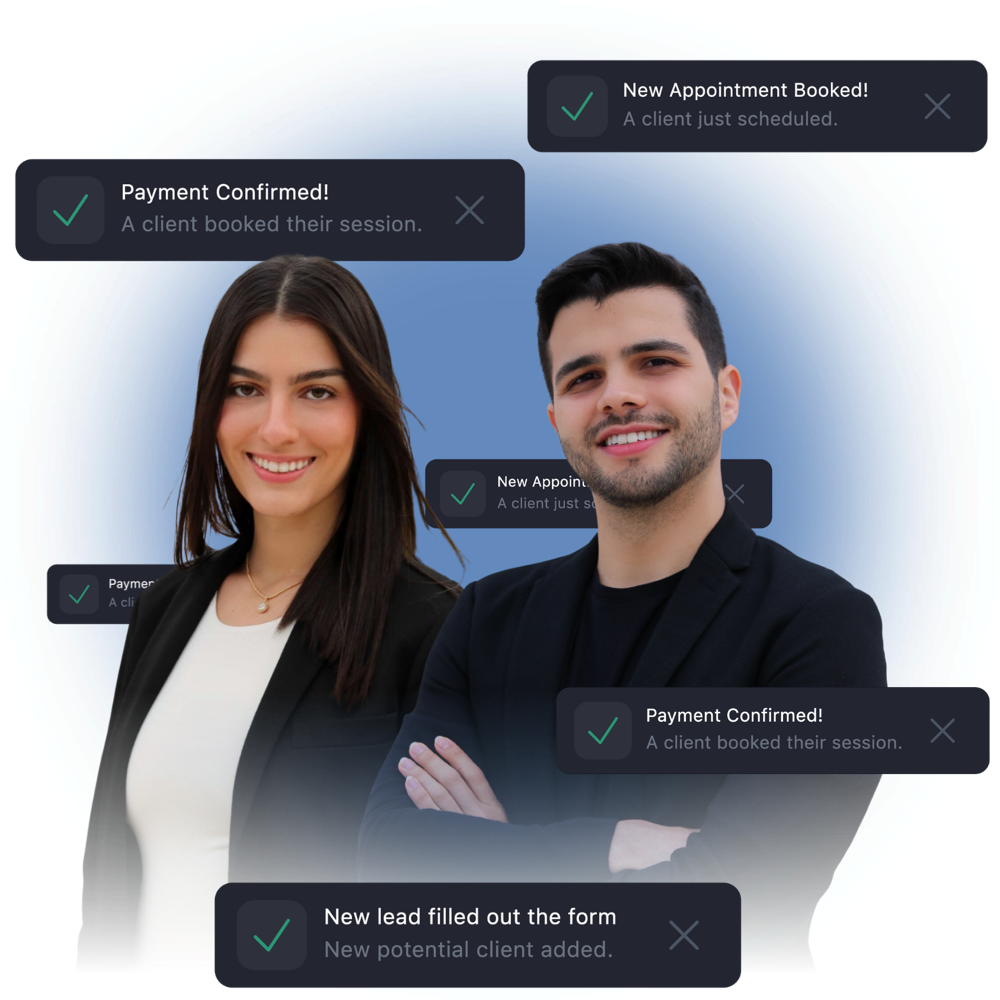
Strip away the funding rounds and the buzzwords and the job is simple. A good voice agent answers every call on the first ring, in a natural voice, day or night. It knows your hours, your services and your locations. It answers the common questions, books the appointment straight into your calendar, and texts the patient a confirmation before they hang up. When a call needs a human, a billing dispute, a worried patient, anything clinical, it takes a clear message or routes it to your staff so nothing gets dropped.
That is it. No diagnosis. No medical advice. No deciding who is sick. It sits on the administrative side of that line we drew, doing the repetitive work that was burying your front desk, so your actual humans can do the warm, in person, judgment work that only they can do. You can try our AI receptionist yourself and hear exactly where that line sits.
You do not need 120 million dollars
It is easy to read a funding headline and assume this is enterprise technology for hospital systems with deep pockets. The opposite is true. The startups raise the money. You just use the tool. For a single independent practice, an AI receptionist runs at a small monthly cost, far less than another full time hire at the desk, and it covers the hours no human is there.
This actually matters more for small practices than for the big systems, because you are the ones competing against hospital networks and venture backed telehealth brands that already answer instantly. We wrote about that fight in how an independent practice competes with hospital systems. Answering every call, day and night, used to be something only the big players could afford. Now it is not. That is the part of this story that is genuinely good news for the little guy.
The guardrails are the feature, not the fine print
Here is where the nurses and the smart practice owner agree. The right way to bring AI into a practice is with hard limits on what it is allowed to touch. Keep it on scheduling, reminders, FAQs and routing. Keep it off diagnosis, triage decisions and anything that shapes a patient's care. Run it on HIPAA compliant infrastructure with a signed business associate agreement, collect only the information it needs to book or route a call, and make sure a human can step in the instant something is off.
Set up that way, the guardrails are not a compromise. They are what makes the thing safe and worth having. We dug into how to judge a tool like this in how to tell if healthcare AI is any good and what it means for the patient relationship in doctors using AI and patient trust. The pattern is always the same: AI earns its place by taking the repetitive load off your people, never by pretending to be one of them in the room.
How EtherealMinds sets this up
We work only with US healthcare practices, and this is one of the first holes we look for, because for most offices the phone is the single biggest leak and it is invisible until you measure it. We build the complete patient acquisition system so the money you spend getting people to call does not evaporate at the front desk. That means a fast website that turns visitors into bookings, a steady social presence so people trust you before they call, and the AI receptionist that catches every call your team cannot, set up with the guardrails above so it stays on the administrative side of the line.
You do not have to do all of it at once. But the next time you see a giant funding headline about AI in healthcare, translate it before you panic or get dazzled. Most of that money is chasing one boring, valuable truth: practices lose patients on the phone every day, and the fix is finally cheap enough for a small office to use. Put AI there. Keep your humans where humans belong. That is the whole strategy.
Find out how many calls you are losing
Book a free strategy call. We will look at where your practice loses patients today, the missed calls, the after hours leads, the voicemails nobody returns, and show you how an AI receptionist with the right guardrails can catch them without touching a single clinical decision.
Book a free strategy call →