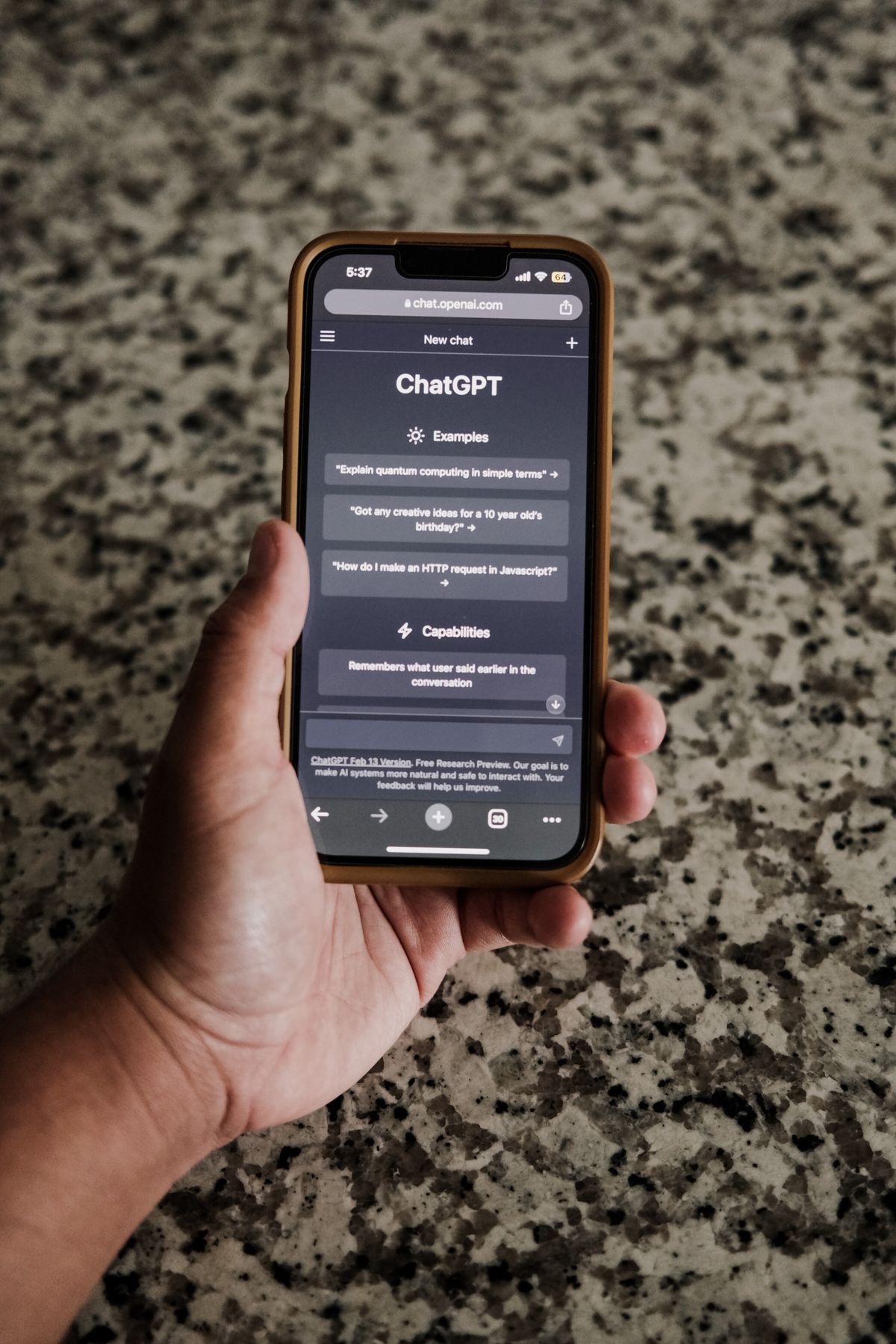
Do this before you read another word. Open ChatGPT on your phone and type the sentence a patient would type: "recommend a good dermatologist near me," or whatever you do, in your town. Does your practice come up? Now ask it by name. "What are the hours for [your practice]? Do they take Blue Cross? Are they accepting new patients?" Read the answer slowly. Because that answer, right or wrong, is what a real person is reading tonight while deciding who to call in the morning.
For most owners this is an uncomfortable little experiment. Sometimes the AI nails it. Often it does not. It lists hours that changed two years ago, an old address from before you moved, an insurance you dropped, or it confidently sends the patient to the practice across town instead of you. And here is the trap: the AI never sounds unsure. It states the wrong thing with the same calm certainty as the right thing, and patients believe it.
Patients are not just googling you anymore
This is not a fringe habit yet to arrive. It is here. The 2026 Patient Choice Report from rater8 found that 47% of people had used AI tools like ChatGPT, Claude, Perplexity, or Google's AI Overviews to research a healthcare provider, up from 31% only nine months earlier. Reliance on AI to actually pick a provider doubled in a year, from 17% to 36%, nudging past both plain Google search and even a friend's referral.
The part that surprises most practice owners is who is doing it. This is not just twenty somethings. In the same report, 64% of patients aged 45 to 60 said they had used AI to find care, the highest of any age group, and among people who switched doctors in the past year, AI was named the top digital influence by 39%. In other words, the patients with the best insurance and the most visits are asking a chatbot who to trust, and the chatbot is answering with whatever it thinks it knows about you.
The uncomfortable truth: AI is often confidently wrong
If AI always got the facts right, this would just be a new place to show up. The problem is that it does not. A Search Engine Journal analysis in July 2026 found that AI tools serve incorrect location data, hours, or service details in nearly half of local business answers. Independent tests put average business profile accuracy on ChatGPT and Perplexity around 68%, meaning roughly one in three facts is off, while some tools do better and others do worse. For a restaurant, a wrong closing time is annoying. For a medical practice, a wrong answer sends a patient somewhere else entirely.
Here is what we actually see when we audit how AI describes a practice:
- Wrong hours. The AI says you close at 4, so a patient who could have made a 5pm slot never calls.
- "Permanently closed." An old duplicate listing or a stale data source convinces the AI you shut down. This one kills more new patients than any bad review, and you never see it.
- The wrong insurance answer. It tells a patient you do not take their plan when you do, or the reverse, which burns trust the moment they find out.
- Services you stopped, or never offered. The AI promises a treatment you do not do, and now the patient shows up angry, or books elsewhere for a service you actually provide.
- The old phone number or address. They call a disconnected line or drive to your last location. Most do not try twice.
- You simply are not mentioned. The worst outcome. The AI names three competitors and skips you completely, and the patient never even knew you existed.
None of these show up in your analytics. There is no bounced form, no missed call log, no angry email. The patient just asked, got an answer, and moved on. That is what makes AI errors so dangerous: they are invisible to the practice and final for the patient.
Why AI gets your practice wrong
It helps to understand how these tools think, because the fix follows directly from it. ChatGPT and its cousins do not have a live line into your front desk. They assemble an answer from everything written about you across the web: your website, your Google Business Profile, health directories, insurance finders, old pages, aggregator databases, and more. Then they look for one thing above all else. Consistency.
When your name, address, phone, and hours match everywhere, the AI reads that as a verified, real business and repeats it with confidence. When those details disagree from one source to the next, or when two or three duplicate Google profiles exist for the same office, the model cannot tell which version is true. So it does what a model does: it guesses, blends, or grabs whatever source it happened to weight most. As one plain summary of the problem put it, AI invents or garbles business facts when the trustworthy data about you is thin, stale, or contradicted somewhere else online. Inconsistent data reads as an unreliable source, and unreliable sources get ignored or scrambled.
If you have ever wondered whether your practice info matches everywhere online, this is exactly why it matters now more than it ever did. The same mismatch that hurt your Google ranking for years now feeds an AI that speaks in full sentences to your future patients.
How to fix what AI says about you
The good news: you fix AI accuracy the same way you fix local search, by giving every source one clean, identical story to tell. There is no secret prompt and no way to "edit" ChatGPT directly. You control the inputs, and the outputs follow. Here is the work that actually moves it:
- Make your core facts identical everywhere. Name, address, phone, and hours must match to the letter across your site, your Google Business Profile, and every directory. Same suite number, same spelling, same phone format. This is the single biggest lever.
- Clean up duplicates and old listings. Two Google profiles for one office, a former location that still lives online, a merged practice under an old name: hunt them down and fix or remove them. Each stray copy is a chance for the AI to trust the wrong one.
- Own your Google Business Profile. AI tools lean heavily on it. Keep hours, services, insurance notes, and photos current, because it is one of the most trusted sources the model reads. This is also why your practice might not be showing up on Google in the first place.
- Publish the facts clearly on your own site. Put your services, the insurance you take, your location, and your hours in plain, readable text on your pages, not locked inside an image or a PDF. Answer the real questions patients ask, in the words they use.
- Add structured data. Schema markup lets machines read your facts without guessing, which is exactly what an AI needs. A well built site bakes this in, which is part of why we obsess over it when we build websites that convert as well as they rank.
- Keep it fresh. Changed a phone number, added a provider, dropped a plan? Update every source the same week. Stale beats wrong, but current beats both.
Do this and something good happens on its own: the errors start to fade. Once the trustworthy sources all agree, the AI stops guessing, because you have finally given it a verified entity to trust instead of scraps to invent from. And the very same cleanup lifts your normal local SEO at the same time, since Google and the AI tools drink from the same well.
This is the new front door, and it needs a system
A few years ago your Google listing was the first impression. Now, for a fast growing slice of patients, the first impression is a paragraph an AI writes about you before they ever touch your website. You cannot log in and edit that paragraph. You can only shape the raw material it is built from, and that is a real, doable job, not magic. We wrote a fuller playbook on how to get your practice recommended by ChatGPT if you want to go deeper on the visibility side.
The reason we treat this as part of a full patient acquisition system and not a one off task is that all the pieces feed each other. Consistent listings, a fast structured website, strong reviews, and an active Google profile are what make the AI describe you accurately AND rank you in regular search AND convince the patient once they land on your page. Fix one in isolation and the others still leak. This is the honest reason a scattered, do it yourself approach struggles here: accuracy across the whole web is a maintenance habit, not a weekend project.
And when the AI does send them to you, answer
Here is the last mile people forget. Say you do all of this. The AI gets you right, likes you, and tells a patient at 9pm, "Yes, they are open, they take your plan, here is the number." The patient calls right then, while the intent is hot. If that call hits a voicemail because the office is closed, you did all the hard work to earn the recommendation and dropped it at the finish line. That is why we pair the search side with an AI receptionist that answers instantly, day or night, handles the common questions the way you would, and books the visit before the patient cools off. The AI sends them, and something on your end is always there to catch them.
It is a neat symmetry, honestly. Patients are using AI to decide who to trust, so the two things that matter are simple: make sure the AI has the true story about you, and make sure a real answer waits on the other end when it points them your way. Get both right and this shift stops being a threat and becomes the cheapest new patient channel you have.
Curious what AI is telling patients about you?
Book a free strategy call. We will run your practice through ChatGPT, Gemini, and Perplexity live, show you every fact they get wrong, and map out the cleanup that makes the AI describe you accurately and send patients your way.
Book a free strategy call →