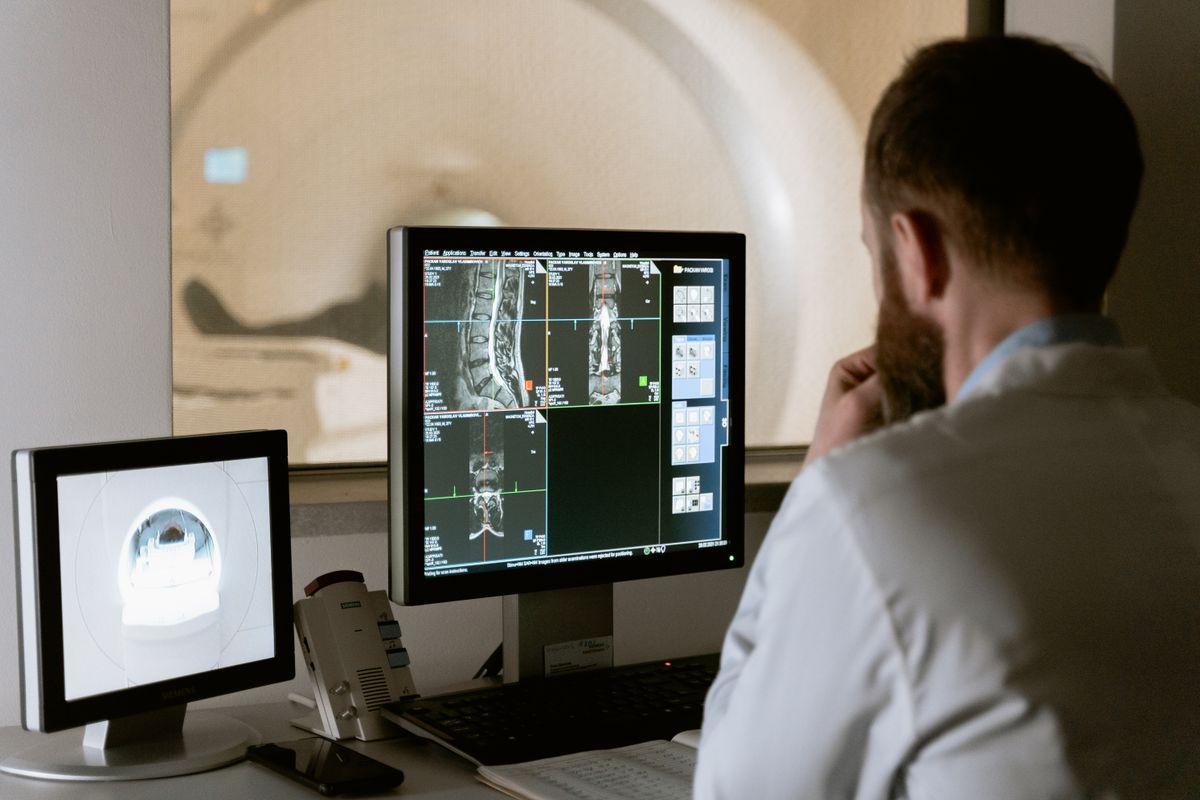
A solo dermatologist forwarded us that Atlantic headline last week with one line: should I be worried? It is a fair question. This month alone, The Atlantic ran a long feature on AI sweeping through hospitals, Modern Healthcare tracked yet another AI startup banking $30 million, and an AI medical conference is heading back to Miami in July. From the outside it looks like the giants are racing ahead and the small practice is getting left behind again.
We want to give you the calm, honest version. Most of what hospitals are buying has nothing to do with whether a new patient picks you. And the slice that does matter is the one place a five person clinic can now stand toe to toe with a five thousand person system.
What hospitals are actually buying
When the headlines say AI is taking over hospitals, this is the real list. Almost all of it is internal, expensive, and invisible to patients.
- Imaging and diagnostics. AI that flags findings on scans and helps radiologists read faster.
- Ambient documentation. Tools that listen to the visit and draft the note so the doctor stops typing.
- Back office automation. Coding, billing, claims and staffing run by software to cut overhead.
- Operations and triage. Predicting bed demand, routing patients, managing huge schedules.
Two things to notice. First, none of that is why a patient chooses a doctor. Nobody picks a clinic because its billing department uses AI. Second, this is exactly the stuff that needs a hospital sized budget and a hospital sized IT team. You are not supposed to compete here, and you do not need to.
There is also a smaller story in the news that you should not miss. Marketplace reported this week that nurses are demanding a seat at the table on how AI gets used, because too many tools are being pushed into care without the people who actually do the work. That instinct is correct, and it is the whole key to using AI well in a small practice: AI does the repetitive load, humans keep the judgment. Hold onto that.
The one place AI decides whether you grow
Here is the part the imaging headlines skip. For an independent practice, AI is not won or lost in the exam room. It is won or lost at the front door, before the patient ever meets you.
Think about how someone actually becomes your patient. They search at night, find your website, and try to book or call. If the call goes to voicemail, or the form sits in an inbox until morning, they are gone. This is not a small leak. Studies of medical practices have found a large share of inbound calls go unanswered during business hours, and the overwhelming majority of callers who hit voicemail never call back. They just dial the next office. After hours it is worse, and after hours is exactly when working patients have time to call.
The big system you are worried about? It often has a call center, online scheduling, and follow up sequences running around the clock. That is the real advantage it has over you, and it has nothing to do with a fancy MRI algorithm. It is just that someone, or something, always picks up. That gap is where AI finally helps the little guy, because answering, booking and following up is now something a small practice can automate too.
The honest test for any AI tool
Before you buy, ask one question: does this help a real patient choose us, book with us, or stay with us? If the answer is yes, it is worth a look. If it is just a shiny dashboard or a buzzword, skip it. The front door, answering calls, booking, reminders and follow up, almost always passes that test. Most of the rest does not, at least not yet, for a practice your size.
Our take: do not chase the hospital, close your front door gap
We will plant a flag here. Most independent practices do not have a clinical AI problem. They have a front office problem that has been there for years, and the AI moment is simply the best chance they have ever had to fix it cheaply.
Spending energy trying to match a hospital on diagnostics is a losing game and a distraction. Spending a little to make sure every call gets answered, every after hours patient can book themselves, and every lead gets a fast reply is where the return actually lives. We have watched practices add more new patients from plugging that one leak than from any new ad campaign, because they were already paying for the marketing that made the phone ring. They were just letting half the calls fall on the floor. We dug into the speed side of this in how fast you should respond to a new patient inquiry, and the leak itself in how your front desk loses patients on the phone.
This is also the right way to think about the nurses point from that Marketplace story. The danger is not AI. The danger is AI with no human in the loop. So the line we hold for every practice we work with is simple: let AI handle the repetitive, the after hours, the overflow, and keep a person on anything sensitive. The machine catches the call and books the slot. The human handles the worried parent and the complicated case. Nobody is replaced, and nothing falls through.
What this looks like in a real practice
You do not need a transformation project. You need three things working while you sleep.
1. Every call answered
The phone is still where most appointments get booked. An AI receptionist that answers on the first ring, day or night, books the appointment, answers the common questions and texts back anyone it could not reach turns missed calls into booked patients. You can see ours live, our AI receptionist, handling exactly this. It is the single fastest win on this list because every saved call is a patient who would have walked.
2. Booking that never closes
Patients want to book the way they shop, at 9pm in their pajamas without talking to anyone. Real online booking that shows open times and locks one in, instead of a contact form nobody reads until morning, removes the exact friction that sends people to the big system with the slick app.
3. Follow up that actually happens
Reminders that cut no shows, a quick text to a lead who went cold, a nudge to reactivate a patient you have not seen in a year. These are boring, repetitive jobs that humans forget when the lobby is full, and they are perfect for automation with a person watching. It is the same engine that lets you reactivate past patients and leads without adding a single hour to your team's day.
One caution that ties to another story in the news this week. The HIPAA Journal again reported that healthcare data breaches keep climbing. Do not let the AI rush make you sloppy. Any tool that touches patient information needs a signed business associate agreement, encryption and access controls. Plenty of consumer AI tools do not clear that bar. We wrote the full checklist in HIPAA compliant AI in healthcare marketing. The short version: useful and compliant are not a trade off, and if a vendor cannot explain their compliance in one sentence, walk.
How EtherealMinds sets this up
We are a healthcare only growth agency, so this is the whole job. When we build a patient acquisition system for an independent practice, the front door is the spine of it: an AI receptionist answering every call, a fast website with real online booking, and follow up sequences that work while you are with patients, all of it HIPAA conscious and all of it with your team kept in the loop on anything that matters. We connect it to your ads and social so the patients your marketing earns actually make it onto the schedule instead of leaking out the bottom.
So should the solo dermatologist be worried about AI taking over hospitals? Not really. The hospitals are using AI to run themselves. You can use a much smaller, simpler slice of it to make sure no patient who tries to reach you ever slips away. That is the part that grows a practice, and for once, it is the part where being small is not a disadvantage at all.
Close the front door gap before the hospital does
Book a free strategy call. We will show you how many calls and after hours patients you are losing right now, and exactly how an AI receptionist and real online booking turn them into appointments, with your team still in control. No jargon, no science project, no pressure.
Book a free strategy call →