
A wave of headlines landed this week saying Americans have turned against AI in their healthcare. It is an easy story to run with, and if you own a practice and have been nervous about adding any AI, it probably felt like permission to keep waiting. Hold on, though, because the survey underneath those headlines says something more specific and a lot more useful.
The Pew Research Center polled 3,488 US adults and published the findings in late October 2026. Yes, 60 percent said they are uncomfortable with AI helping their doctor make a diagnosis or a treatment plan. On insurance, only 5 percent were open to AI deciding a claim without a human reviewing it, and nearly half wanted AI to play no role in coverage decisions at all. Those numbers are real and they are loud.
But here is the part the headlines skipped. The same people were open to AI handling the logistics of care, things like booking appointments and answering routine questions. As one write up of the poll put it, Americans are fine with AI making the appointment as long as a doctor makes the decision. That is not a rejection of AI. That is a map.
Patients are drawing a line, not slamming a door
Think about what the survey is really saying. On one side sits everything clinical and personal: the diagnosis, the treatment plan, whether a claim gets paid. Patients want a human there, full stop, and more than half even said they see AI as a risk to their personal health information. On the other side sits everything logistical and frustrating: getting someone on the phone, finding an open slot, rescheduling, a reminder so they do not forget. Patients do not want a human gatekeeping those. They want them to be instant.
That line matters because most practices are standing on the wrong side of it. The average office has no AI anywhere near a diagnosis, which is correct. But it also has a front desk that misses a quarter of its calls, a phone that dumps patients to voicemail after five, and a booking process that only works during business hours. The place patients are begging for help is the exact place AI is welcome, and it is sitting empty.
Where AI is welcome: the annoying parts
Match your AI to the tasks patients already find impersonal, and you get all of the upside with none of the backlash. The safe, welcomed zone looks like this:
- Answering every call, especially the ones that come in after hours, during lunch, or while your team is with a patient. A missed call is usually a patient who dials the next clinic on the list.
- Booking and rescheduling on demand, at any hour, without a human having to be free.
- Reminders and confirmations by text so a nervous patient does not slip into a no show.
- Routine logistics, like your hours, your address, parking, what to bring, and which plans you take, answered instantly instead of sitting in a voicemail queue.
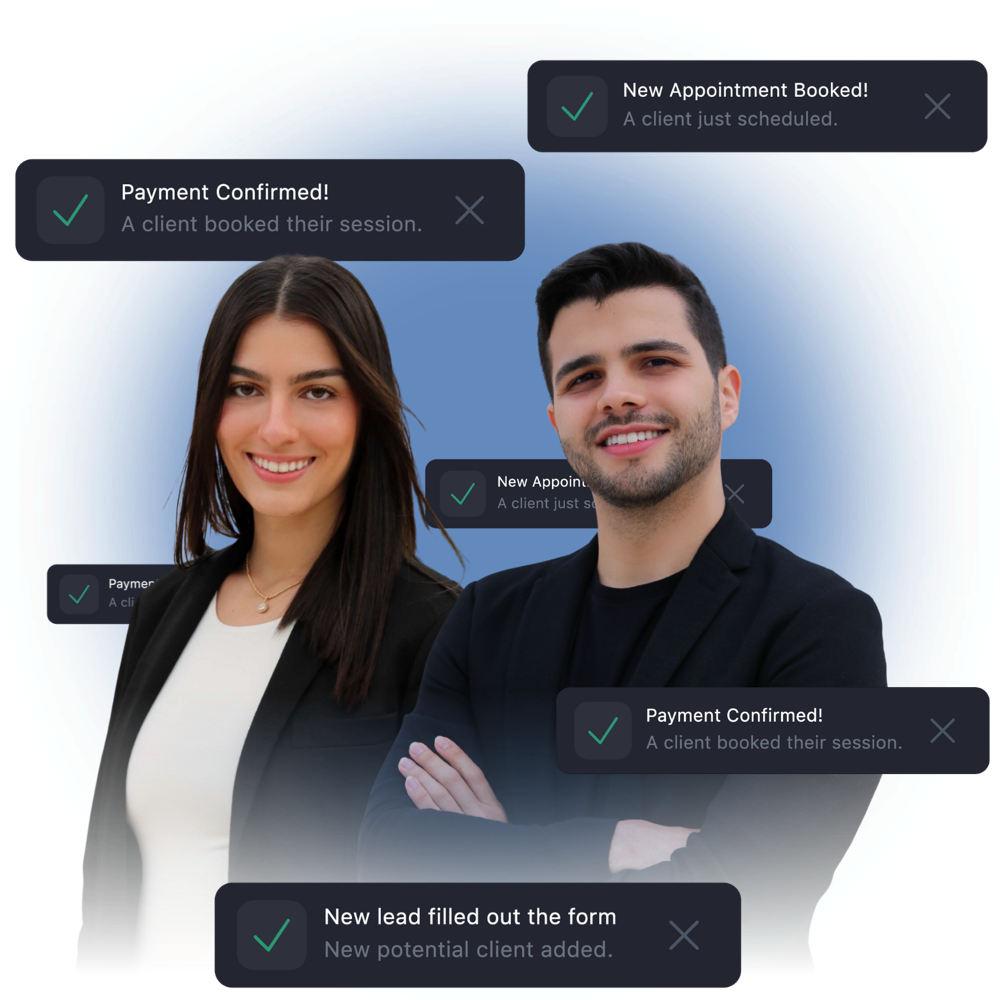
None of that touches a clinical decision. It just means nobody is ever left on hold and no patient gives up because they called at the wrong time. That is why an AI receptionist lands so differently than the dystopian version the headlines imagine. It is not pretending to be a doctor. It is making sure a patient can actually reach yours.
Where AI is not welcome: the personal parts
The flip side of the survey is just as clear, and ignoring it is how practices lose trust fast. Patients do not want AI triaging their symptoms, suggesting a diagnosis, or standing between them and a clinician. The moment a tool feels like it is making a medical call, the 60 percent kicks in. The rule of thumb is simple: if a task requires judgment about a person's body or their coverage, a human owns it and the patient can see that a human owns it. If a task is about access, scheduling, or information, AI can carry it.
There is a transparency piece here too. You do not need to hide that a capable assistant is answering the phone, and trying to hide it usually backfires. Patients care far less about talking to AI for a booking than they care about being misled or stuck. Say plainly that scheduling and questions are handled instantly and that their care is always in human hands, and you have answered the exact fear the survey measured.
The other story this week: patients are bringing AI to you
While one survey measured what patients will tolerate, a product launch showed where this is all heading. In early November 2026, athenahealth announced a tool that lets patients connect their own health records to Anthropic's Claude and ask questions about their health in plain language. The patient signs in with their own credentials, controls the access, and the data is walled off from AI training. Modern Healthcare and others covered it as a sign of where patient behavior is going.
Read it alongside the Pew numbers and the message is consistent. Patients do not want AI deciding their care, but they absolutely will use AI to understand it, research it, and figure out who to see. They are already asking AI tools where to go and what questions to bring. That means the information published about your practice, your reviews, your website, your Google profile, is now being read by machines on the patient's behalf, not just by the patient. If your details are thin, wrong, or missing, the AI fills the gap with somebody else. We dug into that shift in how patients are asking AI before they ever call your practice.
How to adopt AI without tripping the alarm
Put the two stories together and the playbook for a practice is not complicated:
- Automate access, never judgment. Phones, booking, reminders, and routine questions are fair game. Diagnosis, triage, and coverage calls stay human.
- Be upfront. Tell patients an assistant handles scheduling and that their care stays with your team. Transparency is what turns AI from a threat into a convenience.
- Feed the AI patients already use. Keep your website, hours, services, and reviews accurate and rich, because that is what the Claude and search style tools read when a patient asks about you.
- Close the loop fast. The point of AI on the front end is that no patient waits and no lead goes cold. Pair instant answering with quick human follow up on anything real.
Do that and you are not fighting the 60 percent, you are serving the other side of the same person: the one who is relieved to finally reach your office at nine at night and get booked in thirty seconds.
How EtherealMinds would set this up
We work only with US healthcare practices, so we build AI exactly along the line patients drew in this survey. An AI receptionist answers every call and books appointments around the clock, so you stop losing patients to voicemail and after hours silence. Automated follow up makes sure a new lead hears back in minutes, not the next morning. And your whole patient acquisition system, from your website to your Google presence, is built so the AI tools patients now lean on can actually find you and recommend you. Your clinicians stay fully in charge of care. The AI just clears the traffic jam in front of them.
If you have been holding off on AI because you read that patients hate it, you were half right. They hate it in the exam room and in the claims department. They want it on the phone and in the booking flow. Build it where it is wanted and you look modern and responsive instead of cold.
Our honest take
The scary headline and the real finding point in opposite directions, and the real finding is good news. Patients are not telling you to avoid AI. They are telling you precisely where to put it. Keep humans on the decisions that are personal and let AI erase the friction that has nothing to do with care. A practice that gets this line right will feel easier to reach and more trustworthy at the same time, which is a rare combination and exactly what the next few years of healthcare will reward.
Want AI working for your practice without scaring patients off?
Book a free strategy call and we will map which tasks at your practice are safe to automate, which must stay human, and how to set up an AI receptionist and follow up that patients actually appreciate. Healthcare only, US practices, no jargon and no pressure.
Book a free strategy call →