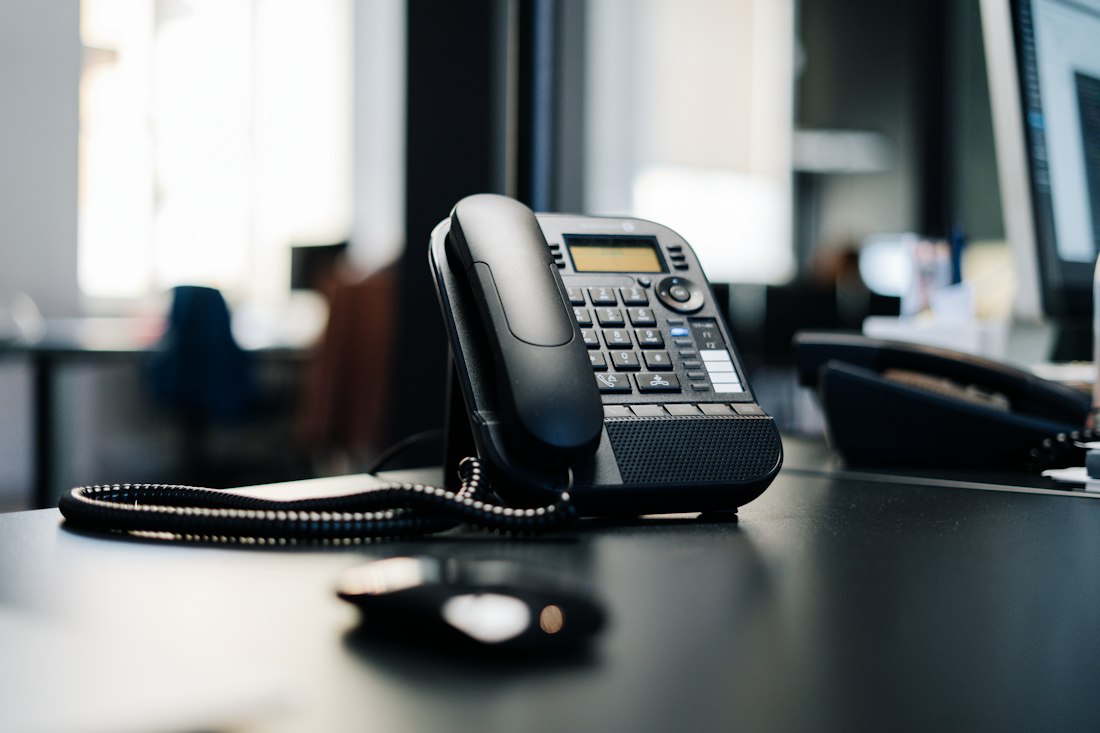
A dermatology office called us in July, a little embarrassed. They had just pulled their phone logs for the first time in years. Over a normal month, roughly one in four calls never reached a human. Lunch hours, the Monday morning rush, every evening after 5, and all weekend. Their answering service was catching the after hours calls, sure, but all it did was take a name and number. By the time the front desk called those people back the next morning, a big chunk had already booked with someone else.
That is the real question behind "answering service or AI receptionist." It is not about the technology. It is about what happens in the ninety seconds after a patient decides to call you, and whether they leave that call with an appointment or just a promise that someone will ring them back. Let us compare the two honestly.
First, why this even matters
The phone is still where most patients book. Even though a majority say they would prefer to book online, industry scheduling data shows the large majority of medical appointments are still made by voice. So the phone is not a side channel. It is the front door, and a lot of practices leave it propped half shut.
The numbers on missed calls are rough reading. Analyses of millions of patient calls put the share that go unanswered at a real world average around 20 to 25 percent, and higher for small practices. When a patient hits voicemail, most do not leave one. A frequently cited figure is that around 6 in 10 callers who reach voicemail hang up, and a large share simply dial the next provider on the list. After hours, when voicemail is often the only option, a 2025 Tebra survey found the miss rate effectively hits 100 percent.
And the timing is brutal, because people call when your office is closed. Scheduling data suggests roughly 40 percent of booking activity happens outside normal business hours, in the evenings and on weekends, exactly when neither your front desk nor a voicemail is going to turn that person into a patient. We put real dollar figures on this in our breakdown of what a single missed call actually costs a practice, and it is more than most owners guess.
What an answering service actually does
A medical answering service is a team of remote human operators. Your calls roll over to them when your lines are busy or your office is closed. A real person picks up, uses your practice name, screens for an emergency, and takes a message. Good ones sound warm and professional, and for triage style calls, a human voice at 2am is genuinely reassuring.
Here is the catch most owners discover later. For the everyday new patient call, the service usually cannot finish the job. It does not see your schedule, so it cannot book the appointment. It takes the message and your staff calls back the next business day. That return call window is where patients slip away. We went deep on this in our piece on whether a medical answering service is worth it, and the honest answer is: it depends entirely on whether taking a message is enough for your practice, or whether you needed the booking.
On cost, answering services bill by the answered minute, commonly around $1 to $2 a minute, and the HIPAA capable medical plans tend to land somewhere between $150 and $500 a month once you factor in volume and after hours rates. The more your phones ring, the bigger the bill, because you pay for every minute an operator spends on the line.
What an AI receptionist actually does
An AI receptionist is software with a natural sounding voice that answers the phone itself. It picks up on the first ring, every time, day or night, in more than one language if you need it. It understands normal speech, not "press one for billing," and it can carry a real conversation about the handful of things most calls are about: your hours, your location, whether you take a patient's insurance, and booking a visit.
The part that changes the math is booking. A healthcare AI receptionist connects to your scheduling system, finds an open slot, and books the appointment while the patient is still on the phone, then texts a confirmation. No callback, no phone tag, no lost lead. It does the simple, high volume work that eats your front desk alive, and for anything sensitive, urgent, or just plain human, it hands off to your team or your emergency line. If you want to hear what that sounds like, you can talk to our AI receptionist, Emma, right now.
Pricing usually works the opposite way from an answering service. Instead of paying per minute, you pay a flat monthly rate, and healthcare grade plans commonly run $200 to $800 a month for a single location no matter how many calls come in. We break the numbers down further in how much an AI receptionist costs for a medical practice.
The head to head
Strip away the sales language and the two options differ on five things that matter.
1. Can it book the appointment?
This is the whole ballgame. An AI receptionist books the visit during the call. A typical answering service takes a message for your staff to act on later. For a new patient who is ready right now, that difference is often the difference between a booked chair and a lost one. If your AI is set up well, it also plugs straight into your calendar, which we cover in how an AI receptionist connects to your scheduling system.
2. Does it answer every call, instantly?
An AI receptionist picks up on the first ring with no hold time, which matters because callers abandon fast when they are put on hold. An answering service is staffed by people, so at peak times your overflow can still sit in a queue. Both beat a voicemail by a mile.
3. What does it cost as you grow?
The per minute model of an answering service means a busy month is an expensive month. The flat model of an AI receptionist means your cost stays put whether you get 200 calls or 2,000. For a growing practice, that predictability adds up quickly.
4. The human touch.
This is where an answering service still has a real edge. For a frightened patient calling after a procedure, or a delicate triage call, a trained human voice carries warmth and judgment that software should not try to fake. The best AI receptionists know this and route those calls to a person instead of forcing their way through.
5. Consistency and records.
An AI receptionist answers the exact same way every time, logs every call, and never has an off day or a sick week. Human operators vary, and quality can drift. For routine calls, that reliability is a quiet advantage. For judgment calls, you still want a person.
A quick word on HIPAA, for both
Anything that answers patient calls is going to hear protected health information, so this part is not optional for either option. Whichever you choose, the provider must sign a business associate agreement, encrypt the data, and control who can see it. Plenty of cheap general answering services and consumer grade AI tools will not sign a BAA, which makes them a legal nonstarter for a medical practice. Get the BAA in writing before you connect anything to your line. If a vendor dodges that question, that is your answer.
So which should your practice use?
Here is our honest take, and we build these systems for a living, so take it with that in mind.
For most US practices today, an AI receptionist is the stronger default, for one simple reason: it finishes the job. It answers every call around the clock, it books the appointment while the patient is motivated, and it does not charge you more for a busy week. That directly attacks the thing bleeding money out of most front desks, which is the booked ready patient who hits a voicemail at 6:15pm and calls your competitor instead.
An answering service still earns its place when live human triage is the real need, for example a practice with a lot of sensitive after hours clinical calls where a trained person must make the first judgment. Many practices land on a blend: the AI handles the routine, high volume calls and the booking, and anything clinical or emotional gets routed to a human line. You are not really choosing a vendor. You are deciding what should happen to a patient in the ninety seconds after they call you.
One thing neither tool fixes on its own: if your website is slow, your hours are wrong on Google, or there is no easy way to book, the phone keeps ringing off the hook with questions that should never have become calls. The receptionist, human or AI, is one piece. It works best sitting inside a real patient acquisition system where the website, the booking flow, and the follow up all point the same direction. And when a call does slip through anyway, having a plan to text that missed caller back automatically catches the ones who still get away.
The bottom line
An answering service takes a message. An AI receptionist books the visit. Both beat a voicemail, and both need a signed BAA to be legal in healthcare. If your biggest leak is after hours and overflow calls turning into missed appointments, the AI receptionist is almost always the better buy in 2026, with a human fallback for the calls that truly need one. The worst option, the one too many practices are still running, is the one where the phone just rings out and the patient quietly books somewhere else.
Want to hear what your patients would hear?
Book a free strategy call and we will look at your phone setup the way a new patient does: the lunch gap, the after hours hole, the callback window where people slip away. Then we will show you exactly what an AI receptionist would catch, with a human fallback where it counts. No pressure, no jargon.
Book a free strategy call →