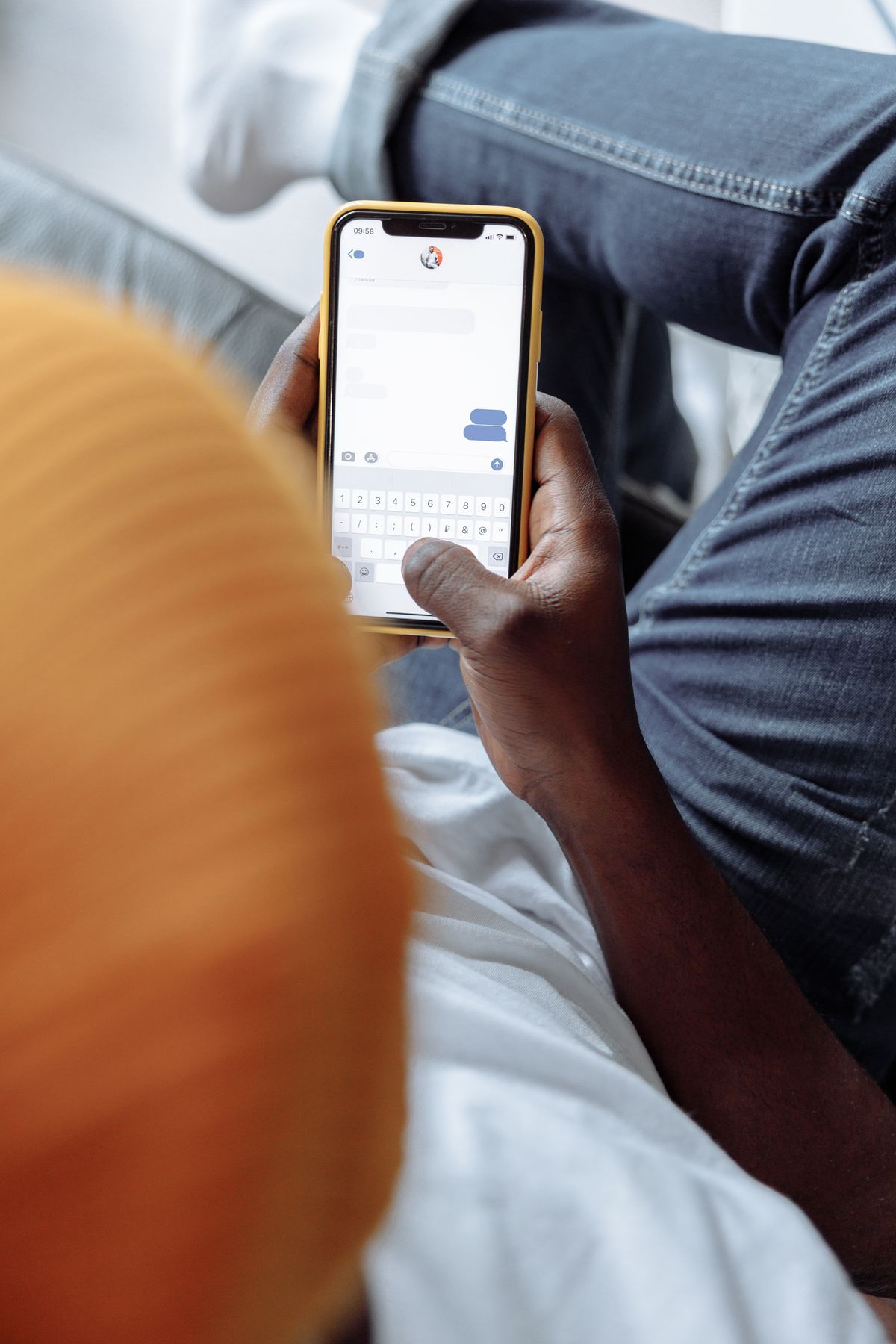
Think about the last time your own phone rang from a number you did not recognize. You probably let it go to voicemail, then never listened to it. Now think about the last text you got. You almost certainly glanced at it within a minute, even if you were busy. Your patients are exactly the same, and that simple fact is the whole answer to a question we hear every week: should we be calling people or texting them?
Here is the short version. For the day to day flow of running a practice, patients want a text, and they want it badly. But for the one moment that matters most, the first real contact with a new patient, a phone call still does something a text cannot. The mistake is not picking the wrong channel. The mistake is picking only one.
What patients actually say they want
The numbers are not close. In healthcare texting research compiled by Dialog Health, about 85 percent of patients say they would rather text than call or email, and roughly 76 percent want appointment reminders sent by text. Text has now passed both email and the patient portal as the communication method people prefer from their doctor.
And texting does not just get preferred, it gets read. Across industries, text messages are opened around 98 percent of the time, usually within minutes, while a marketing email is lucky to crack 20 percent. Roughly 9 in 10 texts are read within about three minutes of landing. Compare that to a voicemail, which a lot of people never open at all. If your goal is to get a message in front of a human quickly, nothing else is even in the same league.
There is a real behavior change underneath these numbers. People treat a phone call as an interruption they have to schedule around, but a text as something they can answer on their own time, in the ten quiet seconds they have between other things. A busy parent will not call you back from the pickup line. They will text you back at a red light. For everything logistical, text simply fits into a modern life in a way a call does not.
Where a text clearly wins
For a big chunk of what a front desk does all day, text is not just acceptable, it is better. It gets the job done faster and annoys people less. The obvious wins:
- Appointment reminders and confirmations. This is the killer use. Surveys find roughly 84 percent of patients are more likely to show up after a text reminder, and a quick reply of yes or no gives you early warning of a cancellation while there is still time to fill the slot. We dug into the details in text versus email appointment reminders, and text wins on almost every measure that matters.
- Logistics. Directions, parking, what to bring, running fifteen minutes behind, a link to intake forms. None of this needs a voice. A text does it in seconds and the patient keeps it on their screen for reference.
- Rescheduling and quick questions. A short back and forth by text beats a round of phone tag every time.
- Catching a missed call. When a call slips past your team, a fast text back keeps that patient in the conversation instead of watching them dial the next practice. More on that below, because it is one of the biggest leaks we see.
If your practice is still forcing every one of these little interactions through a phone line, you are creating friction your patients quietly resent, and you are burning your staff's time on calls that a text would have closed in one line.
Where a phone call still wins
Now the twist, and this is where a lot of the trendy advice gets it wrong. Text is fantastic for logistics, but there are moments where it is the wrong tool, and a few of them are the most valuable moments in your whole practice.
The first is the very first contact with a new patient. Someone who has finally worked up the nerve to deal with a health problem does not want a chatbot vibe. They want to hear a warm human who can answer their worry on the spot, quote a time, and make them feel like they picked the right place. A phone call carries reassurance that a text cannot fake, and it lets your team handle objections in real time. This is the exact conversation where a booking is won or lost, which is why we spend so much energy helping practices turn phone calls into booked patients.
The others are easy to name. Anything sensitive or emotional. Anything clinical that needs nuance, like results or a treatment plan. And older patients, many of whom simply prefer a voice and will feel dismissed by a cold text. Read the room. A text that says "your biopsy results are in" is not efficient, it is alarming. Some news needs a person.
The rule of thumb we give clients
Call for the human moment, text for the logistics around it. Pick up the phone for the first hello, the sensitive news, and the complicated conversation. Send a text for the reminder, the form, the directions, and the quick yes or no. If you match the channel to the moment instead of picking a side, patients feel looked after in both. If you use only one, half of them feel let down.
The real mistake is offering only one door
When owners frame this as call versus text, they are usually about to make the same error either way, which is to standardize on one channel and force everyone through it. That is the actual problem, not the choice between the two.
If your only front door is a phone line that runs 9 to 5, you lose the person who can only think about their health at 9pm on the couch. If you swing the other way and never really answer the phone, you lose the nervous new patient and the older patient who needed a voice. Patients do not all want the same thing, and the practices that grow stop guessing and just give people a choice: call us, text us, or book yourself online, whatever fits your life. We made that case in should you let patients text your practice, and the honest takeaway is that adding text does not replace your phone, it plugs the holes your phone leaves open.
The most expensive version of this mistake is the missed call that dies in silence. A quarter or more of calls to a busy practice go unanswered during peak hours, and most of those callers never leave a voicemail. But if that missed call triggers an automatic text within seconds, "Sorry we missed you, this is Dr. Lee's office, how can we help?", a big share of those patients text right back and book. We walk through the mechanics in should you text back missed calls, because it is one of the cheapest recoveries in the whole business. The patient wanted you. You just needed a second door.
Where EtherealMinds fits
We work only with healthcare practices in the United States, and this is one of the first things we set up, because it is usually a fast win with money attached. The goal is simple: a motivated patient can reach you however they show up, and nobody falls through the crack between call and text.
In practice that means our AI receptionist answers the calls your team cannot get to, on overflow and after hours, talks like a real person, and books straight into your calendar. When a call still slips past, it fires an instant text back so the conversation keeps going instead of ending in a voicemail nobody hears. Reminders and confirmations go out by text automatically, which is where patients want them. And all of it sits on a fast website built to convert with online booking, so the patient who would rather not talk to anyone at all can just pick a time at midnight. Before we change anything, we measure with call tracking, so you can see in black and white how many calls you are missing and when. It all feeds one patient acquisition system, so the marketing you already pay for turns into booked visits instead of missed connections.
So, call or text? Yes. Both. Call the human moments, text the logistics, and never make a patient chase you down through a channel they hate. Do that, and you stop losing people at the one step that happens before they ever meet your doctor.
Give patients every door, and close none of them
Book a free strategy call. We will help you set up call answering, missed call text back, text reminders, and online booking on one connected system, so a new patient can reach you by phone, by text, or at midnight from the couch. Clear, honest, no jargon.
Book a free strategy call →