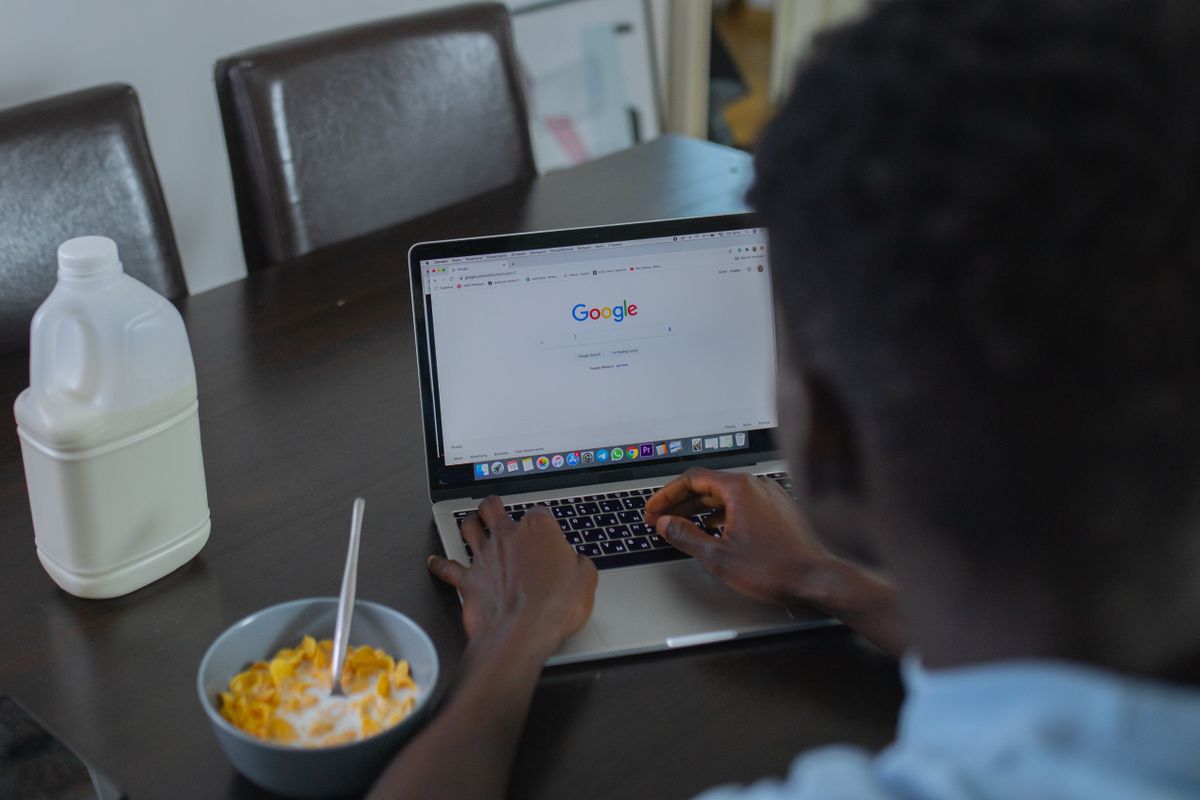
Let us start with the number that scares practice owners, because it is worth sitting with. When patients search Google for a new doctor, researchers asked which part of the page they trust most. The answer, from the rater8 2026 Patient Choice Report: the AI summary at the top got 37%, regular organic results 20%, the local map pack 13%, and the sponsored ads dead last at just 7%. In other words, patients trust your paid ad about five times less than the AI box and three times less than a plain organic listing.
If you are spending real money on Google Ads, that stings. But before you cancel everything, read the next sentence twice, because it is the whole point of this article: patients trusting ads the least does not mean ads do not work. It means you are asking the ad to do a job it was never built to do.
Trust and intent are two different things
Here is the trap. The rater8 number measures trust, which is what people believe. It does not measure intent, which is what people are about to do. Those are not the same, and conflating them is how good practices talk themselves out of profitable campaigns.
Think about who actually clicks a healthcare ad. It is almost never the person idly browsing. It is the person typing "urgent care near me open now," or "Invisalign consult this week," or "dermatologist accepting new patients." That person has a problem and a calendar, and they want to solve it today. Google's own research on local searches has long shown that a huge share of people who search for something nearby act within a day. The ad puts you in front of them at the exact second they are ready, frequently above every organic result on the page. Skepticism about the ad label does not cancel out urgency. A patient can roll their eyes at the little "Sponsored" tag and still click it, because they need a doctor now and you are right there.
So the ad is not trying to win the trust contest. It is buying attention at the moment of highest intent. Trust gets earned a few seconds later, somewhere else on the page and on your website. The practices that win paid search understand that division of labor. The ones that fail expect the ad to do everything, then blame the channel when it does not.
What a patient actually does after they click
Watch the real sequence. A patient searches, sees your ad, and clicks. Now they are on your site, and the trust they did not give the ad, they start looking for here. Within a few seconds they are scanning for: does this page match what I searched, does it load, are there real reviews, do I see actual faces and an address, how do I book. If any of that is missing, they bounce straight back to Google and check the practice whose name they also saw in the organic results or the AI summary, the one that felt more trustworthy. Your ad just paid to warm up a patient who booked your competitor.
This is why so many owners see the symptom and misread the cause. The complaint we hear most is not "my ads get no clicks," it is "I get clicks but no patients." We wrote a whole breakdown of that exact problem in why your ad clicks are not turning into booked patients, and it is almost never the ad. It is what happens in the ten seconds after the click. A patient landing on a slow, generic, trust free page is the real leak, the same way a flood of visitors with nothing to show for it points at the site, not the traffic, a pattern we unpack in getting website traffic but no new patients.
Two patients, same ad, opposite outcomes
The one you lose: clicks your ad, lands on a slow homepage with a stock photo and no reviews in sight, cannot find how to book, hits back, sees your competitor's name in the organic list with 240 reviews, and books them instead. You paid for that click and handed over the patient.
The one you keep: clicks your ad, lands on a fast page about the exact service they searched, sees 15 recent five star reviews and a real photo of the team, taps book, picks a slot, and gets a text back in two minutes. The ad got them in the door. Everything after it earned the booking.
Ads buy the visit. Everything else earns the patient.
Once you accept that ads capture intent and other things build trust, your whole strategy gets clearer and cheaper. You stop trying to make the ad more persuasive and start making the stuff patients actually trust stronger. Three pieces do the heavy lifting:
- Reviews. This is the single biggest trust signal a patient checks after clicking. A steady stream of recent, specific reviews does more to convert an ad click than any headline you could write. The ad gets them looking, the reviews get them booking.
- Organic and AI presence. Remember that the organic result and the AI summary scored far higher on trust than the ad. When a patient clicks your ad, then sees your practice name again in the regular results and in Google's AI box, that repetition is powerful. Being visible in both paid and organic makes you look established, not just advertised. That is a core reason we tell owners not to treat the AI overview and ads as either or.
- A website that converts. The fast, clear, proof filled page that catches the click and turns it into a booking. Without it, every dollar of ad spend is poured through a crack.
Notice what this means. Ads do not compete with SEO and reviews. They depend on them. A practice running ads with weak reviews and a clunky site is spending to send traffic to a page that undoes the ad's work. A practice running ads on top of strong reviews, solid organic rankings and a sharp website is compounding every click. Same budget, completely different return.
Then there is speed, the part most practices ignore
Ad clickers are the most impatient patients you will ever get, because they came to act today. So the clock matters more here than anywhere else. A patient who submits a form from your ad at 7pm and hears nothing until mid morning has almost always booked someone else by then. Classic lead response research found that reaching a web lead within five minutes makes them many times more likely to convert than waiting even thirty. For a cash pay or high value appointment, that gap is the difference between a booked patient and a wasted click. We go deeper on this in how fast you should respond to a new patient lead, but the short version is brutal: if you are paying for the click and then taking hours to respond, you are funding your competitors' growth.
So, are Google Ads worth it for a medical practice?
Yes, when you run them as part of a system instead of a lottery ticket. Ads are the fastest way to get in front of patients who are ready right now, which is exactly what you want when you are filling a new provider's schedule, launching a service, or you simply cannot wait the months that organic growth takes. What ads are not is a shortcut around trust. You cannot buy your way past the fact that patients verify every doctor before booking. You can only make sure that when they verify you, after clicking, they find reviews, a reputation and a website that close the deal.
Judge the channel on the right metric too. Cost per click tells you almost nothing. Cost per booked patient, measured against what a patient is actually worth to you, tells you everything. Plenty of owners declare ads a failure while looking at click costs, when the real problem was a landing page and a slow front desk losing the patients the ads delivered.
Where EtherealMinds fits
We are a healthcare only growth agency in the United States, and this is exactly the kind of problem we are built for, because we refuse to sell ads in a vacuum. When a practice comes to us frustrated that their patient acquisition is not paying off, the fix is almost never "spend more on ads." It is closing the gaps around them. We tune the campaigns so you pay for high intent searches, not window shoppers. We point those clicks at a website built to convert, fast on a phone, matched to what the patient searched, stacked with real proof. We build your organic and AI search presence so your name shows up in the parts of the page patients trust most, making the ad work harder instead of carrying the whole load. And we make sure every lead gets an instant response, including after hours, with our AI receptionist catching the calls and forms your front desk cannot, so the ad clicks you paid for never sit waiting. Ads get the patient to your door. The system is what makes them walk in.
Our honest take
The headline stat is a gift, not a warning. Patients trusting ads least is only bad news if you were counting on the ad to do everything. Read correctly, it tells you precisely where to spend your energy: ads to capture the patients who are ready, and reviews, organic search and a sharp website to earn the trust that actually closes them. Do only the first half and you will keep paying for clicks that book your competitors. Do both and Google Ads become one of the most reliable growth levers a practice has. The ad opens the door. You still have to be worth walking through it.
Stop paying for clicks that book someone else
Book a free strategy call. We will look at your current ads, your landing experience and your reviews together, show you exactly where the booked patients are leaking out, and build the system that turns paid clicks into scheduled appointments. Healthcare only, United States only, no jargon.
Book a free strategy call →