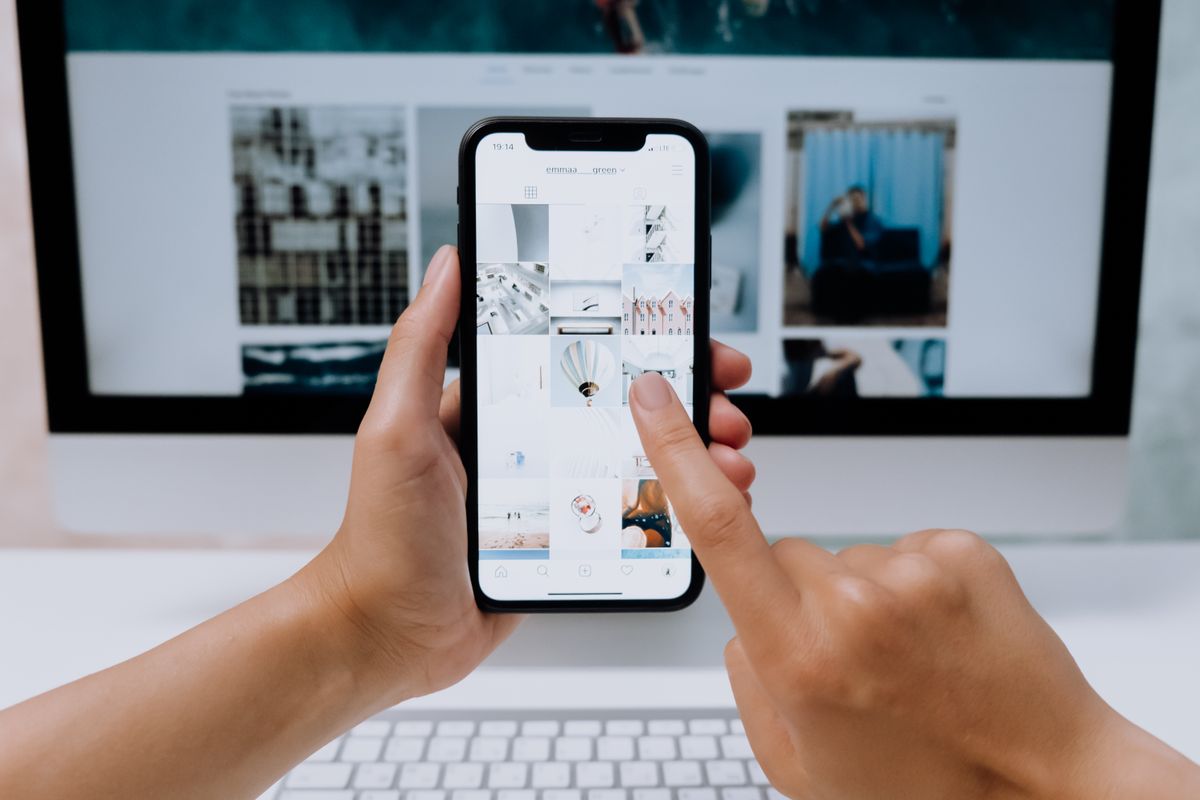
An office manager at a dermatology practice messaged us on Tuesday, half curious and half nervous. She had Googled her own clinic, the way she does every few weeks, and there it was: a little green WhatsApp button sitting on the Google listing, next to the usual call and directions. Nobody on her team had added it. Nobody had asked for it. It just showed up. Her first question was the right one. "Is a patient about to start texting us their symptoms through this?"
Good instinct. Let's walk through what actually changed, why Google did it, and the one line a healthcare practice cannot cross with it.
What Google actually changed
On October 7, 2026, Google started showing a WhatsApp button in the local panel in Google Search, in place of the old chat option or alongside the call and directions buttons. It was first spotted by Sachin Patel and reported by Search Engine Roundtable, and other people were able to reproduce it, which usually means a feature is rolling out widely rather than being a one off test.
This did not come from nowhere. A couple of years back, Google began asking businesses to add a WhatsApp number to their Business Profile, and more recently it started pulling in numbers on its own for some listings. So if a button appeared on your profile and you never touched it, that is why. It is also worth remembering Google shut down its own Business Profile chat feature on July 31, 2024. That left a hole where patients used to be able to message a practice from search, and the WhatsApp button is Google filling it with a tool more than two billion people already have on their phone.
Why Google is pushing a message button at all
Strip away the branding and the reason is simple. People would rather send a message than make a phone call, and the numbers are not close. A text gets read about 98 percent of the time, usually within a few minutes. A phone call to a busy front desk ends in a hold, a voicemail, or a hang up, and a patient will not wait on hold for long before they move on to the next practice. Google knows this, so it keeps adding ways for people to act straight from the search result instead of picking up the phone.
That is the part worth hearing, even if you never touch WhatsApp. Patients are voting with their thumbs. More of them want to message than call, and the practices that make messaging easy tend to catch the ones who would otherwise slip away. We see it every week, and it lines up with what patients say directly: many of them would rather text your practice than call it.
The catch nobody puts in the headline
Here is where a medical practice has to be careful, because most of the excited write ups about this button are aimed at pizza shops and plumbers, not clinics bound by HIPAA.
WhatsApp is not HIPAA compliant for patient information. Yes, it has end to end encryption, and that sounds reassuring. But encryption alone does not make a tool compliant. The piece that matters is a business associate agreement, the signed contract that makes a vendor legally responsible for protecting patient data. Meta, which owns WhatsApp, does not sign a business associate agreement for any WhatsApp product, including WhatsApp Business and the WhatsApp Business API. Without that agreement, using WhatsApp to send or receive protected health information is a HIPAA violation, even for something that feels harmless like confirming an appointment time or answering "did my results come back."
The line in one sentence
The green button itself is fine. The moment a patient's name, condition, or appointment detail travels through WhatsApp, your practice is handling protected health information on a channel that is not allowed to hold it.
This is the same trap practices fall into with regular text messages and even contact forms. The tool feels casual, so the compliance brain switches off. If you have never pressure tested how your clinic takes in messages, it is worth reading whether your own contact form is HIPAA compliant before you add one more open channel to the pile.
So who is this button actually good for?
It is not all risk. There is a real group of patients this serves well: the millions of people in the US who already run their whole life on WhatsApp. That is especially true across Spanish speaking and immigrant communities, where WhatsApp is often the default way families talk, more than regular texting. For those patients, a WhatsApp button can be a warm, familiar front door to ask a simple, non clinical question. Where do I park. Are you taking new patients. What are your Saturday hours.
If that describes a big slice of the people you serve, the button can genuinely help you connect, as long as your team treats it like a public hallway and never a private exam room. It pairs naturally with the broader work of reaching Spanish speaking patients where they already are, instead of forcing them onto a channel that feels foreign to them.
What to do about it, this week
You do not have to panic and you do not have to ignore it. A few practical moves cover you.
Decide on purpose, do not drift
Check your Google Business Profile and see whether a WhatsApp number is attached. If one appeared and you do not want it, remove it so the button goes away. If you do want it, make that a decision, not an accident, and tell your front desk exactly how to use it.
Write a one line rule for your team
Keep it simple enough to tape to a monitor: general questions are fine on WhatsApp, anything about a specific patient's health moves to a compliant channel or a phone call. No results, no diagnoses, no "let me pull up your chart" over WhatsApp. Ever.
Give patients a safe place to actually book
The reason patients reach for a message button is speed. Meet that need somewhere you control the data: a compliant chat or a booking flow on your own website, backed by a tool that will sign a business associate agreement. When the message turns into a real appointment on a safe channel, you get the speed without the exposure. This is a big part of why your website has to be built to convert and protect at the same time, not just look nice.
Make sure your profile is complete so you even show up
The buttons are the easy part. The harder truth is that Google's AI driven local results are increasingly favoring complete, active listings and filtering out thin ones. If your hours, services, and photos are half filled, a new button will not save you, because you may not appear for "dermatologist near me" in the first place. Getting found is its own job, which is what our local SEO work for healthcare is built around.
Where EtherealMinds fits, honestly
You can handle the button yourself in ten minutes, and we would rather you understood it than paid anyone to flip a switch. The genuinely useful question is the one underneath it: patients want to message you, so what do you give them that is both fast and safe?
That is the part we build. Instead of leaving a new patient's first message to bounce around a tool that cannot legally hold their information, we set up the full path: a compliant way to capture the message, a site that turns it into a booking, and something that answers every inquiry in seconds so nobody gives up waiting. When our AI receptionist picks up the call or the chat the instant it comes in, day or night, the patient who wanted to message gets an answer right away, on a channel that is actually built for healthcare. We wrap all of it into a complete patient acquisition system so the pieces talk to each other instead of leaking patients between the cracks.
Our honest take
Google adding a WhatsApp button is a small change with a loud message. The button is not the story. The story is that patients keep telling us, through every tool Google ships, that they want to reach their doctor the way they reach everyone else in their life: a quick message, an instant reply. Practices that hear that and answer it, on a channel that respects both the patient's time and their privacy, will keep winning the people who are deciding right now, on their phone, which office to call. The ones who shrug and say "just call us during business hours" will keep wondering where those patients went. Meet them where their thumbs already are. Just do it without handing their health to a tool that was never allowed to hold it.
Want patients to reach you fast, without the HIPAA headache?
Book a free strategy call. We will look at how patients are trying to message and call your practice today, show you where you are losing them, and set up a path that is both instant and compliant. No pressure, no package pushed on you, just a clear plan for turning messages into booked patients.
Book a free strategy call →