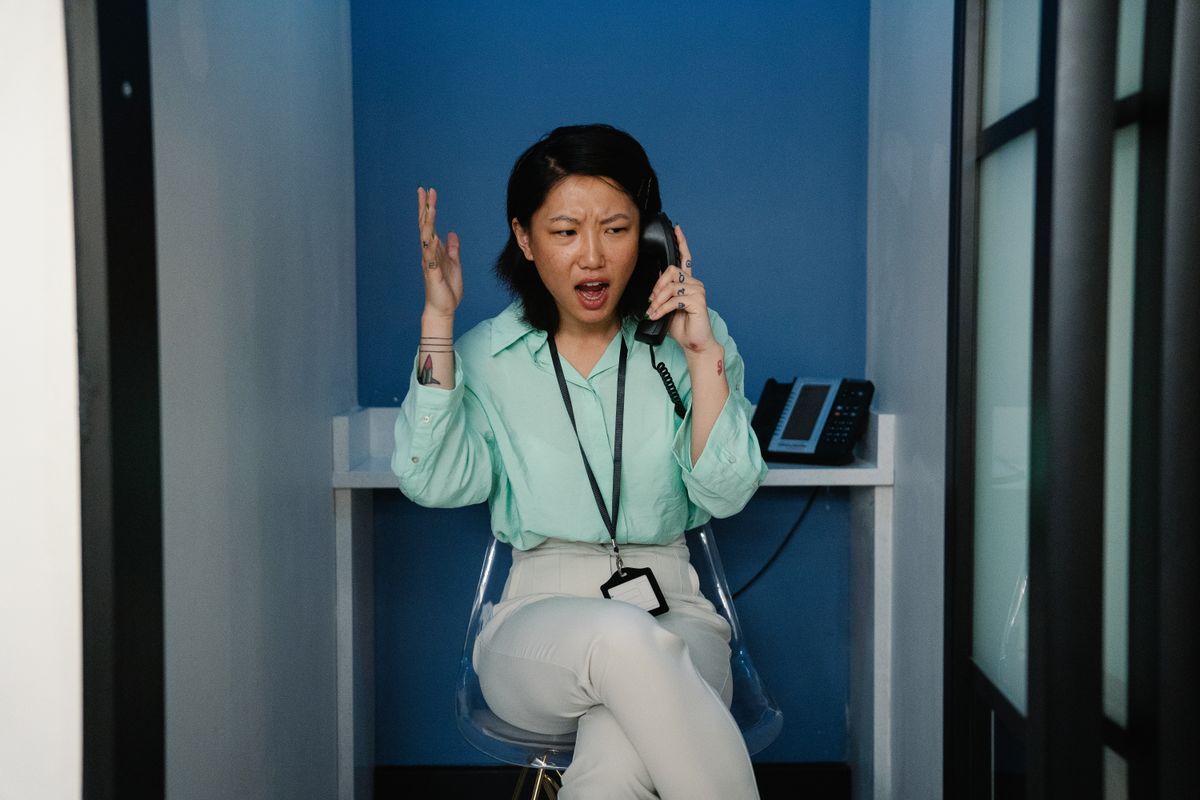
Try this today. Call your own practice from your cell phone, ask to be put on hold, and start a timer. Then just sit there. Feel how long a minute of hold music actually is when you have somewhere to be. Around the ninety second mark, you will get the itch to hang up. That itch is the exact moment your future patients are deciding to call someone else.
Every practice owner knows patients hate being on hold. Almost none know how little patience patients really have, or what it costs them when that patience runs out. So let us put real numbers on it: how long will a patient wait on hold before hanging up, what happens after they hang up, and what a few seconds of hold music is actually worth to your bottom line.
The real answer: about 90 seconds
Here is the honest number. When researchers looked at large volumes of real medical calls, they found that roughly 60 percent of patients abandon the call after waiting about 90 seconds on hold. Other call center data lines up: at least 60 percent of people hang up once a hold passes a single minute. Patience in 2026 is measured in seconds, not minutes.
It gets steeper from there. An analysis summarized by Dialog Health found that about 34 percent of patients hang up after two minutes, and by five minutes roughly 67 percent are gone. So the drop off is not gentle. You lose a big chunk in the first ninety seconds, another chunk by two minutes, and by the time your favorite hold song loops back around, two out of three callers have already given up.
The patience timeline
0 to 60 seconds: most patients will tolerate this, barely. 90 seconds: about 60 percent have abandoned the call. 2 minutes: a third are gone and the rest are angry. 5 minutes: roughly two out of three have hung up. Design your phones for the one to two minute window, because that is all you get.
Now the part that hurts: your actual hold time
So patients tolerate maybe one to two minutes. What does the average practice actually make them sit through? Often much longer. Industry leaders point to a target of roughly 30 to 50 seconds before a caller reaches a live person. Yet some healthcare data shows facilities averaging around 4.4 minutes of hold time, according to reporting compiled by NotifyMD.
Put those two facts side by side and you have the whole tragedy in one sentence: patients will wait about ninety seconds, and many practices make them wait four minutes. The call is lost before anyone ever picks up. It is like setting a table for guests who left the moment the food was late.
The hang up is not a pause. It is goodbye.
Owners comfort themselves with a hopeful story: sure, they hung up, but they will just leave a voicemail or try again later. The data flatly demolishes that story.
- They do not leave a message. When a call rolls to voicemail, roughly 60 to 70 percent of callers hang up without saying a word. Among patients under 45, that climbs above 80 percent. A newer breakdown found about 62 percent hang up on voicemail without leaving anything.
- They do not call back. About 85 percent of patients will not call back after a first attempt that does not connect, according to healthcare phone research. One shot is all you get.
- They call your competitor. Someone with a toothache, a rash, or a sick kid is not going to sit on hold for four minutes when the practice down the street answers on the second ring. The next name on Google gets the appointment.
So a long hold is not a delay in booking. It is usually a lost patient, and often a gift to a competitor. And remember who those callers are. They are the people your marketing already reached. The ad worked. The website worked. The Google ranking worked. They picked up the phone with money in hand. Then a hold queue sent them away.
What that hold music actually costs
Let us make it concrete. A commonly cited estimate values a single missed new patient call at around 200 dollars or more in immediate revenue, and far more across the life of that relationship. If you have never worked out how much a new patient is worth over the years they stay with you, that first hello is worth a lot more than one visit.
Now scale it. A practice that loses even a handful of new callers a day to hold music and voicemail is bleeding well into five or six figures a year. One widely shared piece called it the 150,000 dollar silence, and the math is not hard to hit. The cruelest part: none of it shows up on a report. You cannot see revenue from a patient who hung up before they ever became one.
Where the long holds happen
Hold times are not evenly spread. They spike at a few predictable moments, and knowing them is half the fix.
The lunch hour. This is the worst offender. Working patients finally get a free minute at noon to call, and that is exactly when half your front desk is at lunch and one person is juggling three lines. Everyone waits. Most hang up.
After hours and weekends. Roughly 41 percent of patient calls come outside standard business hours. Someone decides at 8pm they need to be seen, calls, gets hold music or a recording, and books with whoever answers first the next morning.
The double ring. Two lines light up while a staffer is checking in a patient at the desk. The second caller sits in silence, watches the seconds tick, and gives up. That is your call abandonment rate climbing in real time. For context, most call center standards treat a healthy abandonment rate as under 5 percent, and healthcare benchmarks usually sit around 5 to 7 percent. Many practices are far above that and have never checked.
How to keep patients off hold in the first place
The good news: this is a systems problem, so it is fixable. Here is what actually shrinks hold time, roughly in order of impact.
Measure it. You cannot fix a number you never look at. Most practices have zero visibility into their hold times and abandonment rate. Simple call tracking shows you how long patients wait, when the spikes hit, and how many give up. Almost every owner who checks is stunned.
Cover the gaps. Once you see the spikes, staff for them. Treat the lunch hour as prime time, not a break. Have a real plan for the after hours window instead of a recording that ships patients straight to a competitor.
Take pressure off the phone. Every routine task you move off the line frees your team to answer the calls that need a human. Online booking lets patients grab a time without dialing at all. Letting patients text your office catches the ones who would rather not call. Fewer routine calls means shorter holds for everyone else.
Answer every call instantly. The real endgame is that no patient ever hears hold music or a full voicemail box. That is where an AI receptionist changes the math. It picks up every call on the first ring, day or night, weekends included, and can book the appointment, answer common questions, and pass along a message that actually reaches you. It never goes to lunch and never leaves a second caller waiting. You can even try our AI receptionist live and see how it sounds.
How EtherealMinds stops the leak
Here is the pattern we see constantly. A practice invests in marketing, the phone rings more, and the hold queue gets longer, so more of that new demand hangs up before booking. The owner concludes the marketing did not work. It worked fine. The phone was the leak.
That is why we treat the phone as part of the growth system, not an afterthought. When we run patient acquisition for a practice, we make sure the calls we generate actually get answered fast. That means a website with online booking so patients can lock in a time without waiting on hold, texting so they can reach you the way they prefer, and our AI receptionist answering every call in seconds so the lunch rush, the after hours calls, and the double ring stop costing you patients.
Speed matters on the front end too. The faster you pick up and book a new caller, the more likely they become a patient, which we broke down in how fast to respond to a new patient inquiry. Put it together and a practice that was losing a third of its callers to hold music can get nearly all of them booked, which for most offices is real money that was already ringing in and hanging up.
So, how long will patients wait on hold before hanging up? About ninety seconds, and most who hang up never call back. If your phones make patients wait longer than that, you do not have a patient shortage. You have a hold time problem, and it is one of the fastest, cheapest leaks a practice can plug.
Find out how many patients your hold music is costing you
Book a free strategy call. We will help you measure your real hold times and abandonment rate, show you exactly when and where callers give up, and lay out a simple plan to answer nearly every call in seconds, human and AI together. Clear numbers, no jargon, no pressure.
Book a free strategy call →