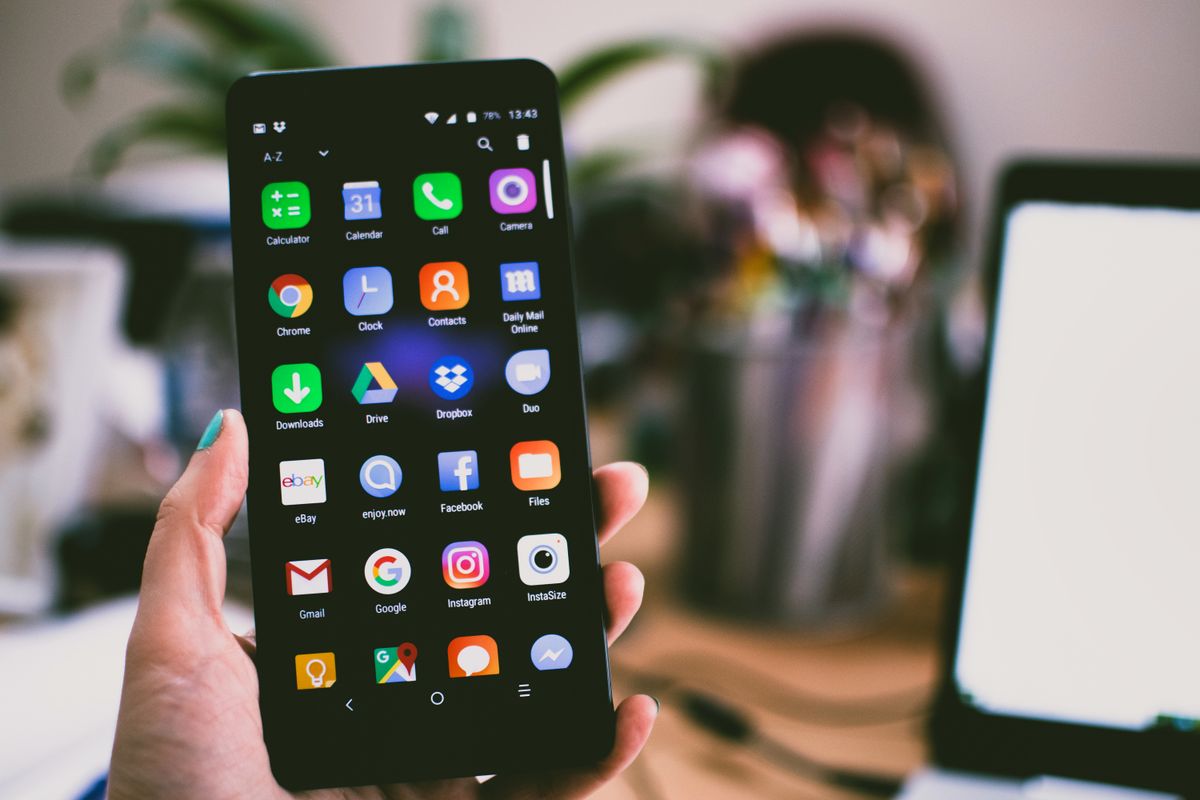
Picture the person you want as your next patient. They are not reading a brochure or asking a neighbor. They are on the couch with their phone, thumb already moving, typing something like "family doctor near me" or "urgent care open now." What happens in the next few seconds decides whether they ever hear your practice name. And the uncomfortable truth is that they are not going to look very hard.
We get asked a version of this all the time by practice owners: "We are on Google, so why is nobody calling?" Being on Google and being where patients look are two completely different things. Let us walk through what the real data says about how far people scroll, why it matters even more for healthcare, and what you can do about your position.
The short answer: not far at all
People decide fast and they decide near the top. The pattern shows up in study after study of Google click through rates. According to Backlinko's analysis of billions of search results, the first organic result earns roughly 27 percent of all clicks, and each spot below it drops off sharply. By the time you reach the bottom of the first page, individual results are picking up low single digit percentages. The gap between showing up first and showing up eighth is not small. It is most of your traffic.
Older and often cited research puts the top result even higher, around 39 percent of clicks in some data sets, with the top three results together capturing the majority of everything. The exact numbers move around depending on the study and the type of search, but the shape never changes: attention crashes as you go down the page.
Page two might as well not exist
Here is the number that stops most practice owners cold. In that same Backlinko study, only about 0.63 percent of searchers clicked on anything on the second page of Google. Not 6 percent. Zero point six three. There is an old joke in SEO that the best place to hide a dead body is page two of Google, because nobody ever goes there. It is a joke because it is true.
So if your practice ranks number 14 for "pediatrician in your town," you are not "on Google" in any way that helps you. You are invisible to the people searching. They found their answer, booked it, and closed the app long before they would have reached you. Ranking on page two feels like being in the game. In terms of new patients, it is the same as not showing up.
On a phone it is even more brutal
Most of your future patients are searching on a phone, and a phone screen shows only a sliver of the page at once. Before they scroll even a little, they often see a map with three business listings, maybe a sponsored result or two, and an AI generated summary. The classic list of blue links is pushed down below all of it.
That changes the math. On mobile, the very top of the page is prime real estate that most people never scroll past. If you are not in what shows up on that first thumb length of screen, you are relying on the small share of people patient enough to keep going. For a busy parent trying to book a sick visit, that patience does not exist.
For healthcare, the map pack is the real prize
Here is what makes this especially important for medical practices. Almost every search a future patient makes has local intent. They do not want a dentist. They want a dentist they can drive to. Google knows this, so for these searches it shows the local pack, also called the map pack: a map with three highlighted business listings, sitting right at the top before the regular results.
That map pack is the most valuable position on the entire page for a practice, because it sits above the organic links and it is exactly what someone searching "doctor near me" is looking for. Grabbing one of those three spots often matters more than ranking first in the blue links underneath. If you want to go deeper on that specific fight, our guide on how to rank higher on Google Maps breaks down each lever, and our piece on winning "doctor near me" searches covers the intent behind them.
How big is local search? Google has said for years that a large share of all searches carry local intent, and figures around 46 percent are widely cited across the industry. For healthcare specifically, that share is even higher, because sick people and worried parents are not browsing, they are looking for help nearby, right now. That is your entire audience, and it is deciding from the top three map results.
Now AI is crowding the top even more
The top of the results page is getting more crowded, not less. Google now shows AI Overviews, those AI written summaries, for a growing number of health related questions, and they push the traditional links further down the screen. On top of that, more patients are skipping Google entirely and asking tools like ChatGPT "who is a good dermatologist near me." We wrote about that shift in our guide to Google AI search for medical practices.
The takeaway is not to panic. It is that the top few positions have never mattered more, and the same work that ranks you in Google also makes you the practice the AI recommends. Strong profile, clear and helpful content, real reviews. Search and AI search are turning into one job, and the practices that show up well in one tend to show up well in the other.
What this means for your practice, plainly
Put the numbers together and the picture is stark. If a practice down the road ranks in the map pack and you sit at position seven, they are seeing the lion's share of new patient searches in your area and you are catching scraps. It has nothing to do with who is the better doctor. It is purely about who Google shows first, and who patients see before they stop looking.
The flip side is the opportunity. Every one of those top positions is earnable. None of it is luck. Here is what actually moves you up.
- A complete Google Business Profile. The right primary category, every relevant service filled in, real photos, and current hours. This is the price of admission to the map pack.
- A steady stream of real reviews. Both the count and the rating feed your local ranking, and they are the first thing a patient reads once they do see you.
- Consistent name, address, and phone everywhere. Mismatched listings drag your ranking down across the web without you ever seeing it.
- A fast website with real location and service pages. Google will not rank a profile it cannot back up with a solid site. Speed matters too, which we covered in how website speed affects patient bookings.
- Content that answers real patient questions. The articles and FAQ pages that get you into AI Overviews and earn the trust that turns a click into a booking.
How EtherealMinds gets practices to the top of the page
This is the whole point of our healthcare SEO work. We start by finding out exactly where you rank for the searches that bring new patients, not vanity terms, the ones people actually type when they need what you offer. Then we build the two things that move you up together: a Google Business Profile tuned to compete for the map pack, and a fast website built to rank and convert, with real pages for your services and your city so Google has every reason to put you first.
None of it is a trick, and none of it happens overnight. It is the boring, compounding work of becoming the obvious local answer, which is exactly what a real patient acquisition system is built to run for you month after month. The reward is simple: when someone in your area reaches for their phone, you are the practice they see before they stop scrolling.
The honest bottom line
How far down Google do patients scroll before booking? Barely. The top result takes a huge share of clicks, the top three take most of the rest, and page two is a ghost town. On a phone, and with AI summaries and a map pack crowding the top, being visible in those first few spots is close to the whole game. If your practice is not there, the fix is not more hoping. It is earning your way to the top of the page the durable way, and then staying there.
Want to know where you actually rank?
Book a free strategy call. We will show you exactly where your practice lands for the searches new patients are making, where your competitors sit, and the honest path to the top of the page, map pack, website, and reviews. No pressure, just a clear plan.
Book a free strategy call →