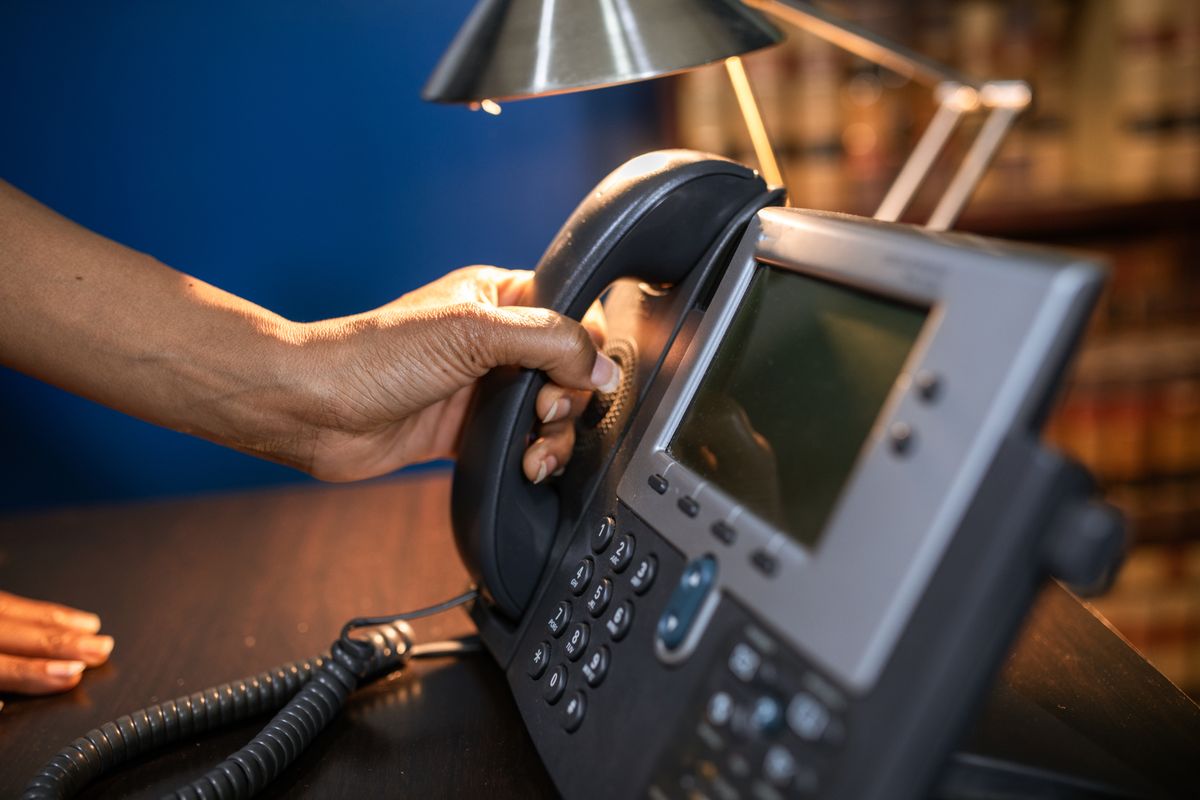
Everyone obsesses over the website, the ads, the Google reviews. Then a ready to book patient calls, the phone rings six times, and they hang up and dial the practice down the street. All that marketing, gone at the last step, over a few seconds of ringing. The phone is still the main way new patients reach a medical office, and it is where a surprising amount of growth disappears without anyone noticing.
So let us answer the question directly, then dig into why the ring count is not really the number you should be watching.
The short answer: most patients hang up within about a minute
Patients do not wait the way they used to. Research on medical practice phone lines consistently finds that a large chunk of callers give up within roughly 60 seconds of ringing or being on hold, which works out to about four to six rings before many of them are gone. People calling a doctor are often stressed, in pain, or squeezing the call into a lunch break, so patience runs even thinner than normal.
But here is the catch that makes the ring count a bad thing to fixate on: the real damage is not that one patient hung up. It is what they do next.
They do not call back. They call a competitor.
This is the part that should keep practice owners up at night. Phone audits across medical offices repeatedly land on the same ugly numbers: around 85 percent of people who cannot get through on the first try do not try again, and the majority who reach voicemail hang up without leaving a message. A big share of them simply call the next practice on their search results.
Think about how a patient finds you today. They search "dermatologist near me," get a short list, and start calling from the top. The first office that answers like a human and offers a time usually wins. You are not competing against a patient's patience. You are competing against the clinic that picked up on the second ring. That is why a missed call is almost never a booking you will recover later. It is revenue handed to whoever answered first. We put real dollar figures on this in our breakdown of what a missed call actually costs a medical practice, and the number surprises most owners.
How many calls are practices actually missing?
More than they realize, because nobody at the desk logs the calls that never got answered. Widely cited phone studies of medical offices have found that something close to 42 percent of incoming calls go unanswered, and smaller solo and group practices often miss 30 percent or more of their inbound calls during busy stretches. For a three provider primary care office taking 150 calls a day, missing even a quarter of them is around 35 to 45 calls a day slipping through, every single day.
Not all of those are new patients, of course. Plenty are refill questions and reschedules. But some of them are exactly the high value call you paid an ad to generate, and you will never see it in any report because a ring that goes nowhere leaves no trace.
The after hours problem nobody staffs for
Here is the piece most practices completely ignore. A huge share of patient calls happen when the office is closed. Industry data puts roughly 41 percent of calls to medical practices outside standard weekday 8 to 5 hours: early mornings, evenings, lunch breaks, and weekends, which is exactly when a working adult finally has a minute to deal with their health.
If your answer to those calls is a voicemail greeting, you are asking your most motivated patients, the ones taking action on their own time, to leave a message and hope. Most will not. They will book with a practice that answered. We dug into this gap specifically in our piece on whether you are losing patients after hours, because it is one of the biggest and most invisible leaks in the whole patient journey.
Run the 20 call test on your own practice
Over the next week, call your own main line 20 times at random hours, including a lunch break and after you close. Count how many ring out, hit voicemail, or leave you on a long hold. If more than a couple go unanswered, your phone is costing you patients right now, no matter how good your ads or website are. It takes 20 minutes and it is the cheapest audit you will ever run.
So what is a healthy answer speed?
Forget counting rings in isolation. The standard that matters is simple: a patient making a real attempt to reach you should almost never hit endless ringing, a long hold, or voicemail, no matter when they call. Call centers measure this as a service level, usually phrased as answering 80 percent of calls within 20 seconds, which is about three to four rings, with an abandonment rate in the single digits.
For a practice, the plain English version is this. Daytime: calls get picked up quickly by a real person, and when the desk is slammed, something catches the overflow instead of dumping people to hold. After hours: the call still gets answered or captured, with a clear way to book, not a dead end greeting. Separately, once someone is on hold, keep that short too, since patience there is just as thin. We covered that side in how long patients will wait on hold before hanging up.
The reason speed matters this much is the same reason it matters in every other industry: intent is perishable. Classic research summarized by the Harvard Business Review on sales leads found that responding within a few minutes rather than hours makes a buyer dramatically more likely to convert. A patient with their phone in hand is at the peak of that intent. Make them wait and the moment passes.
Why "just hire more front desk" rarely fixes it
The instinct is to throw another person at the phones. Sometimes that helps. But it has real limits. Your front desk is also checking patients in, handling the lobby, processing payments, and juggling the exact lunch and end of day rushes when call volume spikes and staff thins out. No reasonable headcount covers evenings and weekends, which is where a chunk of those lost calls live. And every call a human answers about your hours or whether you take a certain insurance is a call pulling them away from the patient standing at the window.
This is why the smartest practices stop thinking of the phone as a staffing problem and start thinking of it as a systems problem. The goal is not more people. It is making sure no real attempt to reach you ever hits a dead end.
Where EtherealMinds fits, honestly
If your office already answers nearly every call fast, days and nights, you do not need us for this, and we will tell you so. Where we help is when the phone is clearly leaking and hiring your way out is not realistic. We treat answering as one part of a complete patient acquisition and retention system, so the call that your ads and SEO worked so hard to generate actually turns into a booked visit instead of a voicemail nobody returns.
A big piece of that is an AI receptionist that answers on the very first ring, every time, including nights, weekends, and the lunch rush. It handles the routine questions, takes a message, and books or requests the appointment, so a patient who would have hung up becomes a patient on your schedule. It is not there to replace your team on the complex or sensitive calls. It is there to catch the ones that were going to vanish anyway. You can even try ours live to hear how it handles a real call. And because so much of this starts before the phone even rings, our local SEO work makes sure you are the practice that shows up first when a patient searches, so the calls you are catching are the right ones.
Our honest take
How many rings before a patient hangs up? Usually fewer than you would like, often within a minute, and the ones who hang up mostly do not call back. But the ring count is a distraction. The real question is whether a motivated patient can reach you quickly whenever they decide to act, including the nights and weekends your desk is dark. Most practices lose more new patients at the phone than anywhere else in their marketing, and it never shows up in a report because an unanswered ring leaves no record. Run the 20 call test on your own line this week. Whatever you find, that is the number your growth is stuck behind. Fix the phone and you often do not need to spend a dollar more on ads to grow.
Curious how many calls your practice is really missing?
Book a free strategy call. We will look at how your phones are handled across the day, nights, and weekends, show you where ready to book patients are slipping through, and walk you through what it would take to catch them. No pressure and no package pushed on you, just a clear read on where your growth is actually leaking.
Book a free strategy call →