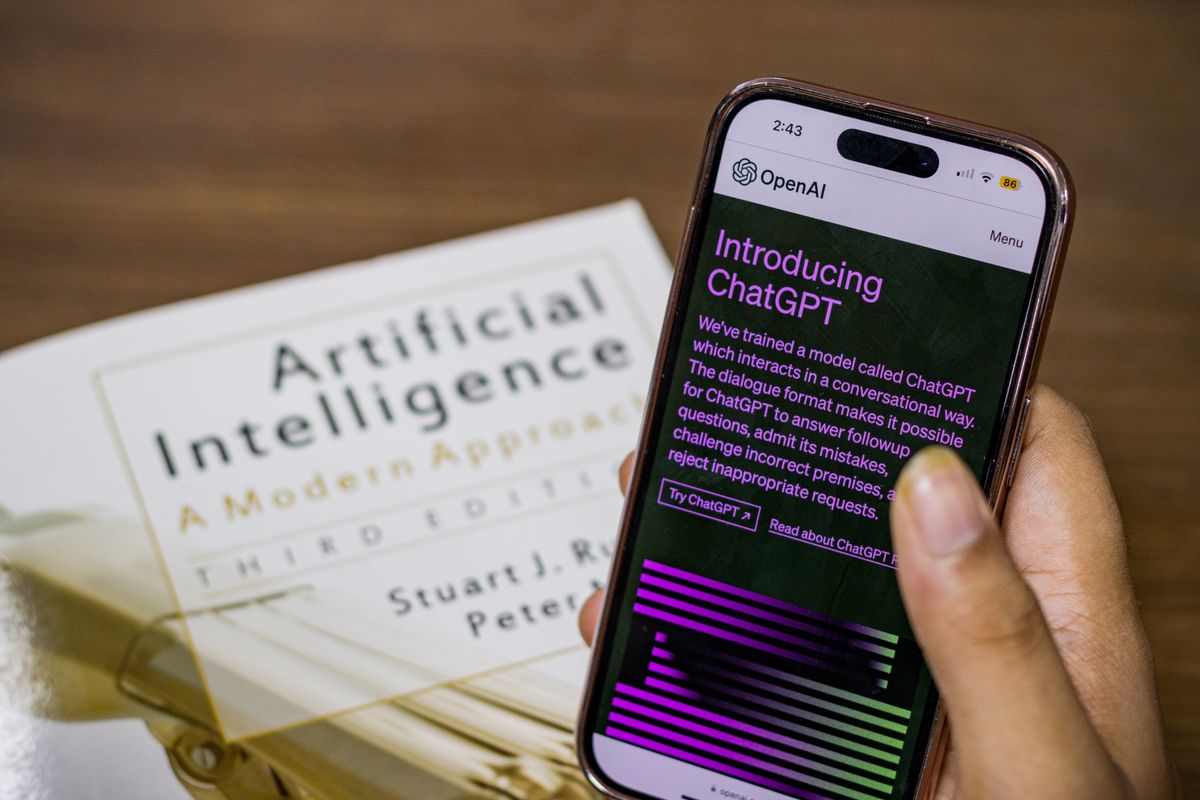
A pediatric clinic called us in July, a little rattled. A parent had told the front desk, matter of factly, that she picked them because "ChatGPT said you were the most reviewed kids' practice on this side of town." The owner had never thought about that as a marketing channel. He had never optimized for it, never even considered it. He got lucky. His question to us was simple and smart: how do I stop leaving that to luck?
That is the real shift happening right now. For twenty years the game was "show up on Google." The game is steadily becoming "be the practice the AI recommends," and the two are not identical. So let us look at what actually changed, then walk through exactly how a practice earns its spot in an AI answer. No hype, no magic button, because there is not one.
This is not a prediction, it already happened
The numbers moved faster than almost anyone expected. The third annual rater8 Patient Choice Report, published in June 2026 from a survey of nearly 1,000 adult patients, found something that would have sounded absurd two years ago. AI tools like ChatGPT, Claude, and Perplexity influenced 36 percent of people searching for a doctor, nudging past plain Google search at 34 percent and personal recommendations at 32 percent. A year earlier, that AI number was just 17 percent. It more than doubled.
It gets more pointed. When patients were asked which part of a Google results page they trust most, the AI Overview at the top won at 37 percent, far ahead of the classic blue links at 20 percent and the local map pack at 13 percent. And this is not a young person quirk. In that same report, 64 percent of the 45 to 60 age group said they used AI in their search, actually more than the under 30 crowd.
Zoom out and the scale is hard to ignore. OpenAI has said around 230 million people ask ChatGPT health and wellness questions every week, and a 2026 KFF survey found roughly a third of US adults have used an AI chatbot for health information. According to reporting from MediaPost, patient use of AI to find providers nearly doubled in nine months. Your future patients are already in there, asking. The only question is whether the answer includes you.
How AI actually decides who to name
Here is the good news buried in all this: you cannot buy your way into an AI recommendation, and neither can the practice down the street. There is no ad slot inside a ChatGPT answer. Instead, the AI reads the open web and summarizes what it finds about the doctors in your area. That means the signals it leans on are ones you already control or can build:
- Your reviews and star rating. How many, how recent, how detailed, and whether you reply. This is the single loudest signal, because it is exactly what a nervous human weighs too.
- Your Google Business Profile. Correct categories, hours, services, and address. This is one of the most structured, trusted sources an AI can pull from about a local business.
- Your website text. Plain, readable words that clearly say what you treat, where, and for whom. If it is legible to a machine, it can be quoted by one.
- Mentions elsewhere. Consistent listings and references on other reputable sites tell the AI you are real and established, not a ghost.
Notice what all of that has in common. It is the same foundation that wins local search. Getting picked by AI is not a separate project bolted onto your marketing. It is what happens when your healthcare SEO is genuinely solid and honest. We dug into whether this new layer, sometimes called GEO, is even real in our piece on SEO and AI search for healthcare in 2026, and the short version is that the work is real even if the buzzword is overcooked.
The five moves that get you recommended
So what do you actually do on Monday morning. Here is the order we run it in for the practices we work with.
1. Fix and feed your Google Business Profile
This is the foundation everything else sits on. Fill in every field, pick the most accurate primary category, list your real services as text, and make sure your name, address, and phone match your website to the letter. AI tools lean heavily on this structured data. A half filled profile is a half formed answer. Our full walkthrough on the Google Business Profile for a medical practice covers the fields most owners skip.
2. Get reviews, and keep them coming
Reviews are the currency of both trust and AI recommendations. The rater8 report found 75 percent of patients will not book a practice below 4.0 stars, and 66 percent said a provider's response to reviews shapes their trust, up 24 points in a year. AI reads all of that. The habit that works is boring and unbeatable: ask two happy patients a week, every week, and reply to every review, good or bad. In a year you are the practice that looks established from the first glance.
3. Write your website in plain, readable text
This one sinks a lot of practices. If your list of services, conditions, and prices lives inside a pretty graphic or a PDF, an AI usually cannot read a word of it, so you never come up for the things you actually do. Put your services in real text. Answer the real questions patients ask, in plain language, on the page. That is exactly what a website that converts and gets read by machines is built to do, and it is why we obsess over clean, fast, legible pages.
4. Answer questions the way people ask them
AI loves clear, factual, question and answer content, the kind a real human would actually type. An FAQ section that answers "do I need a referral," "do you take my insurance," "how much does this cost" in a sentence or two gives the AI something clean to quote. It is also just good service. This is the same reason we care whether patients can book your practice through ChatGPT at all.
5. Make it dead simple to act once AI sends them
Getting named is half the battle. If a patient arrives ready to book and hits a clunky form or a phone that rings out, you lose them anyway. Online booking that works on a phone, and someone or something that answers instantly, closes the loop. This is where our AI receptionist earns its keep: it answers, books, and follows up around the clock, so the patient AI handed you does not slip away after hours.
One honest warning about all this
Do not fully outsource your judgment to the robots, and do not let your patients either. The same rater8 report found a real trust paradox: 66 percent of people said they had run into incorrect information from AI, yet 60 percent admitted they trust an AI summary without double checking it. That cuts both ways for you. It means an AI can confidently get your hours, your services, or your specialty wrong, and a patient may act on it without ever visiting your site.
Which is the whole argument for controlling your own information rather than hoping the machine guesses right. The cleaner and more consistent your real data is across Google, your website, and reviews, the more accurate the AI's answer about you becomes. You are not gaming a system. You are making sure the truth about your practice is the easiest thing for it to find. We made a similar case about the risk of blind trust in do patients trust Google's AI Overviews.
How EtherealMinds gets practices into the answer
When we take on a practice, the AI recommendation problem and the Google ranking problem are the same to us, because they run on the same fuel: an accurate profile, a steady flow of real reviews, and a clear, fast, readable website. We clean up your Google Business Profile, build a simple system that keeps genuine reviews coming in, and make sure every service you offer is written in plain text a person and a machine can both read. Then we connect it to booking and an AI receptionist so the patients AI sends you actually turn into appointments.
None of it is a trick. It is the honest, unglamorous work of being genuinely findable and genuinely trustworthy, done consistently. That happens to be exactly what ChatGPT, Google's AI, and a real human all reward. The practices that win the next few years are not the loudest. They are the clearest.
So, how do you get your practice recommended by AI? You stop hoping to get lucky like that pediatric clinic, and you make the true story of your practice the easiest, cleanest, best reviewed answer in your town. Do that, and the machine has no reason to name anyone else.
Find out if AI is recommending you right now
Book a free strategy call. We will check what ChatGPT and Google's AI actually say about your practice today, spot where your profile, reviews, or website are holding you back, and lay out a simple plan to become the name AI hands your future patients. No jargon, no pressure.
Book a free strategy call →