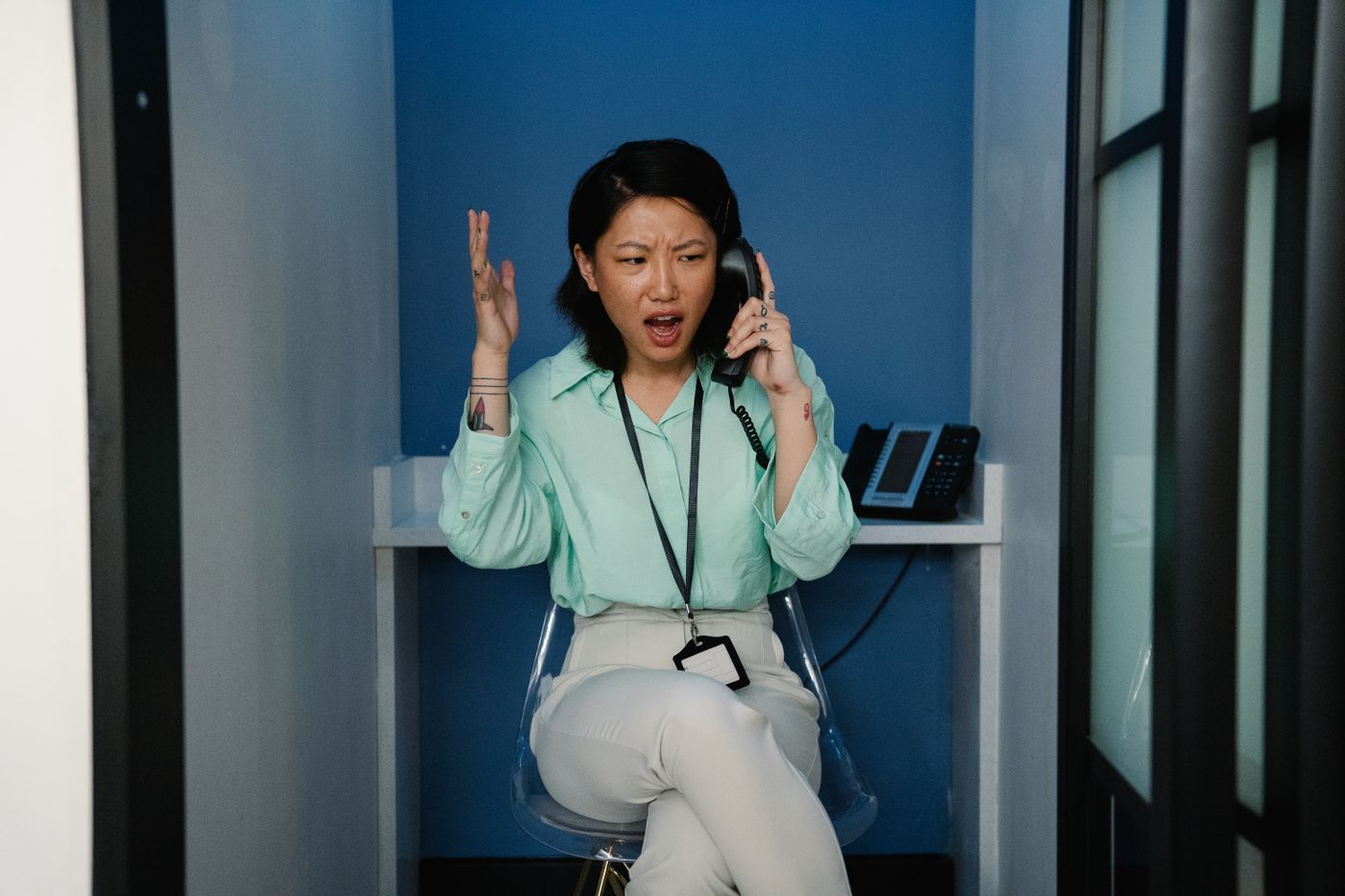
Do this before you read another line. Call your own office from a number your team will not recognize, and act like a brand new patient with a question. Count the seconds before a real person says hello. Count how many buttons you press. Notice the moment you feel the small urge to hang up. That moment is not rare. For a lot of your callers, it is where the story ends, and you never even hear the phone ring.
Phone trees, auto attendants, IVR, whatever your vendor calls them, all promise the same thing: order. Route the caller, protect the staff, save time. And in a big call center with real departments, they can. But most independent medical practices are not call centers. They are a front desk with two or three people, and a menu bolted on top usually does the opposite of what it promised. It does not organize your patients. It filters them out.
The number that should worry you
Here is the stat that reframes the whole question. In a consumer survey by Vonage, people reported abandoning roughly 27 percent of their calls because they hit an automated menu, and a majority said automated systems make for a poor experience. More than half said they have walked away from a business entirely over a bad IVR. That is not people who mildly disliked it. That is people who left.
Now layer on how little patience anyone has on the phone anymore. Across industries, most callers who land on hold are gone inside a minute, and a large share hang up in the first ninety seconds. A healthcare caller has even less tolerance, because they are rarely calling for fun. They are in pain, they are worried about a symptom, they are trying to squeeze the call into a lunch break. Every extra prompt is a reason to quit.
And this is only the callers who make it far enough to be annoyed. Plenty never reach a menu at all. An analysis of physician office access using federal AHRQ patient survey data found that a large share of patients do not reliably get a same day answer when they call, and in one widely cited hospital case shared through the MGMA, more than half of incoming calls were going straight to voicemail before the office fixed its phones. Add the hang ups on the menu to the calls that never get answered, and the leak is bigger than almost any owner guesses.
Why a new patient is the worst person to put on hold
Not all calls are equal. An established patient who loves you will sit through your menu, because they have a relationship and a reason to wait. A brand new patient has neither. They found you through a Google search, an ad, or a friend's offhand recommendation, and they very likely have two or three other practices open in other tabs. To them, your phone menu is not your phone menu. It is a test you can fail in the first ten seconds.
This is the cruel math of the phone tree. The caller it frustrates most is the one you spent the most to earn. You paid for the website, the ads, the reviews, the local SEO, all to get a stranger to pick up the phone, and then a recording asks them to press 4 and hold. Many will not. We wrote about the raw dollars of this in how much a missed call really costs a medical practice, and the answer usually stuns owners once they connect it to their acquisition spend.
There is a quieter cost too. A confusing phone experience is the patient's very first impression of how your office runs. If the phone feels chaotic, people assume the waiting room and the billing will be chaotic too. A smooth, human answer does the reverse. It tells a nervous first timer, before you have said a single word about care, that they are in good hands.
When an auto attendant actually earns its place
To be fair, phone trees are not evil, and there are practices where a short one helps. If you genuinely have separate departments, a busy multi provider group, several locations under one number, or an after hours flow that needs to route an emergency differently from a refill request, a lean menu can save everyone time. The problem is almost never that a menu exists. It is how the menu is built.
A phone tree that helps patients tends to follow a few rules:
- Short and shallow. A few options, one level deep. If a caller has to remember a number by the time the list ends, the list is too long. Nobody should ever navigate a menu inside a menu inside a menu.
- Most common reason first. For most practices that is scheduling or reaching a person. Put it at option one, not buried after billing, records, and the pharmacy line.
- A human is always one press away. Offer press zero for the front desk at any point, and mean it. The exit should never be hidden.
- No dead ends. Every path leads to a person, a callback, or a way to book, never to a voicemail that no one checks until Thursday.
- It exists to help the caller, not to shield the staff. This is the honest gut check. If the menu was designed to reduce how often patients reach a human, it is quietly costing you the patients you cannot afford to lose.
Notice that last one used a word we normally avoid, on purpose. A menu built to keep patients away from your team does its job a little too well.
The real problem is usually not the menu, it is the morning
Here is what we find when we actually look at a practice's call data. The phone tree gets blamed, but the deeper issue is capacity at the exact moments patients call. Healthcare calls are wildly bunched. A big chunk of the day's calls hit in the first and last hour the office is open, and Monday morning between roughly 8 and 10 is a tidal wave. Your two front desk people are checking in a waiting room full of patients and cannot answer four ringing lines at once. So callers get the menu, then hold, then a busy tone, then they are gone.
No menu design fixes that. The fix is coverage. And there are only a few honest ways to add coverage: hire more front desk help, which is expensive and hard to staff for a two hour spike, use a live answering service, or add an assistant that never gets overwhelmed because it can answer every line at once. That last option is where the technology has finally gotten good.
What we tell practices to do instead
You do not have to choose between a cold phone tree and a front desk drowning at 9am. The better path is a mix of small operational fixes and smart automation that actually answers.
1. Measure before you touch anything
Find out what share of your incoming calls never reach a human. Most modern phone systems report this, and if yours does not, that alone tells you something. A healthy call abandonment rate sits around five to seven percent. Many practices are stunned to learn theirs is two or three times that. You cannot fix a leak you have never measured. This is the same discipline we push in how the front desk quietly loses patients on the phone.
2. Trim the menu to the bone
If you keep a menu, cut it to two or three options with a person reachable at any time. Rewrite the greeting so the first thing a caller hears is warm and human, not a legal notice. If you are unsure what good sounds like, our medical office phone script and our take on what your voicemail greeting should say are good starting points.
3. Never let a missed call just die
When a call does slip through, text the caller back within a minute: a real message from your practice, not silence. A quick automatic text turns a hang up into a booked visit surprisingly often, which is why we are big believers in texting back every missed call. Speed is the whole game with a caller you have not met yet.
4. Put a real assistant on the line, not a maze
This is the piece that changes everything. Instead of a menu that sorts people, an AI receptionist picks up on the first ring, every line at once, and simply talks to the caller like a person. It answers the common questions, checks what the patient needs, books the appointment right into your calendar, and hands off anything genuinely human to your staff. No press 1, no hold music, no busy tone at 9am. You can call ours right now and hear what a first time patient would hear. That is a very different experience than pressing your way through a tree and hoping someone is free.
Where EtherealMinds fits in
We are a healthcare only growth agency, and we care about the phone because it is where so much of the marketing money quietly leaks out. You can run beautiful ads and rank at the top of Google, but if the call that follows lands in a phone tree at your busiest hour, you paid to send patients to your competitors. That is why our patient acquisition system does not stop at the click. It carries the patient all the way to a booked appointment, with an AI receptionist that answers every call, missed call text back so nobody slips away, and follow up that keeps the calendar full.
The practices that win the phone are not the ones with the fanciest menu. They are the ones a stranger can call, at the worst possible moment on a Monday, and still reach a helpful voice in seconds. Make that true for your office and you stop losing the patients you already paid to reach.
Stop losing patients to your phone menu
Book a free strategy call. We will listen to how your practice actually answers the phone, show you where callers are dropping off, and set up an AI receptionist and missed call follow up so every new patient reaches a real answer, all inside one patient acquisition system built for healthcare.
Book a free strategy call →