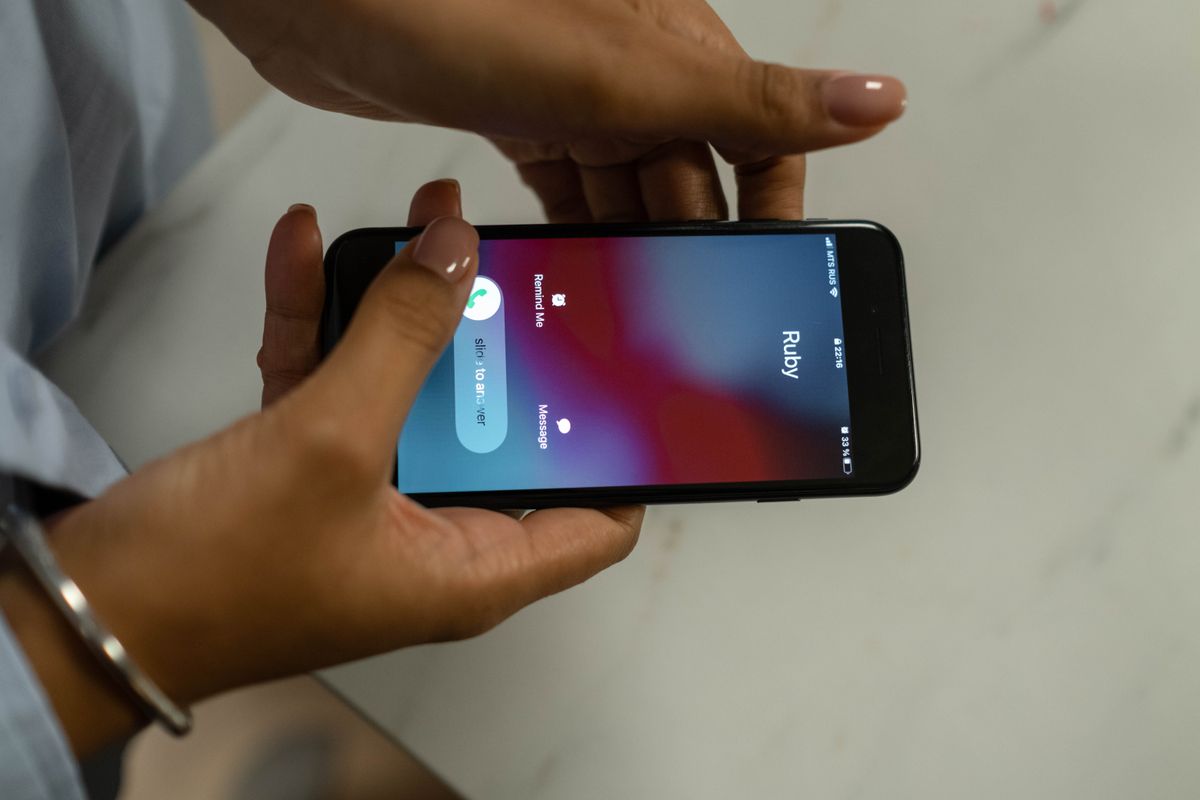
A pediatric office we spoke with had a strange, expensive mystery. Their no show rate had crept up for three straight months even though nothing about the schedule or the patients had changed. Same reminder system, same friendly front desk, same appointment volume. More empty chairs anyway.
The answer was not in the schedule. It was on the patients' phones. When the office called or texted a reminder, a lot of those patients saw the words Spam Likely in red next to the number, so they let it ring. The practice was doing everything right and getting treated like a robocaller. If your reminders, callbacks, and new patient follow ups feel like they vanish lately, this is worth ten minutes of your attention.
What Spam Likely actually means
Here is the part that surprises most owners: your phone carrier is not personally judging your practice. AT&T, Verizon, and T-Mobile lean on three call analytics companies, Hiya, TransUnion, and First Orion, that score every number in the country based on how it behaves. Those scores decide whether a call shows up as your practice name, a plain number, or a red Spam Likely or Scam Likely warning.
Layered on top is STIR/SHAKEN, the caller ID authentication framework the FCC has required since June 2021. It is meant to prove a call really comes from the number on the screen and stop scammers from spoofing legitimate lines. That is good news overall. But it also means every number now carries a reputation that follows it around, and a practice line with a weak reputation gets buried right alongside the actual junk.
Why does any of this exist? Because the flood is real. Robocalls hit a six year high in 2025, with Americans getting billions of unwanted calls a month, per the consumer group PIRG. Carriers built aggressive filters to fight that. Your practice just has the bad luck of making the same kind of calls the filters are trained to catch.
How a normal practice trips the filter
You never sent a single spam call, so how does a clean office end up flagged? The algorithms watch for patterns, and a busy medical practice hits several of them by accident.
The behavior that looks like a robocaller
- High call volume in bursts. Reminder and recall calls go out in waves. A number that suddenly dials dozens or hundreds of people looks automated, because usually it is.
- Lots of short calls. A quick "your appointment is tomorrow at 3" or a call that hits voicemail lasts seconds. Piles of short calls are a classic spam fingerprint.
- Calls that go unanswered. When most people ignore the ring, the score reads it as unwanted, which makes the next call even more likely to be ignored. A vicious loop.
- Spam reports. A handful of patients tapping "report spam" instead of just declining can tank a number fast.
- Spoofing you did not do. Scammers hijack real local numbers to look trustworthy. If they borrow yours, the complaints land on your reputation.
- A fresh or recycled VoIP number. New internet phone numbers, or ones a spammer used before you got it, often start life with a bruised reputation.
Notice that reminder calls, result callbacks, and lead follow ups are exactly the daily work of a front desk. As CNN reported, doctors' offices increasingly get swept up in spam filtering precisely because their legitimate outreach mirrors the volume patterns of the junk. You are punished for being diligent.
What the label costs you behind the scenes
A spam tag does not announce itself. Nobody calls to tell you your number is flagged. You just watch outcomes slide and reach for other explanations. The bill shows up in three places.
No shows climb. Reminders are your cheapest defense against empty chairs, and they only work if patients see them. When a reminder wears a spam label, it gets ignored, and the appointment slips. We put real dollars on that in how much a no show costs a medical practice, and it is not small.
Callbacks fail. Result calls, prescription questions, and "we had a cancellation, want the spot" calls all rely on the patient picking up. Most already do not answer unknown numbers, a behavior we broke down in why patients don't answer when you call back. A spam tag turns "probably won't answer" into "definitely won't."
New leads leak. This is the painful one. You spent money on ads and SEO to make the phone ring, the front desk calls the lead back, and the call lands under a red warning. The lead you paid for never picks up, and everyone concludes the lead was junk. It was not. Your number was.
How to check if your practice is flagged
Do not trust the phone in your pocket. Your own device usually shows your practice as a saved contact and hides the label the rest of the world sees. Instead, run a quick test.
Grab three phones on three different carriers, an AT&T, a Verizon, and a T-Mobile handset if you can, and call your main line and your reminder line from each. Watch what caller ID displays. If any of them read Spam Likely, Scam Likely, or Telemarketer, you have found your leak. You can also look up and dispute your number through the Free Caller Registry, which feeds all three analytics providers at once, and through consumer apps like Nomorobo and YouMail.
How to get your number clean again
The good news: a flagged number is fixable, and you can keep it. There is no need to print new cards or lose the line your patients know. Work down this list.
Register and dispute the label. Start at the Free Caller Registry to submit your number to Hiya, TransUnion, and First Orion, and file corrections with Nomorobo and YouMail. This tells the databases you are a real business, not a robocaller, and asks them to lift the tag.
Get STIR/SHAKEN verification and branded caller ID. Ask your phone provider whether your outbound calls are signed with full attestation, so carriers trust your caller ID, and whether they offer branded caller ID that puts your practice name, and sometimes your logo, on the screen. A named call reads as safe. A bare number reads as risk.
Use one consistent local number. Bouncing between random caller IDs looks like spam and never lets patients recognize you. One steady local number becomes a saved contact over time. This is also why letting patients text your practice on a number they can store pays off twice.
Stop feeding the pattern. Space out big reminder batches instead of one giant burst, keep your spam complaints down by only contacting patients who expect to hear from you, and never spoof or borrow another number. Clean behavior rebuilds a reputation over a few weeks.
Lead with text for routine contact. The cleanest fix for the reminder problem is to stop depending on a ringing phone for it. Texts get read, they arrive from a recognizable local number, and they do not carry a spam label. Keep the phone for the moments a live voice truly matters. If your reminder texts are also going missing, that is a separate delivery issue we cover in why patient texts are not delivered.
How EtherealMinds handles this for practices
When we run patient acquisition for a practice, the phone reputation is part of the plumbing we set up, not an afterthought. Every patient touch goes out from one consistent local number so you become a saved contact instead of a rotating mystery. Reminders and follow ups lead with text, which sidesteps the spam label entirely for the routine stuff, and calls are the follow up, not the first knock.
For the calls that do matter, our AI receptionist answers inbound calls on the first ring, day and night, and texts back anyone whose call was missed so the conversation continues on the channel the patient actually checks. We also keep the numbers registered and monitored, so if a reputation starts slipping, we catch it before your reminders start disappearing. It pairs naturally with the fast, text first follow up we build for every new lead, the same approach we lay out in how fast to respond to a new patient inquiry.
Here is the honest takeaway. A Spam Likely tag is one of the sneakiest, most fixable leaks in a medical practice, and almost nobody goes looking for it. Run the three phone test this week. If your number is wearing a red warning, your reminders, your callbacks, and the leads you already paid for are all paying the price, and the patients were never the problem.
Make sure patients actually see your calls
Book a free strategy call. We will check whether your practice line is flagged, set up a consistent, text first system patients recognize and answer, and make sure the leads your marketing brings in never ring into the void. Clear plan, no jargon, no pressure.
Book a free strategy call →