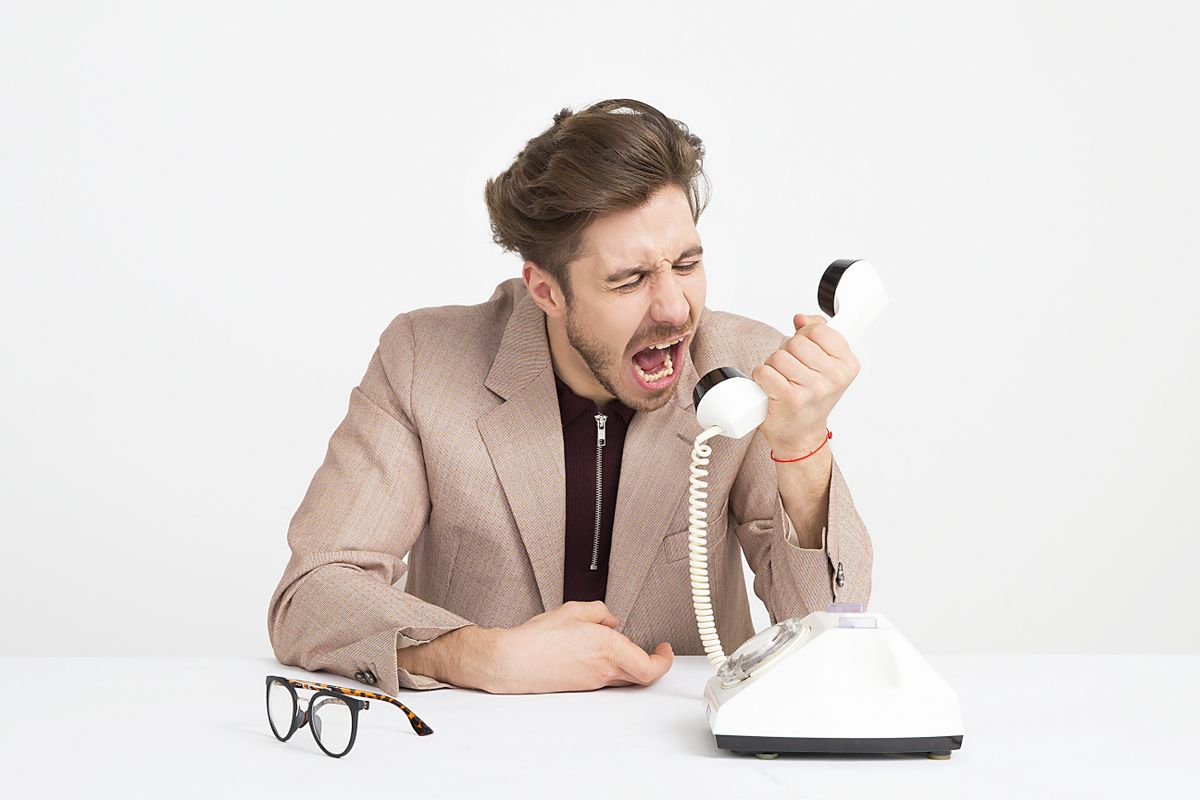
Picture the moment. A prospective patient fills out your form or leaves a message asking about an appointment. Your front desk calls them back an hour later. It rings four times and goes to voicemail. They leave a message and try again the next morning. Straight to voicemail again. After a couple of tries, someone marks the lead dead and moves on.
Here is the uncomfortable truth. That patient probably still wants an appointment. They just watched your office number light up their screen, did not recognize it, and let it ring. In 2026, that is the default behavior of almost everyone. If your entire follow up plan is calling people back and hoping they pick up, you are losing patients who were ready to book, and blaming the leads for it.
Nobody answers unknown numbers anymore
This is not a hunch. It is one of the most consistent findings in consumer research. A survey from Transaction Network Services found that about 75 percent of Americans will not answer calls from unknown numbers, reported by BusinessWire. The Pew Research Center found something similar years earlier: roughly 80 percent of U.S. adults generally do not answer their cellphone when an unknown number calls, per Pew Research.
Think about your own phone for a second. When an unfamiliar number calls and you are not expecting it, what do you do? You let it ring, glance at it, and wait to see if they leave a voicemail or a text. Your patients do the exact same thing to you. The number they do not know is your practice.
There are good reasons people behave this way now. Years of robocalls and scam calls trained everyone to treat unknown numbers as a threat. Phone carriers make it worse: your legitimate office line can get flagged as Spam Likely or Scam Likely on a patient's screen through no fault of your own, and once that label shows up, the answer rate falls off a cliff. So the very people your marketing worked hard to reach are now screening you out on instinct.
And medical calls fare even worse
It is not just cold calls. Even calls people are half expecting go unanswered at a startling rate. Reporting compiled by healthcare communication firm Curogram, citing a Forbes figure, notes that about 70 percent of medical calls to consumers simply go unanswered. Seven out of ten. That means an outbound call is, statistically, the least reliable way to reach the patient you are trying to book.
Then comes the voicemail problem, which we dug into when we looked at how long patients wait on hold before hanging up. Most people who hit voicemail never leave a message, and most who receive one never listen to it. A voicemail open rate hovers around 30 percent. So the classic front desk routine of call, leave a message, wait for a callback is built on a channel that the majority of patients quietly ignore.
The callback math nobody runs
Start with 10 genuinely interested new leads. If only about 30 percent answer an outbound call, you reach 3 of them on the first try. A few more with persistent redialing over several days, maybe. The other 5 or 6 are not uninterested. They are unreached. Every one of them is a patient your marketing already paid to attract, sitting there waiting for you to contact them a way they will actually respond to.
The channel patients actually respond to: text
Here is the flip side, and it is dramatic. The same patient who ignores your call will very often reply to a text within minutes. Text messages carry roughly a 98 percent open rate compared to about 30 percent for voicemail, and most people read a new text within about three minutes of getting it, according to the same Curogram analysis. Response rates to text follow ups can run about three times higher than voicemail callbacks, even among patients who say they prefer phone calls.
And it is what patients want. More than 80 percent of patients say they prefer a text over a phone call for non urgent matters. A text respects their time. They can read it in the checkout line, between meetings, or while the kids are finally asleep, and reply whenever they get a second. A call demands they stop everything and talk to a stranger right now, which is exactly the thing most people have decided to stop doing.
None of this means the phone is dead. Plenty of patients still love talking to a real person, especially for anything urgent or complicated, and a warm human voice builds trust that a text never will. The point is simpler: the phone is a great second touch and a terrible first one. Lead with a text to open the door, then let the patient choose to hop on a call.
Speed is the other half of the problem
Even a text loses its power if it shows up too late. A lead who filled out your form at 9am and hears nothing until 2pm has cooled off, and probably messaged two other practices in the meantime. The window to catch someone while they are still leaning in is measured in minutes, not hours, which is why we keep hammering on how fast to respond to a new patient inquiry.
The winning sequence is boring and effective: an instant text the second the lead comes in, a follow up call soon after, and a couple of gentle touches over the next few days if they go quiet. We broke down the cadence in how many times to follow up with a patient lead. Most practices quit after two calls. The booking often comes on the fourth or fifth touch, and usually by text.
Small fixes that lift your answer and response rate
You do not need to rebuild anything to fix this. A handful of changes move the needle fast.
Text first, every time. Make the very first contact a friendly text, not a call. Something like: Hi Maria, this is Sarah at Lakeside Family Health returning your request. Happy to get you booked. Does Thursday or Friday work better? It names your practice, so you are not a mystery number, and it invites a one word reply.
Use one consistent local number. Patients start to recognize a number that texts and calls them from the same line each time. A random string of different caller IDs looks like spam. Letting patients text your practice on a number they can save turns your office into a contact, not an unknown caller.
Let them book without a conversation at all. The surest way to beat the unanswered callback is to remove the callback. Online booking on your website lets a patient grab a time at 11pm without waiting for anyone to reach them. No phone tag, no voicemail, no lost lead.
Answer inbound calls on the first ring. When a patient does call you, that is the golden moment they are ready, so never send them to hold or voicemail. An AI receptionist picks up every inbound call instantly, day or night, and can text back anyone whose call was missed so the conversation continues on the channel they prefer.
How EtherealMinds plugs this leak
We see this pattern in almost every practice we audit. The marketing is generating real leads. The front desk is calling them back in good faith. And a big share of those leads are simply never reached, because the follow up relies on a channel most patients have opted out of answering. The owner concludes the leads are bad. The leads were fine. The follow up method was the problem.
So when we run patient acquisition for a practice, we build the follow up around how people actually behave. Every new lead gets an instant, personal text from a consistent local number within seconds, before they cool off or forget they reached out. Calls are offered as a next step, not forced as the first one. Missed inbound calls trigger an automatic text back so nobody falls through. And our AI receptionist answers the phone the instant it rings so the patients who do want to talk get a warm greeting, not hold music.
The result is not magic. It is just meeting patients where they are. A practice that was reaching maybe a third of its leads by phone can reach and book the large majority once the first touch is a fast text instead of a call that rings out. Same leads, same budget, far more patients on the schedule.
So, why don't patients answer when you call them back? Because your number is a stranger on their screen, and strangers do not get picked up anymore. Stop trying to win a game the whole country has quit playing. Send the text first, answer fast, and let people book on their own terms. The patients were never the problem.
Reach the leads you are already paying for
Book a free strategy call. We will look at how your practice follows up with new patients today, show you where leads are going unreached, and set up a text first system that answers in seconds and books more of the patients your marketing is already bringing in. Clear plan, no jargon, no pressure.
Book a free strategy call →