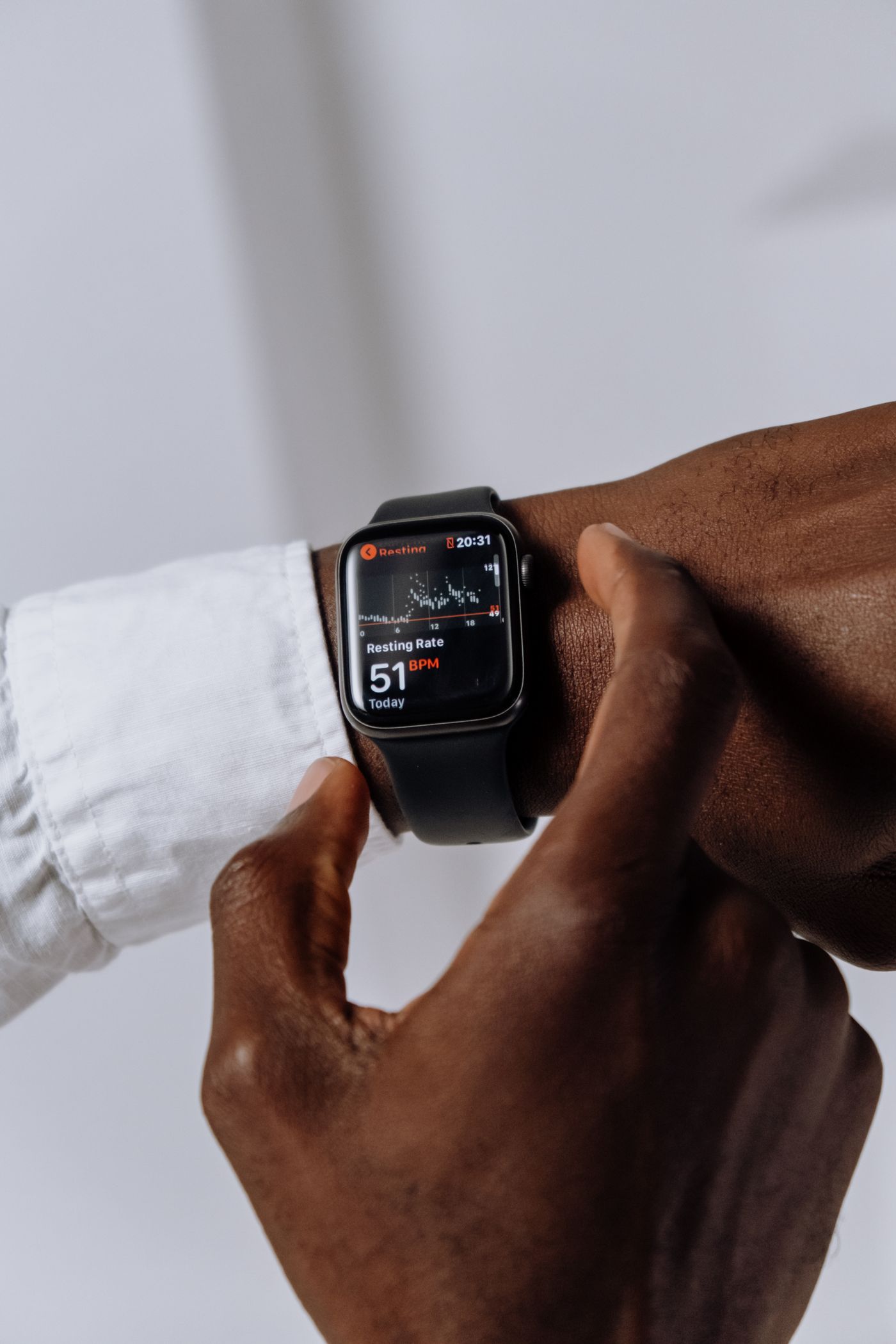
A cardiology practice told us a story last spring that is becoming common. A woman in her fifties booked a new patient visit not because her primary doctor referred her, and not because a friend did. She booked because her watch buzzed one morning with an irregular rhythm alert, she got scared, and she searched "heart doctor near me" at 6am. She found the practice on Google, booked online before breakfast, and walked in with three weeks of data already pulled up.
That is a different patient than the one most practices are built for. The old model waits for symptoms, waits for a referral, and waits to be told what is wrong. The self tracking patient shows up early, informed, a little anxious, and holding data. How your practice greets that person, online and at the front desk, decides whether they become a loyal patient or a one time visitor who felt dismissed.
This is not a niche. It is a fifth of your market and growing
Back in 2020, Pew Research Center found that about one in five US adults, 21%, regularly wore a smart watch or fitness tracker. That was already a big number. It has only grown since. More recent consumer surveys from Rock Health put wearable ownership closer to half of consumers, with adoption still climbing year over year.
The Pew data also carried a detail that should get any practice owner's attention. Wearable use was highest in higher income households: about 31% of adults in homes earning $75,000 or more wore one regularly, compared with 12% in homes under $30,000. In plain terms, the self tracking patient skews toward the exact person most practices are trying to attract, the health invested patient with the means and the habit to keep coming back.
Add the clinical side and it stops being a fitness story. An Apple Watch can now run an FDA cleared ECG and flag atrial fibrillation from the wrist. Continuous glucose monitors have moved from diabetics to biohackers. Sleep, blood oxygen, heart rate variability, and cycle tracking are all a tap away. Your patients are collecting real signals about their bodies every single day, and a rising share of them want a doctor to help read the story.
Here is the gap nobody is closing
Now the part that turns a trend into an opportunity. Patients want to share this data with their doctor. Most practices give them no way to, and no sign that they care.
A study published in JAMA Network Open looked at exactly this. The large majority of US adults said they were willing to share wearable health data with a clinician. But when researchers measured who actually shared it, the number collapsed to roughly one in six. The willingness is there. The behavior is not, because the bridge between the watch and the exam room barely exists.
Think about what that gap feels like from the patient side. They bought the device, they wore it every day, they watched a number they did not like, and they made an appointment partly to talk about it. Then they get five minutes, the doctor never asks, and they leave feeling like the thing they were most worried about did not even come up. That patient does not argue. They simply decide you were not that interested, and next time they try a practice that seems more with it, or worse, they ask an AI chatbot instead. We wrote about that shift in how patients now self diagnose with AI before the visit.
The short version
A fifth of US adults track their own health on a wearable, and the number is climbing toward half. They tend to be higher income and highly engaged, the ideal patient. Most say they would share the data with a doctor, but almost none actually do, because practices give them no easy path and no signal that they care. The practice that closes that gap wins a proactive patient for years. Most of the fix is not clinical technology. It is a modern, responsive front door.
Why the self tracking patient is a marketing story, not just a clinical one
You might be thinking this is a topic for your medical team, not your marketing. It is both, and the marketing half is the one you can act on this week. The habits that make someone track their own health are the same habits that shape how they pick a doctor.
- They research before they book. A person who reads their own heart rate trends reads your reviews, your website, and your Google profile just as carefully. They are comparing you to two or three others in a browser tab.
- They expect to book on their own terms. The self tracker made their appointment at 6am from a phone. If your only option is calling during office hours, you already lost a chunk of them. We covered the split in whether patients prefer to book online or call.
- They judge you by speed. A proactive patient is not a patient one time. They will move to the next result if you make them wait, which is why how fast you respond to a new patient lead matters more with this group than any other.
- They read your practice as a signal. A fast, clean, modern website tells them you are current. A slow, dated one tells them your whole approach might be. Fair or not, that is how patients choose a doctor now.
So the self tracking patient does not just change what happens in the exam room. They raise the bar on everything a patient touches before they ever meet you. And because they skew health invested and higher income, losing them at the website is one of the most expensive silent leaks a practice has.
What actually attracts them (and what does not)
Here is the good news, and the part practices get wrong. You do not need to integrate with Apple Health or build a data dashboard to win these patients. The technology is optional. The mindset is not. What the self tracker responds to is a practice that feels as proactive and current as they are.
Four things do most of the work.
Be found when they search. The self tracker's journey often starts with a scared 6am search, not a referral. If you are not near the top for "doctor near me" and your service in your town, you are invisible to them. That is a local SEO job, and it is the single highest leverage fix for capturing demand that already exists in your area.
Load fast and let them book in taps. A health conscious patient on a phone will not wait for a slow site or fill out a wall of fields. Every extra second and every extra tap sheds people. It is not a small effect either, as we broke down in how website speed affects patient bookings. The website we build for a practice is designed to load fast and carry someone from search to booked in about two taps.
Answer fast, even after hours. The proactive patient books and asks questions at night and on weekends, exactly when your front desk is gone. A missed call at 8pm from an anxious patient with a rhythm alert is a patient you paid to reach and then dropped. Our AI receptionist answers, books, and reassures at 2am so that patient never has to wait until Monday and drift to a competitor.
Speak to prevention, not just treatment. On your website and your social channels, show that you care about the long game, catching things early, tracking trends, partnering on health, not only fixing what already broke. That is the language the self tracker lives in, and it is what your social media presence should reflect. It signals, before they ever call, that they will be met as a partner.
What does not attract them: a stock photo homepage from 2015, a phone tree, a two week wait for a callback, and a visit where the numbers on their wrist get dismissed with a wave. None of that is a technology problem. All of it is a choices problem.
The honest caveats
Two things are worth saying plainly, because we do not want to oversell this.
First, wearable data is noisy. Consumer devices produce false alarms, and a watch is not a diagnosis. The point is not to treat every reading as gospel. The point is that when a patient brings it up, taking it seriously, explaining what it does and does not mean, is a trust building moment you would be foolish to skip. The anxiety is real even when the data is shaky.
Second, if you do decide to bring wearable data into care in a formal way, patient health information has to be handled with the same care as anything else in your practice, which means proper security and the right agreements. That is a real project, not a weekend one. But it is entirely separate from the marketing side, which you can start on immediately. You can become the practice the self tracker chooses long before you ever touch their data feed.
Where EtherealMinds fits
We are a healthcare only agency, so we watch how the patient is changing and build the front door to match. The self tracking patient is one of the clearest shifts we have seen: more informed, more proactive, more digital, and more likely to walk if the experience feels a step behind them.
Meeting that patient is not one tool, it is a connected system. Being found when they search, a website that loads fast and books in taps, a receptionist that answers the moment they reach out, and social channels that speak to prevention and trust. That is the whole patient acquisition system we build, and it is aimed squarely at the patient who is already looking for a practice like yours and just needs to find it and feel welcome.
The self tracking patient is not a fad that fades when the next gadget arrives. They are what the average patient is slowly becoming. Build for them now and you are not chasing a trend. You are getting ahead of your whole patient base before your competitors notice it moved.
Ready for the patient who shows up informed?
Book a free strategy call. We will look at how a proactive, digital first patient would find, judge, and book your practice today, and show you exactly where you are losing them. Healthcare only, no jargon, no pressure.
Book a free strategy call →