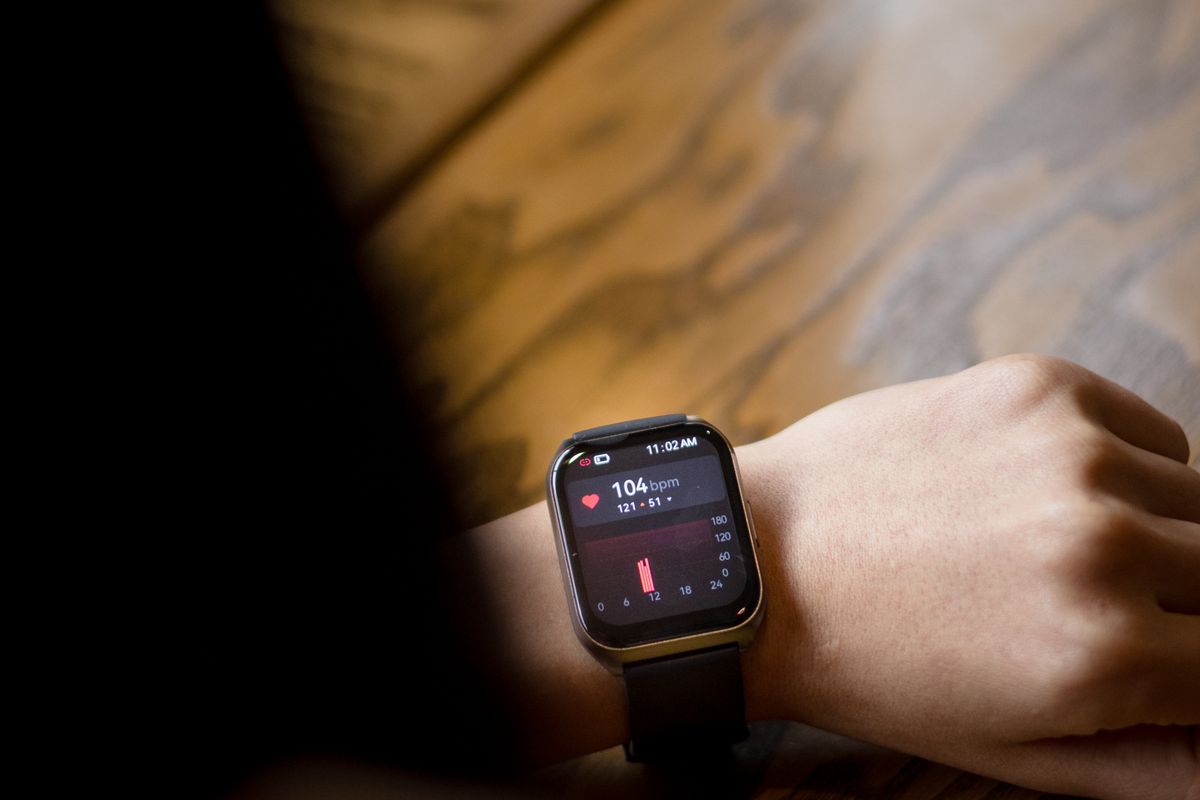
A primary care office near us got a call on a Sunday night. A patient in her fifties, no history of heart trouble, said her watch had buzzed three times that weekend with an irregular rhythm alert. She was scared, she was awake at 11pm reading about it, and she wanted to know if she should worry. The office was closed, the call went to voicemail, and by Monday morning she had already booked with a cardiology group across town that answered the phone. The first practice never knew it lost her.
This is a new front door to a medical practice, and most owners have not noticed it opened. People are not only finding you through Google and Instagram anymore. A growing number reach out because a device on their wrist told them something looked wrong. That is a patient with a reason, a worry, and a budget, which is about as high intent as it gets. The only question is whether your practice is set up to catch them or set up to send them to voicemail.
Wearables stopped being toys
For years it was easy to wave off fitness trackers as step counters for people training for a 10k. That is over. About 37% of US adults own a smartwatch today, according to the Pew Research Center, and that climbs to roughly 44% among adults under 50. Stanford researchers put the number of American smartwatch wearers at around 115 million. These are not edge cases. A big share of your patient panel is walking around with a heart monitor on their wrist.
And the devices got good. Stanford cardiologist Marco Perez presented data in 2026 showing the Apple Watch detects atrial fibrillation with about 86% accuracy. A larger trial, the EQUAL study published in the Journal of the American College of Cardiology in January 2026, found that a smartwatch screening program caught about four times more new cases of AFib than standard care. New AFib was diagnosed in 9.6% of the watch group versus 2.3% of the control group, and more than half of those caught had no symptoms at all. People who felt perfectly fine learned their heart was not, because of a watch.
Multiply that across sleep apnea alerts, blood oxygen dips, resting heart rate changes, and the simple nudge to get a weird reading checked, and you have millions of small moments every week that end with someone wondering, should I see a doctor about this? Doctors are leaning in too. A 2026 survey of more than 2,200 physicians by the American Medical Association found broad interest in using the data these devices collect, and the AMA has published guidance on what doctors want patients to know about them. The technology arrived. The marketing has not caught up.
Where practices lose the wearable patient
Here is the uncomfortable part. The demand is already landing on your doorstep, and it leaks out through three cracks that are easy to miss because nothing shows up as a dramatic failure. You just never hear from the person.
The phone, after hours. Watch alerts do not keep business hours. They fire on a Saturday hike or at midnight, exactly when the person is most anxious and most ready to act. If they call and get voicemail, they do not wait until Monday, they call the next name on the list. We wrote about how much this costs in our piece on losing patients after hours, and wearables pour fuel on it. The fix is not a bigger front desk, it is making sure someone, or something, always answers.
Search, when they look for help. Before most people call, they Google. They type things like afib near me, cardiologist who reviews Apple Watch data, or is my heart rate alert serious. If your website says nothing about wearables, you are invisible for every one of those searches, and so is the booking that would have followed. This is a straightforward local SEO opening, and almost no local practice has claimed it yet.
The visit itself, when they bring the data in. Patients increasingly show up with screenshots and ask what they mean. We covered this shift in our note on the self tracking patient. The office that groans and says we cannot really use that teaches the patient not to come back. The office that says great, let us look at it together earns a fan who tells everyone they know.
The one line to remember
A wearable alert is a patient raising their hand. They have the device, the worry, and the willingness to pay. All you have to do is be reachable, be findable, and be the practice that says bring it in instead of brushing it off.
Answer the phone the device cannot ignore
Start where the loss is biggest. If a worried patient calls at 9pm about an irregular rhythm alert and gets a recording, you did not just miss a call, you handed a high intent patient to a competitor. Hiring overnight staff to fix that makes no sense for a small practice. This is exactly where we point practices to our AI receptionist, which answers by voice or text around the clock, triages the reason for the call, and books the appointment straight onto your schedule. The patient staring at a scary alert at midnight gets a calm, immediate response instead of a beep.
Speed matters here more than almost anywhere. A watch alert creates urgency, and urgency has a short shelf life. We have written before about how fast you need to respond to a new patient lead, and the wearable caller is that lesson at double intensity. Reach them while the worry is fresh and they book with you. Reach them tomorrow and they already saw someone else.
Be the practice that shows up when they search
The second fix is content, and it does double duty. When you put a plain page on your site that answers the real questions, what an irregular rhythm alert means, when a watch reading is worth a visit, what you can and cannot tell from the data, you do two things at once. You rank for the searches people are already typing, and you build trust before they ever call. For a cardiology practice, that might live on a website built to answer the AFib question head on. For primary care, men's health, or sleep medicine, the angle shifts but the move is the same.
This is also where social earns its keep. A short, honest reel or post that explains how to read your watch data, when to relax, and when to come in, travels well because people are genuinely curious and a little nervous about it. We help practices build that kind of educational social content that pulls in the exact people who own the device and have a reason to act. It positions you as the local expert on something your competitors are not even talking about.
Be honest about what the data can and cannot do
Now the part a good practice has to get right, because the easy version of this is hype and hype backfires. Wearables are not diagnostic tools. They throw false alarms, they make some people anxious over nothing, and a reassuring watch reading is not a clean bill of health. The AMA is clear eyed about this, and so should you be. The winning message is not your watch is a doctor. It is your watch noticed something, and we are the people who can tell you whether it matters.
That honesty is the whole brand play. A patient who calls in a panic and gets a straight, kind answer, yes that alert is worth checking, come in, or that reading is common and here is why, remembers you. It is the same reason patients are starting to trust the practice that engages with the tech they already use rather than the one that dismisses it. You do not have to love every gadget. You just have to be the calm, competent human on the other end of the alert.
How EtherealMinds thinks about this
When we look at a practice, we are not hunting for more clicks, we are hunting for demand that is already there and leaking. Wearables are a textbook example. The patients exist, they are motivated, and they are reaching out on their own. The gap is almost never interest. It is that the call hits voicemail, the website is silent on the topic, and the social feed is a stock photo of a stethoscope.
So we close those three gaps as one system. A phone that always answers through a patient acquisition setup that catches calls day or night, a website that ranks for the searches these patients run and answers them with real information, and social content that teaches and builds trust before anyone picks up the phone. None of it is magic. It is just being reachable and findable at the moment a device on someone's wrist tells them to find a doctor.
The watch on your patient's wrist is not a fad, and it is not going to slow down. It is a new, growing reason people walk into a medical practice, and right now it is mostly going uncaught. The practices that notice first, and simply make themselves easy to reach when the alert goes off, will win those patients while everyone else wonders where the new bookings went.
Catch the patients your competitors are missing
Book a free strategy call. We will look at how reachable and findable your practice is right now, from the after hours phone to what you rank for on Google, and show you where high intent patients are slipping through. Clear numbers, no jargon, no pressure.
Book a free strategy call →