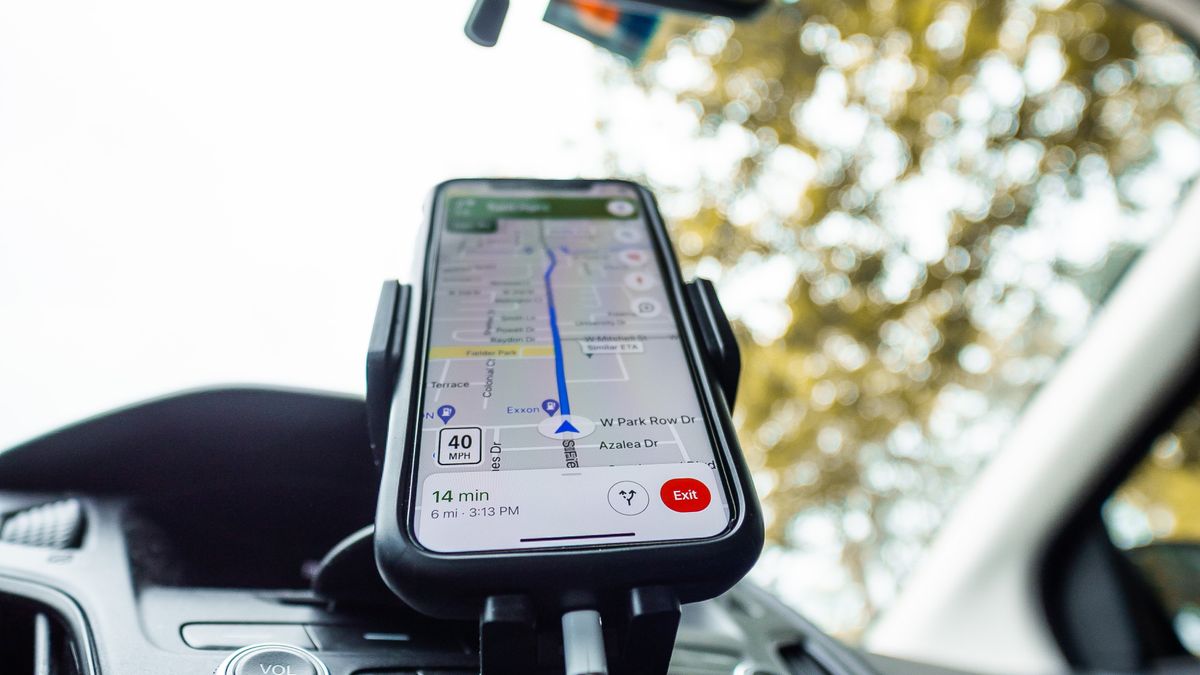
A chiropractor we work with in a suburban plaza kept getting the same frustrated call: "I'm here, but I don't see you." Patients were following their GPS to the far end of the parking lot, staring at a nail salon and a taco spot, and calling the front desk confused. The office was fine. The pin was not. One navigation app had his suite dropped a hundred yards off, at the wrong entrance, and every driver using that app got sent to the wrong door. He had no idea, because his own phone used a different map that happened to be correct.
That is the sneaky thing about directions. You test it once from your own phone, it works, and you assume everyone's experience matches yours. But there is no single map. Google Maps, Apple Maps, and Waze are three separate systems with three separate copies of where you are, and being right on one says nothing about the other two. The one that gets skipped almost every single time is Waze.
Waze is not a niche app
It is easy to wave off Waze as a thing for hardcore commuters. The numbers say otherwise. Waze has roughly 150 million monthly active users across 185 countries and is owned by Google, which bought it back in 2013 for about 1.15 billion dollars, according to compiled Waze usage statistics. It consistently ranks among the most used navigation apps in the United States, right alongside Google Maps and Apple Maps, per Statista's ranking of US mapping apps.
Translate that to your waiting room. A real slice of the patients driving to you right now are not using the map you assume they are. They are using Waze, following its arrow, and trusting it completely. If Waze has you in the wrong place, or does not have you at all, that trust works against you.
A wrong pin is a no show you never diagnose
Here is what makes this leak sneaky. When a patient cancels because your prices scared them, you at least have a clue. When a patient never arrives because their GPS dumped them behind the building, you get nothing. They do not fill out a survey that says "your Waze pin is off by a hundred yards." They just show up flustered and late, or they do not show up at all, and it lands in your schedule as a plain no show.
And the cost is real. A patient who circles the block for ten minutes walks in stressed, which colors their whole visit before you say a word. A patient who gives up and reschedules is a hole in your day you paid marketing money to fill. Medical offices are the worst hit by this, because so many of us sit in exactly the confusing spots: multi suite buildings, medical plazas, business parks with one address and eight doors. The route ends at "the building," not at your suite, and the patient is on their own from there. We dug into the hidden causes of empty appointment slots in why patients really no show, and "could not find the place" is on the list more often than owners think.
It gets worse if you have ever moved. When a practice relocates, the old pin can linger on one map long after the others update, still routing new patients to a location you left two years ago. We covered that specific headache in does moving your practice hurt your Google ranking, and Waze is one of the maps most likely to hold onto the stale address.
Being right everywhere is one job, not five
Step back and Waze is just one piece of a bigger principle: your practice has to say the exact same thing everywhere a patient can find it. Same name, same address, same suite, same phone, same hours, on Google, on Apple Maps, on Waze, and across the directories. When those match, map apps and search engines trust you more and route people correctly. When they conflict, you get patients at the wrong door and a weaker local presence at the same time. We made the full case for this in does your practice info match everywhere online.
This consistency is also the backbone of showing up when someone searches "doctor near me" in the first place. Getting found in local results and getting routed to the right door are two halves of the same healthcare SEO work, and skipping Waze leaves a real gap in it. If you have ever wondered why you seem invisible locally, start with the basics in why your practice is not showing up on Google, then make sure the map every driver trusts actually knows where you are.
How to add and fix your Waze listing
The good news: this is one of the cheapest wins in local marketing. Adding your practice as a place on Waze is free and takes about fifteen minutes, whether you suggest it in the app or use the Waze Map Editor. Here is the short version.
Search Waze for your practice first. Open the app and look yourself up. You will usually find one of three things: you are missing entirely, you are there but the pin is wrong, or you are correct. Every one of those is worth knowing.
Add or correct the place. If you are missing, add your practice with its exact name, address, suite, and category. If the pin is off, drag it to your actual entrance, the door you want patients to walk through, not just the center of the building. Waze lets you suggest edits in the app or verify details through its official add a place help page.
Match your hours and phone to everything else. Use the identical name, address, and phone number that appear on your Google Business Profile and Apple Maps, so nothing conflicts. While you are at it, if you have never claimed Apple Maps, do that too. We walk through it in should your practice claim its Apple Maps listing.
Test it from a phone that is not yours. Borrow a staff member's phone, open Waze, and route to your office as if you were a first time patient. Watch where the arrow actually stops. That thirty second test is the whole point.
Our honest take
We are a marketing agency, so you might expect us to steer you toward something expensive. This is the opposite. Waze is free, it takes fifteen minutes, and almost nobody does it, which is exactly why it is worth doing. There is no cheaper way to protect appointments you already earned than making sure the patient's own GPS can find your front door.
Think about the order of operations. You spend real money and effort getting a patient to choose you, pick up the phone, and book. That is the hard part, and you already won it. Then the entire investment can evaporate at the last hundred yards because a free map has your pin in the wrong spot. Fixing that is not glamorous and it will never be the reason someone praises your practice. It is just one of those unglamorous basics that ends up deciding whether the schedule fills. Do it once, test it twice a year, and stop losing patients in your own parking lot.
How EtherealMinds handles this for you
When we take on a practice, one of the first things we do is a findability sweep: we check that your name, address, and directions are correct and identical across Google, Apple Maps, Waze, and the directories, and we fix the pins that route patients to the wrong door. It is not the flashiest part of what we do, but it plugs a leak most owners never see. That work sits inside our broader local SEO and search effort to help you show up for "near me" searches and then actually get the patient into the building.
From there it connects to the rest of the patient acquisition system. Getting found, getting the call answered, getting the patient booked, and getting them through the right door are all one chain. A break anywhere costs you the patient, so we treat the map pin with the same seriousness as the ad campaign. If you are not sure where your practice currently lands on Waze, that is a two minute thing we can show you.
Make sure patients can find your door
Book a free strategy call. We will check where your practice shows up across Google, Apple Maps, Waze, and the directories, fix the listings sending patients to the wrong place, and make sure the people already driving to you actually arrive.
Book a free strategy call →