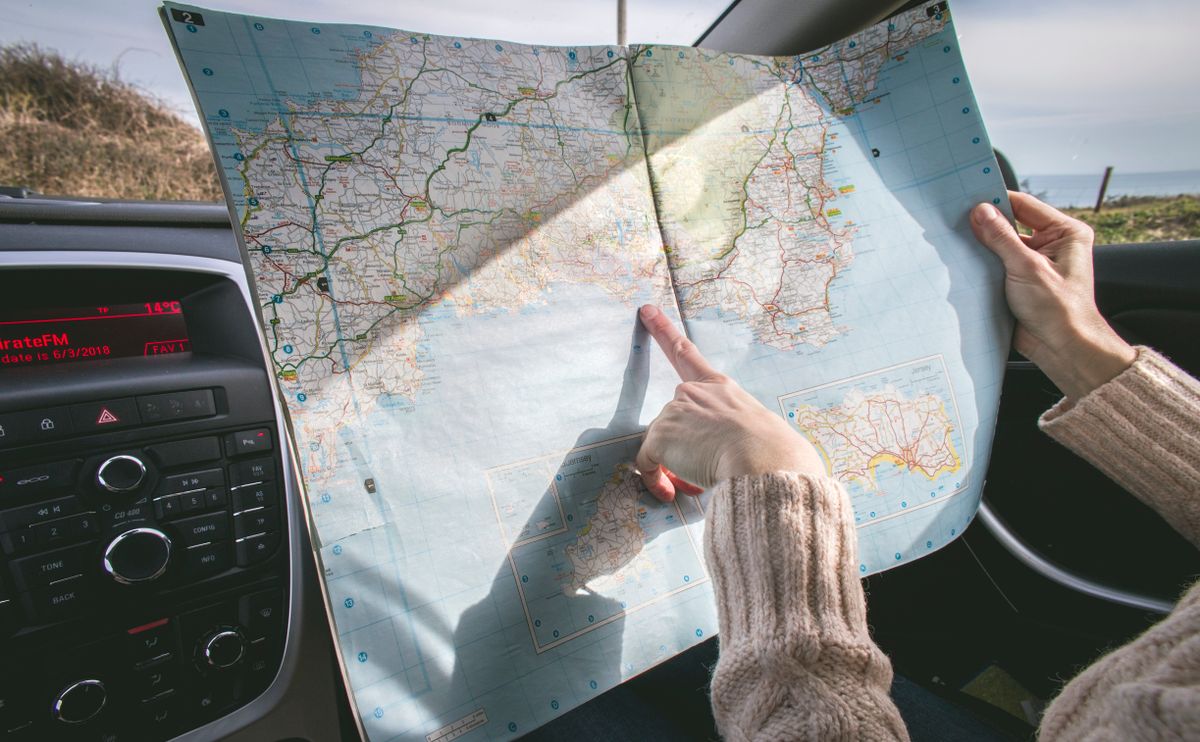
A dermatologist we work with was proud of her reputation. Twenty years in the same city, a wall of five star reviews, patients who drove across town to see her. So when new patient numbers dipped, she wanted to run ads across the entire metro area, three counties wide. We pulled her patient list first and mapped where people actually lived. Almost nine in ten came from within about fifteen minutes of the office. She had been about to spend real money reaching families forty minutes away who would never, ever make that drive for a skin check.
That is the thing about patient travel distance. Owners imagine their reach is bigger than it is. Patients, meanwhile, are drawing a small circle around their own home and picking from whoever is inside it. If you know how big that circle really is, you stop wasting money outside it. So let us look at what the data actually says about how far people will drive to see a doctor.
The short answer: closer than you think
For everyday care, patients do not travel far at all. A study of real visit patterns reported by Medical Economics found a median travel time of about 13 minutes for primary care and roughly 17 minutes for specialty visits. Median means half of all patients traveled even less than that. When people say they want a doctor "nearby," they mean it almost literally.
And this is not just about convenience being nice to have. It shapes the actual choice. In a Healthgrades survey highlighted by Healthcare Success, 62 percent of patients who had chosen a physician named a convenient location as a key reason, ranking it second only to whether the doctor took their insurance. Other consumer research puts it even higher, with roughly 7 in 10 patients saying a convenient location matters when they pick a provider. Location is not a tiebreaker. For a first visit, it is close to the whole game.
Why the distance changes: three things move the circle
That 20 minute rule is a starting point, not a law. How far a patient will drive depends on a few things, and knowing them tells you how wide your own circle really is.
1. How common the service is
The more routine the care, the shorter the drive. Nobody crosses the county for a strep test or a teeth cleaning when there are ten options closer. But for a rare specialist, a complex surgery, or a fertility clinic, patients will happily drive an hour or fly across the state. Some cancer and neurology patients travel 50 miles or more each way. The rule: if a patient can get it around the corner, they will. If they cannot, distance stops mattering.
2. City versus rural
Where your practice sits changes everything. Research covered by Healio found that people in metro areas had a median primary care travel time around 14 minutes, while those outside metro areas traveled closer to 28 minutes, and rural patients often drive 2 to 3 times farther to reach a specialist than city patients do. In a dense city your realistic circle might be ten minutes wide because there is a clinic on every corner. In a rural town it might stretch to forty, because you are the only option for miles.
3. How much they trust you
Reputation stretches the circle. A patient who has read glowing reviews, gotten a strong referral, or watched your videos will drive past three closer offices to reach the one they trust. That is exactly why how patients choose a doctor is never only about the map. Trust is the one force that lets you win patients outside your normal radius, which is why reviews and a real online presence pay off far beyond the click.
The quick way to find your real circle
You do not need a study. Pull your last 100 new patients and map their zip codes. Most practices are stunned to see how tight the cluster is. That cluster, not your city limits and not your dream service area, is where your marketing money should live. Everything you spend outside it is a bet that people will do something the data says they almost never do: drive far for routine care.
What this means for where you market
Here is where the distance data turns into money saved or wasted. If most of your patients come from a 20 minute radius, then your marketing should aim at that radius with everything it has, and mostly ignore the rest.
Target your ads by radius, not by city. Running Google or Meta ads to a whole metro when your patients come from three zip codes is like shouting to a stadium to reach the front row. Tighten the geography and the same budget hits far more people who can actually reach you, which is a big part of why some practices feel like Google ads are too expensive. They are paying to reach people who were never going to drive in.
Win the map, not just the search. When someone types "dermatologist near me," Google shows the closest, best rated options first. That local map pack is where your neighbors are choosing. If you are not there, you are invisible to the exact people most likely to book. Making sure your Google Business Profile is complete and that you rank well on Google Maps matters more for a local practice than almost anything else. If your practice is not showing up on Google for nearby searches, patients inside your circle are finding your competitor instead.
Speak to the neighborhood. Patients trust local. Mentioning the neighborhoods, landmarks, and towns you serve on your website, and having pages for the areas around you, tells both patients and Google that you are their local option. It is a small thing that widens how many people inside your radius see you as "close."
When patients live too far: the telehealth angle
The flip side of all this is the patient who wants you but lives outside the drive. For anything that needs hands on care, distance is a hard wall. But for follow ups, consults, medication checks, and second opinions, it is not. This is where offering telehealth erases the map. A patient forty minutes away who would never drive in for a fifteen minute follow up will absolutely take a video call. As a bonus, virtual visits get far fewer no shows than in person ones, because there is no drive, no parking, and no afternoon lost.
So the smart setup is two circles. A tight one for in person care, where you dominate local search and target ads by radius, and a wider one for the virtual visits that do not need a room. Together they stop your growth from being capped by how far someone is willing to drive.
Our honest take
Most practices market as if patients will travel to find greatness. A few will. The vast majority will not. They will pick the good, close, easy to book option over the great one across town, every single time, for routine care. That is not laziness, it is just how busy people make decisions. Fighting it is expensive. Using it is cheap.
The practices that grow the fastest are not the ones with the biggest reach. They are the ones that own their circle. They show up first on the map for their neighborhoods, their ads only spend on people who can actually get to the door, and their reviews are strong enough to occasionally pull someone from a little farther out. Small circle, fully owned, beats a huge circle you barely touch.
How EtherealMinds helps you own your circle
When we build a patient acquisition system for a practice, we start with exactly this question: where do your patients actually live? We map your real radius, then point everything at it. That means local social content and ads targeted to the zip codes that convert, a Google Business Profile tuned to rank in the map pack, and a fast website built to convert the neighbors who find you into booked visits. When one of them calls or messages, our AI receptionist answers instantly and books the appointment, so a local patient ready to choose you never slips away to the office down the street.
So, how far will patients travel to see a doctor? For the care most practices provide, about 20 minutes, and often less. Stop paying to reach the people outside that circle. Own the one you are in, make it easy for those neighbors to find and book you, and use telehealth to reach the rest. That is how a local practice grows without burning money on drivers who were never coming.
Find out where your patients really come from
Book a free strategy call. We will map your real patient radius, show you where you rank on the local map today, and pinpoint the neighborhoods you should be targeting instead of your whole city. Clear numbers, no jargon, no pressure.
Book a free strategy call →