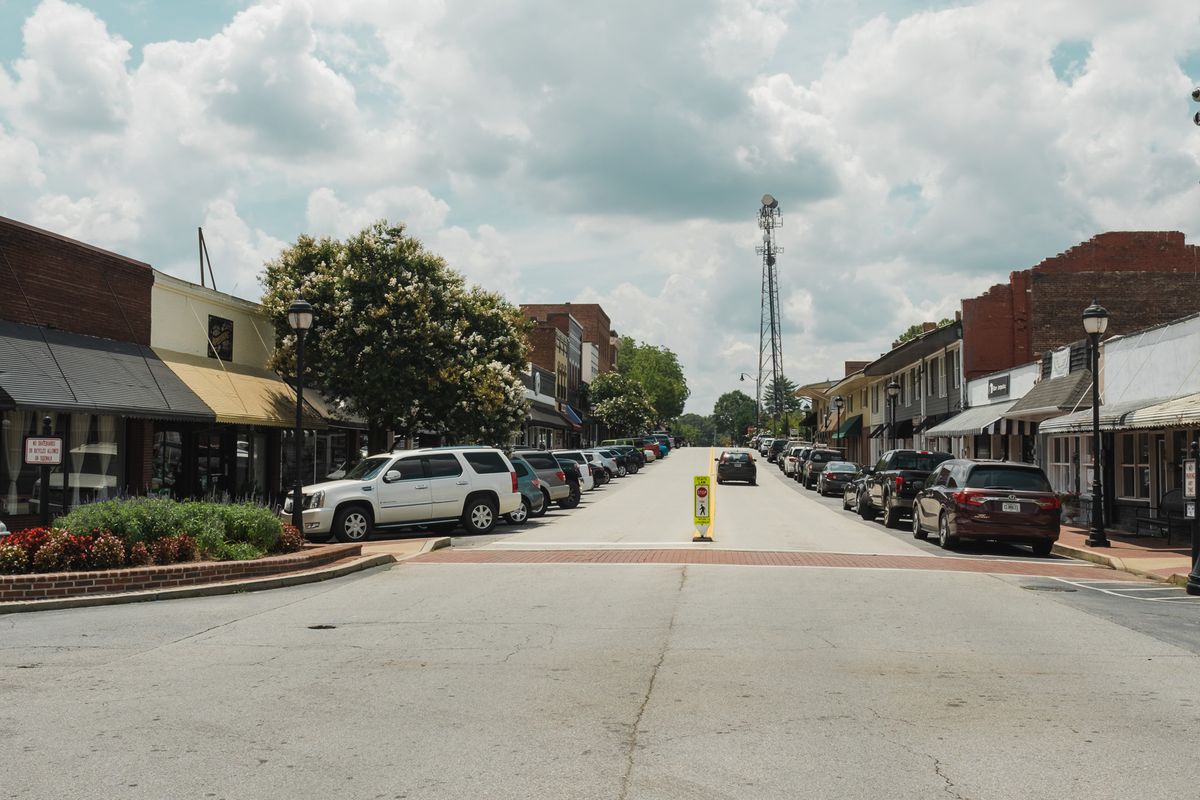
Here is a number that reframes the whole thing. Around 20 percent of Americans live in rural communities, yet only about 1 in 10 physicians practice there, and by some counts closer to 9 percent. Rural areas average roughly 30 physicians per 100,000 people compared to 263 in urban ones, according to figures compiled by University of Rochester Medical Center. The number of rural family physicians actually fell about 11 percent between 2017 and 2023, and the AAMC projects a national physician shortage of up to 86,000 by 2036.
Read that as an owner, not a policy wonk. In most small towns, demand outruns supply and the field is thin. That is the opposite of a big city, where a new patient search is a knife fight between forty clinics. Your problem is almost never too much competition. It is that the people who need you, especially the newcomers and the younger families, cannot easily find you, or find an outdated listing that makes them wonder if you are still open. Fix the finding and the trusting, and a small town practice fills up faster than most city ones ever could.
Why word of mouth alone slowly shrinks you
Nobody is knocking word of mouth. In a small town it is gold, and it will always be part of your growth. The problem is treating it as your only channel. Word of mouth is carried by your current patients, and that group is slowly aging and moving. Every year some of your best referrers leave, and the people replacing them do something different before they ask a neighbor: they pull out a phone.
A young couple that just bought a house in town does not ask the folks at church who to see, at least not first. They Google "family doctor near me" or "pediatrician in [town]" and judge you in about ten seconds by your reviews, your photos, and whether your website loads. If a competitor two towns over shows up cleaner and closer to the top, they book there, then tell their new friends about that place. That is how a practice can feel busy for years and then suddenly notice the schedule thinning. The base did not betray you. It just got older while nobody was replacing it. This is also why so many practices become too dependent on referrals without realizing the risk.
Your unfair advantage: local search is cheap to win here
Local search is where small town practices have the biggest, most ignored edge. Local and near me searches make up a massive share of everything people type into Google, and they carry the highest intent of any search. Industry research finds that a large majority of people who search for something nearby visit a business within 24 hours, and healthcare has been one of the strongest categories for local search growth, with Google Business Profile views and website clicks for healthcare up double digits year over year in 2025 per Rio SEO's local search data. You can see the broader consumer behavior in BrightLocal's research too.
In a city, getting into the top three of that map takes real ongoing work against heavy competition. In your town, the bar is low because most of your competitors have a half empty Google profile and a website from 2014. That means the wins are cheap and they stick. Start here:
- Fully build your Google Business Profile. Correct category, every field filled, real hours, and your services written out in plain words, because that Services text is exactly what Google and AI search now read when someone asks for care nearby.
- Add real photos. Your building from the road, your front desk, your team. In a small town, people want to recognize the place before they walk in. We cover which shots matter in what photos to put on Google.
- Make your name, address, and phone match everywhere. An old number on a directory sends real patients to a dead line.
- Aim to own the map. With little competition, a good profile plus reviews can put you in the top spot for your whole area. More on that in how to rank higher on Google Maps.
Reviews carry extra weight in a place where everyone knows everyone
In a small town, a name in a review is not an abstraction. When a review says "Dr. Reyes took time with my mom," the next reader might actually know that mom, or at least recognize the name and feel the ring of truth. Recent, specific reviews do double duty here: they lift your Google ranking and they act like public word of mouth that strangers and newcomers can read.
The catch is recency. A patient trusts the practice with fifteen reviews from this year far more than the one with sixty reviews that stop in 2021. So build a simple, steady habit of asking happy patients right after a good visit, ideally with a text link while the goodwill is fresh. Never buy fake reviews, which the FTC made illegal in 2024 with real fines, and in a small town a fake glowing review from a name nobody knows stands out anyway. Our full playbook is in how to get more Google reviews. One more small town specific tip: a good share of your neighbors are on iPhones, so claim your Yelp page too, since Apple Maps and Siri pull from Yelp.
Your website has one job: turn a searcher into a booking
Plenty of small town practice websites are really just a digital business card. Hours, a phone number, a stock photo, done. That was fine when the site only had to confirm you exist. Now it has to close. Someone found you on their phone, they are half decided, and the site either books them in a minute or loses them. A site that converts in a small market does a few plain things well:
- Loads fast on a phone. Rural connections are not always great, and more than half of visitors leave a page that takes over three seconds. If yours drags, that is a leak. Here are the signs your site is too slow.
- Says your town by name. Put your city and what you do near the top, in plain words. It helps you rank and it reassures the searcher they found the right local office.
- Real faces and a real story. The doctor bio and team page are among the most visited pages on any health site. In a small town, being a familiar, human name is half your advantage.
- One clear next step. A big obvious way to book or call on every page, not five competing buttons.
- Plain insurance and cost info. Uncertainty about cost is a top reason people delay a visit anywhere.
We build every website to convert and rank around exactly this, because in a small market a site that gets found and books people is worth more than any billboard on the county road. If yours feels dated, here are the signs it needs a redesign.
Show up where your town actually talks online
Small towns have a town square, and these days part of it is on Facebook and Nextdoor. When someone posts "can anyone recommend a good dentist around here," a dozen neighbors answer within the hour. You want to be the name that comes up, and you cannot be if you have no presence there. This is less about going viral and more about being present and familiar.
Keep an active, human Facebook page with real updates: holiday hours, a new provider, a staff birthday, a simple seasonal health reminder. Be responsive when someone messages or comments. Consider claiming your business on Nextdoor, which is built around exactly these neighborhood recommendations. The goal is that when your name comes up in a local group, people already recognize it and think, yeah, they are good. That recognition is small town marketing at its purest.
A quick story from the trenches
A family practice in a town of about 6,000 called us convinced they had done everything right for twenty years and could not understand why the schedule felt softer than it used to. We looked before we pitched anything. Their reviews were lovely and the newest one was from 2021. Their Google profile listed one service and a photo of an empty waiting room. When we searched their main service plus the town name, a clinic fifteen minutes up the highway sat above them with fresh reviews and a fast website. Their longtime patients still adored them. The problem was every new family that moved into the growing subdivision on the edge of town never found them, because online they looked half closed. We rebuilt the Google profile, set up a simple review request by text, sped up the site, and put their real team on the homepage. Within a few months the new mover traffic they had been steadily losing started booking with them instead. Nothing about their care changed. Their visibility did.
Do not forget the patients you already have
Here is the trade off of a small market. There are fewer strangers to win, so the patients already in your files are worth even more. Two of your cheapest growth moves have nothing to do with new people:
- Reactivate the ones who drifted. Every practice has hundreds of patients who simply fell off, no drama, just life. A short, warm reminder that it is time to come back reliably brings a chunk of them in. We walk through it in how to reactivate past patients.
- Make referrals easy on purpose. Your happy patients will send neighbors if you make it simple and remember to ask. A light touch referral habit turns your best patients into a steady channel.
Then build the professional side of word of mouth. In a small town the nearest hospital, pharmacies, the physical therapist, the local specialists, and even the school nurse are all referral relationships worth tending. Being the reliable local option a hospital system trusts to refer to is a real advantage, especially as you compete with bigger players. We dig into that in how an independent practice competes with hospital systems.
Answer the phone, especially after hours
A working parent in a small town does not call you at 10am. They call at 7pm after the kids are down, or on their lunch break, or Saturday morning. If they hit a voicemail, plenty of them do not leave a message. They call the next name on the list, or they give up and stay unbooked. You paid, in reviews and search work, to get that call. Losing it at the last step is the most expensive leak there is.
Text helps, since texts get read about 98 percent of the time versus roughly 20 percent for email, so confirmations and reminders belong in a text. But the bigger fix is making sure a warm voice answers every time. This is where an AI receptionist earns its keep for a small practice with a lean front desk. It picks up the instant the phone rings, day or night, answers the common questions, and books the caller or takes a message instead of letting them hit a dead end. For a small town office where one or two people run the desk, never missing that after hours call can matter more than any new ad. We covered the broader version in how the front desk loses patients on the phone.
How EtherealMinds puts it together
We work only with healthcare practices in the United States, and small town and rural practices are some of our favorite to help, because the advantages are so lopsided in your favor once you use them. You do not need a huge budget or a viral video. You need to be the practice that a searching newcomer finds first, that a neighbor recognizes in the Facebook group, that loads fast and books in a minute, and that actually answers when someone finally calls at 7pm.
So we build those pieces into one connected patient acquisition system: local SEO and a fully optimized Google profile so newcomers find you, a website built to convert and rank that names your town and books people, a steady review engine that turns happy visits into public word of mouth, social media that keeps you familiar where your town talks, and an AI receptionist so no after hours call goes to voicemail. Each piece feeds the next, which is why they work far better together than any one alone.
Want to see where you are leaking today? Do the free version first. Search your main service plus your town name from your phone and see who shows up above you. Read your newest Google review and check the year. Then call your own office at 7pm and see what a new patient hears. Whatever makes you wince is a patient right now finding someone else.
Fill your schedule from the town that is already looking for you
Book a free strategy call. We will show you exactly where a new family searching tonight either finds you and books, or lands on a competitor two towns over, and how to make sure it is always you they reach.
Book a free strategy call →