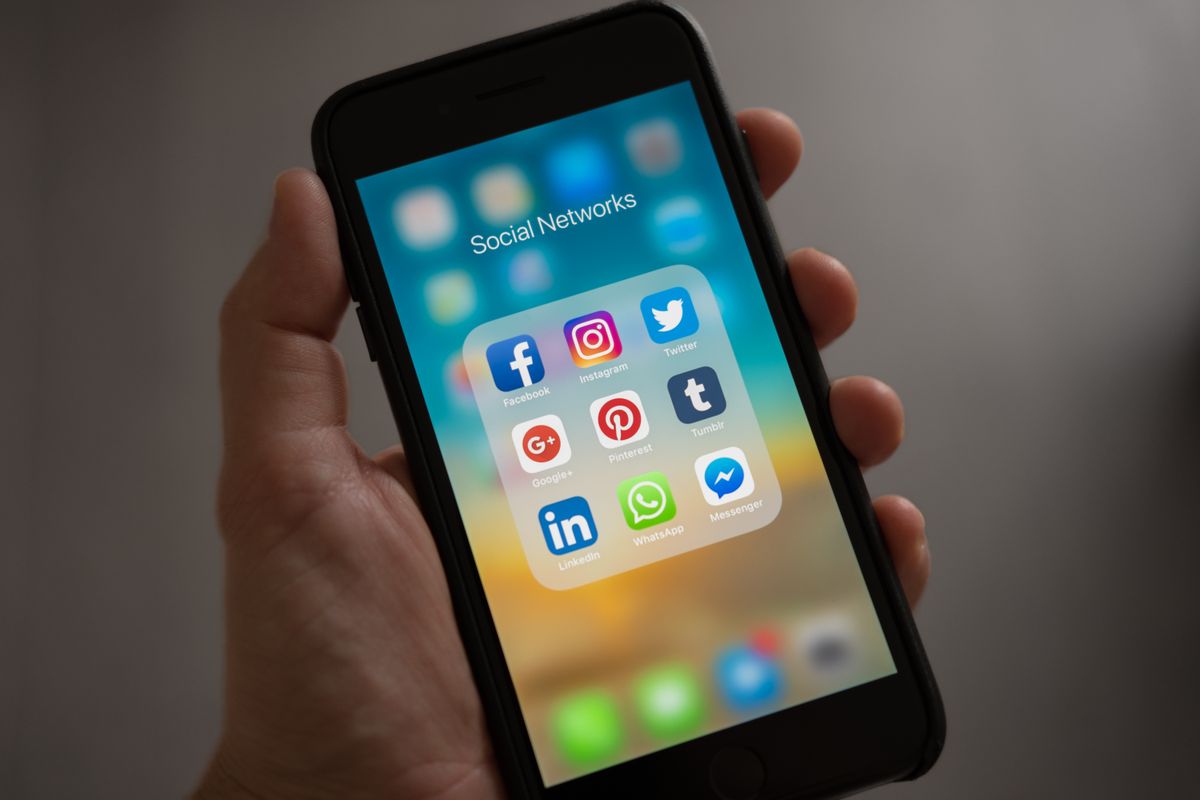
A med spa owner in Florida told us about a new client who booked a microneedling package in August. When the front desk asked the usual question, how did you hear about us, the answer stopped her: "I searched microneedling near me on Instagram, watched a couple of your reels, read the comments, and booked." She never touched Google until after she had already decided. She used Google only to double check the address.
That order of events would have sounded strange three years ago. Now it is common. The search bar is moving off Google and into the apps, and it is changing where patients first find a practice. So the honest question every owner should ask: is social media becoming a search engine for my patients, and if so, can they find me there?
So is social media really a search engine now?
The data says yes, at least for the first step of the journey. An Adobe Express study found that roughly 49 percent of people now use TikTok as a search engine, and about a quarter of Gen Z say it is an effective alternative to a traditional search. When Marketing Dive looked at younger users specifically, the shares were nearly a dead heat: about 67 percent of Gen Z use Instagram for search, 62 percent use TikTok, and 61 percent use Google. Three tools, almost the same pull.
People are not just watching videos. They are typing questions and place names into the app search bar the same way they would type into Google. "Best dentist in Austin." "Botox before and after." "Physical therapy for runners." Then they judge what comes back by the vibe of the video and the tone of the comments, not by a blue link or a star rating.
But do not delete your Google strategy yet
Here is the part the breathless headlines skip. Social search is growing, but it is not killing Google. In fact, the stated preference for TikTok over Google among Gen Z actually dropped from 8 percent in 2024 to 4 percent in 2026, according to data reported by Search Engine Journal. So this is not one platform beating another. It is people using more places to look.
The cleanest way we have found to explain it to practice owners: social media is the discovery engine, and Google is the validation tool. A patient discovers you on Instagram or TikTok. Then, before they part with their time and money, they flip to Google to confirm you are real, close by, well reviewed and open. Discovery and validation are two different jobs, and right now they happen on two different platforms. Win one and lose the other, and the patient still walks.
What this actually means for a medical practice
It means a patient now runs two searches before they book you, whether they realize it or not.
The first is the discovery search, often on social, where they find options and get a feel for who you are. The second is the validation search, on Google and your website, where they confirm the choice. This is not new in spirit. Patients have always vetted providers. What changed is that the first search moved into apps that most practices treat as a place to post, not a place to be found.
And the stakes are real even for the practices that think social is optional. Recent healthcare data shows about 78 percent of patients check a practice's social media before booking a first appointment. Many of them are not casually browsing. They are searching with intent, and a blank or abandoned profile answers their question the wrong way. We dug into that vetting behavior in whether patients check your social media before booking.
How patients actually search social for a provider
It looks different from a Google search, and that matters for how you show up. When someone hunts for care inside an app, they tend to:
- Type plain keywords into the app search bar, like "invisalign atlanta" or "vein doctor near me," and scroll the video results.
- Search by location tag and hashtags to see who is actually in their area, not three states away.
- Judge on feel first. As one local search study put it, younger patients often pick a place based on vibe and aesthetics, then use Google Maps to validate. The video earns the click. The reviews earn the booking.
- Read the comments. The comment section has become the new word of mouth. A warm, responsive comments section does more than any polished caption.
The takeaway is simple but easy to miss: the apps can only surface content they can read. If your posts have no words, no location, and no clear topic, the search engine inside Instagram or TikTok has nothing to match a patient's query to.
How to actually get found in social search
You do not need to go viral. You need to be findable. That is a much lower and much more useful bar. A few things that move the needle:
- Write captions and on screen text like keywords. Say your city and your service in real words. "Microneedling in Scottsdale" beats a clever one liner, because it matches what people type. Put the same clarity in your bio and your handle.
- Post the content people search for. Short procedure explainers, honest "what to expect" videos, before and after where your field allows it, and plain answers to the questions patients actually ask. Educational reels from a real clinician consistently earn the strongest organic reach in healthcare. We covered the format in whether Instagram reels work for medical practices.
- Use location tags every time and keep your name, handle and city consistent across Instagram, TikTok and Google, so the apps and the patient connect the dots.
- Stay active. A page that last posted in March tells a searcher you might be closed. Steady beats perfect. If TikTok is where your patients are, we weighed that decision in whether your practice should be on TikTok.
The trap to avoid
Do not pour everything into discovery and starve validation. We have seen practices build a real social following, then lose those patients on the Google check because their reviews were thin or their site was slow. Discovery brings them to the door. Validation decides if they walk in. Both have to be strong, or the effort in one just feeds patients to a competitor who nailed the other.
The validation side still runs on Google
Once a patient discovers you, they Google you. That is where your Google Business Profile, your reviews and your website do the closing. If your profile is stale or your rankings are weak, the patient who loved your reel still books elsewhere. This is why local search and reviews are not the old fashioned half of the plan. They are the half that turns a fan into a booking. We laid out the map ranking piece in how to rank higher on Google Maps, and it pairs directly with strong healthcare SEO so the practice a patient discovers on social is the same one Google confirms is worth choosing.
Our honest take
Social media is the new front window, and Google is the front door. For years, practices poured energy into the door and left the window dark. Now the window is where a lot of patients first spot you, especially the younger ones and anyone shopping for aesthetics, dental, weight loss or mental health. Ignore it and you are simply not in the running for those searches.
But the window does not replace the door. Do not fall for the pitch that you should abandon Google and chase TikTok fame. The practices winning right now are boring in the best way: they post findable, useful content that shows up when a patient searches, and they keep a clean, well reviewed Google presence that confirms the choice. Discovery and validation, working together. That is the whole game, and it does not require a single viral moment.
How EtherealMinds handles this
We build both layers so they feed each other instead of leaking patients between them. On the discovery side, our social media management creates content built to be found in search, not just scrolled past, with the keywords, location signals and steady posting that get a practice surfaced when a patient looks. On the validation side, we tie it to local SEO, reviews and a website that loads fast and books patients the moment they come to confirm you on Google.
The point is not to be everywhere. It is to be findable and trustworthy in the two places every patient now looks before they choose. Get discovered, get confirmed, get booked. Miss either step and you are handing patients to whoever did not.
Are patients finding you where they search?
Book a free strategy call. We will look at how your practice shows up in social search and on Google, show you the gaps a patient sees today, and map out how to get found and booked in both, all built for healthcare and kept compliant.
Book a free strategy call →