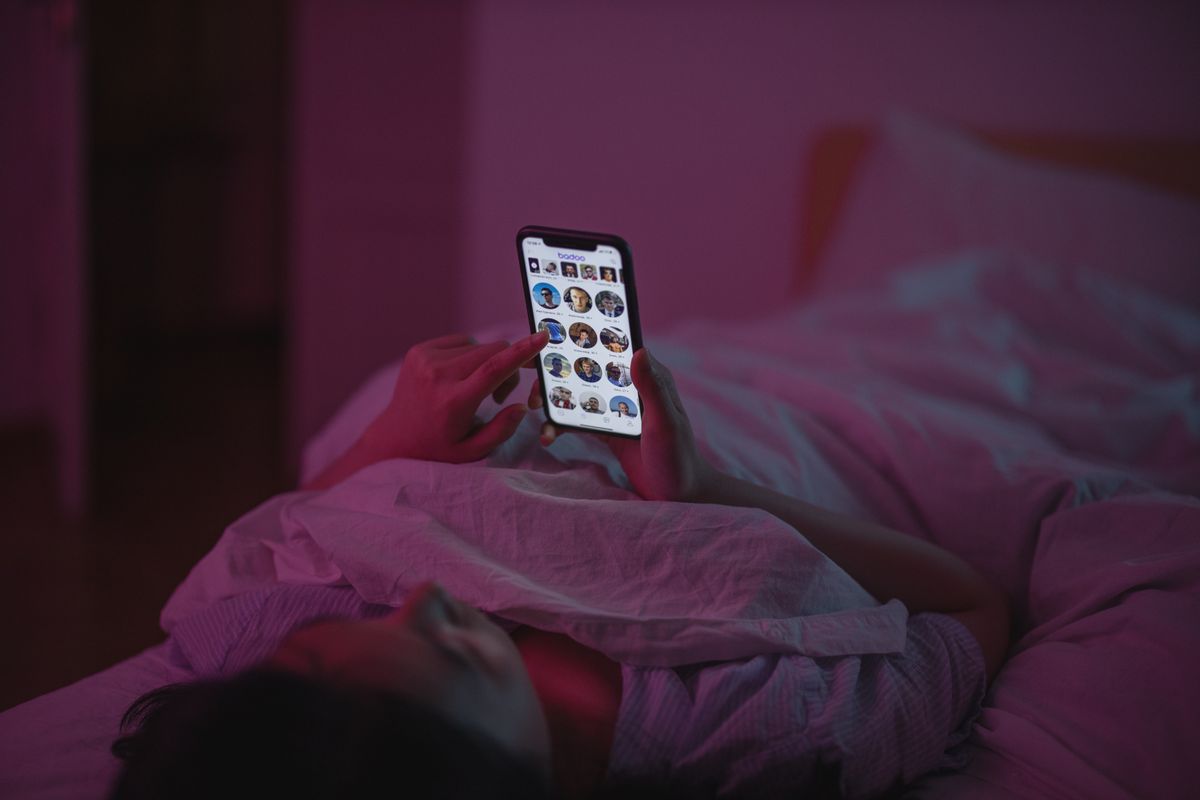
Picture a Tuesday at 10:40pm. A woman in your town feels a lump she did not notice last week. The practice she would normally call closed five hours ago. So she does what tens of millions of people now do by reflex. She picks up her phone and types the question to an AI. It explains what the lump might be, tells her it is worth getting checked by a specialist, and in some cases even suggests how to find one nearby. By the time she falls asleep she has a plan, a level of worry, and a short list. Your practice was never part of that conversation.
For years we talked about patients googling their symptoms. That still happens, but something bigger has moved in beside it, and 2026 is the year the numbers got hard to ignore.
The new number nobody prepared for
In early 2026, OpenAI released a report on how Americans use AI for health. Medical Economics summed up the headline figure: more than 40 million people ask ChatGPT a health question every single day. Not every month. Every day. In the same reporting, OpenAI found that three in five US adults had used an AI tool for a health or medical question in the prior three months, 55 percent of them to check or explore symptoms, and more than 40 percent to learn about treatment options.
Put plainly, asking AI about your health has gone from a tech curiosity to a normal thing an ordinary adult does from the couch. It is now one of the first places people go, and for a lot of them it is replacing the late night phone call they used to make to a nurse line or the friend who happens to be a dentist.
The part that should get your attention: when it happens
Here is the detail that matters most for a practice owner. OpenAI reported that about 70 percent of health related conversations with ChatGPT happen outside typical clinic hours. Read that twice. The moment a patient is most curious, most worried, and most ready to decide is usually a moment when your office is closed and your phone goes to voicemail.
This is not a surprise if you think about how people actually live. The workday is for work. The worry surfaces at night, after dinner, in bed, when the house is still and there is finally time to think. For a long time that was a dead zone. The patient had a question and nowhere to put it until morning, and by morning half of them had talked themselves out of it. AI filled that dead zone. Now the question gets an answer at 10:40pm, and so does the decision.
We have written before about how much business slips away in those hours. If you want the operational side of this, see our piece on whether you are losing patients after hours. The AI report just raised the stakes, because the after hours gap is no longer silence. It is a conversation happening without you.
What patients actually do with those answers
It would be comforting to think people just read a paragraph and move on. The data says they go further. STAT News described what is forming as a kind of shadow medical system, where people stack AI answers with at home tests and direct to consumer services and make real choices about their care before a licensed professional is ever involved.
For your practice, three things happen in that late night exchange, and all three affect your schedule:
- They decide whether this is worth seeing someone about. The AI either nudges them toward care or talks them down. If it says wait and watch, you may never hear from a patient who actually needed you.
- They decide what kind of provider to see. A patient asking about jaw pain might be pointed to a dentist, a TMJ specialist, or an ENT. Whoever the AI frames as the right fit has a head start.
- They start narrowing down who. More and more, the answer includes local options or sends them to a map and reviews. If your name, hours, and reviews are thin or wrong, you are not on that short list.
None of this is theoretical anymore. The habit of asking AI to find a local business has exploded. BrightLocal's 2026 consumer research found the share of people using AI tools to find a local business jumped from a small slice a year earlier to nearly half, and Google's own AI answers now appear on a large majority of local searches. The front door to your practice increasingly has an AI standing in it.
The real risk is not replacement. It is being left out of the decision.
Every few months someone asks us if AI is going to replace doctors. For the kind of practices we work with, that is the wrong worry. Nobody is getting a filling or a skin biopsy from a chatbot. The real risk is subtler and happening right now. AI is shaping the decision before you are in the room. By the time a patient contacts you, the chatbot has already framed what is wrong, what is urgent, and who they should trust. You are not competing with the AI. You are competing to be the practice the AI and the patient land on together.
That reframes the whole job. You do not need to out talk a machine. You need to be the clear, trustworthy, reachable answer at the exact moment a worried person is holding their phone in the dark.
This creates two jobs for your practice
Job one: be the answer the AI trusts
AI tools do not invent their recommendations. They assemble them from what already exists about you online: your Google Business Profile, your website, your reviews, and your mentions on local sites patients and search engines trust. When those are complete, consistent, and genuinely helpful, you become easy to surface. When they are stale or contradictory, you get skipped, because a model that is unsure about you will reach for a practice it is sure about.
This is local SEO, with a newer cousin people call answer engine optimization. The fundamentals overlap. Keep your Google Business Profile accurate and full, publish pages that answer the real questions patients ask in plain language, and earn real reviews from real patients. It is the same work that helps you rank, now doing double duty to help AI quote you. We go deeper on this in how to get your practice recommended by ChatGPT and what ChatGPT tells patients about your practice, and it is the heart of our healthcare SEO work.
Job two: be reachable the minute they decide
Getting named by the AI is only half the win. If a patient finally decides at 11pm and your site has no way to book and your phone just rings out, you handed the moment right back. The whole advantage of being the answer disappears if there is nowhere for the answer to go.
So the second job is to meet the patient at the same hour they are searching. Online booking that works at midnight. A phone number that is tap to call on a phone. A website that answers the first obvious questions, like whether you take their insurance and whether you have anything this week, without making them wait for the office to open. And something to catch the calls and messages that come when the front desk is gone, so a ready patient never hits a wall. A fast, clear website built to convert handles the first part. For the calls and chats that arrive after close, our AI receptionist answers at any hour, books the appointment, and handles the simple questions that used to go to a voicemail nobody checks until Monday.
Try this tonight, after you close
Open an AI tool and ask it the way a nervous patient would. Type something like "I have [a symptom your practice treats] in [your city], what should I do and who should I see." Read what it says. Does it mention a practice like yours? Does it point toward your kind of provider or a different one? Then open your own website on your phone and see if a patient could actually book or reach you right now, at this hour. If the answer to either question is no, you just found exactly where you are losing people.
Why small practices can win this
It is easy to read all this and assume the big hospital networks will swallow the whole thing. They will not, and here is why. AI answers reward clarity and trust signals, not size. A focused local practice with an accurate profile, real reviews from real patients, and a website that answers plain questions can look more trustworthy to both a person and a model than a sprawling system with a generic page and a phone tree. And a small office can fix its booking flow and turn on after hours coverage in a week, while a large organization files a ticket and waits a quarter. Nimble beats big when the game is being clear and being reachable.
If anything, this is the rare shift that favors the independent practice that is willing to move. The patient asking AI at night is not loyal to a brand. They are looking for the clearest, closest, most trusted answer. That can be you.
Our honest take
The instinct when you read a stat like 40 million a day is to feel like the ground moved under you. It did, a little. But the response is not to panic about AI stealing patients. It is to accept that a huge part of the patient decision now happens after you close, in a conversation you are not in, and to make sure that when that conversation turns into action, you are easy to find and easy to reach. Be the answer, and be awake when they are. The practices that do both will steadily take share from the ones still treating the phone line and the business hours sign as the whole front door. We pull the getting found part and the getting answered part into one patient acquisition system, because in 2026 they are not two jobs anymore. They are one.
Want to see what AI says about your practice?
Book a free strategy call. We will show you what ChatGPT and Google AI answers say when a patient searches for your kind of care in your city, where your practice is missing, and how reachable you really are after hours. You will leave with a clear picture of your late night front door and what to fix first.
Book a free strategy call →