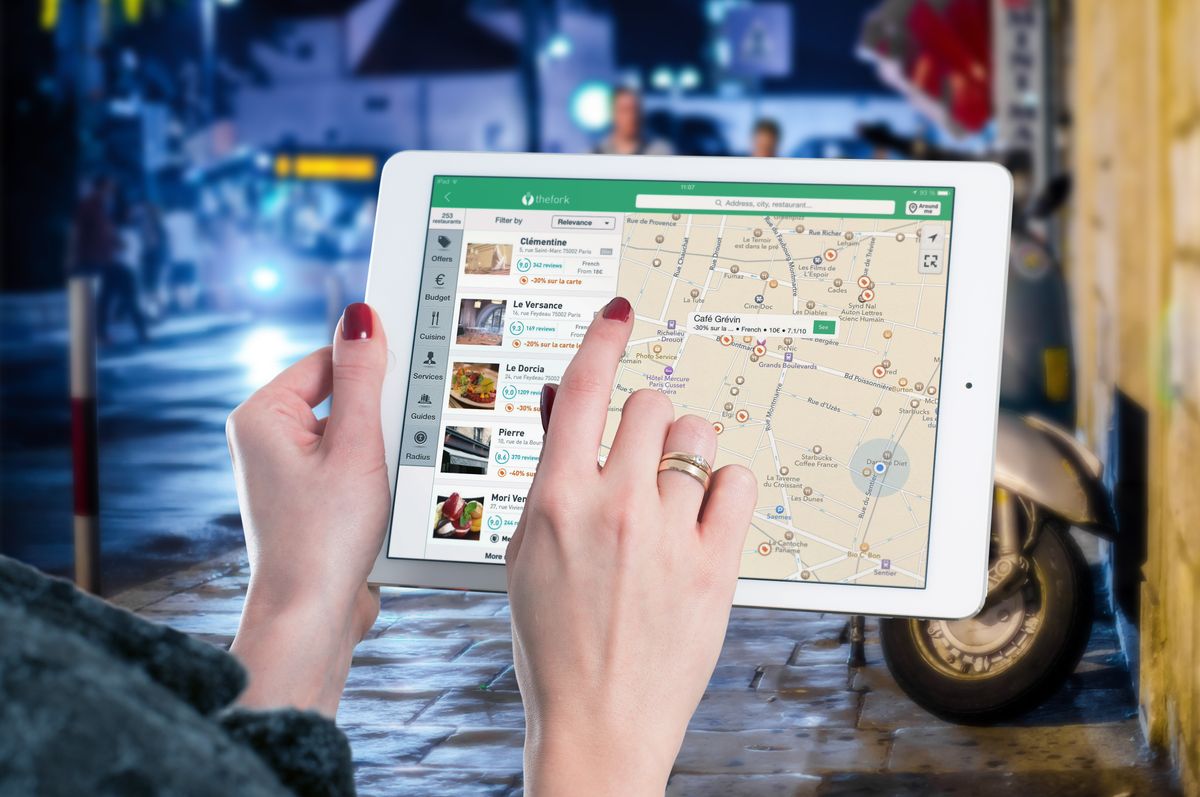
Geofencing is one of those marketing words that sounds futuristic enough to make an owner reach for their wallet. And the pitch is seductive: pick any building on a map, draw a shape around it, and your ad follows every phone that crosses the line. For a practice fighting to get noticed, that feels like finally getting to aim instead of spray.
Here is the honest version. Geofencing is real, it does work, and it has a legitimate place in a local healthcare marketing plan. But it is also oversold, easy to waste money on, and in healthcare it comes with a rule that has already cost one company a settlement with a state attorney general. So before you sign anything, let us make sure you know exactly what you are buying.
What geofencing actually is
A geofence is a virtual boundary around a real place. It can be as big as a whole zip code or as small as a single building. When a person carrying a phone enters that boundary, their device becomes eligible to see your ads inside the apps and websites they use. Good vendors can also keep showing that person your ad for a while after they leave, which is really just retargeting tied to a location.
It helps to separate three words that get thrown around as if they mean the same thing, because they do not:
- Geotargeting. Showing ads to anyone in a city, a zip code, or a radius around your office. Broad and completely standard. Every Google and Facebook campaign already does a version of this.
- Geofencing. Drawing a tight boundary around a specific place people physically visit, like a stadium, a mall, an office park, or a conference center, and reaching the phones inside it.
- Geoconquesting. The aggressive cousin. Fencing a competitor's location on purpose to poach the people who go there. This is the version that gets healthcare into trouble, and we will come back to it.
Where geofencing genuinely works for a practice
Used the right way, geofencing is a smart awareness tool. It shines when there is a real, honest reason a group of people in one place would want what you offer. A few examples we actually like:
Local events and health fairs
You are sponsoring a 5k, a school health fair, or a booth at a community expo. Fence the venue for the day and the surrounding blocks. Now the people already thinking about health in that moment see your name while they are standing there, and again for a few days after. That is timely and relevant, not creepy.
Large local employers
An office park with a few thousand workers who all have vision or dental benefits they forget to use is a legitimate audience. Reaching that broad area with a friendly "in network and two minutes from your desk" message is fair game. It is the same idea as the lunch and learn approach, just digital. We wrote about the offline version in how to get patients from local employers.
Your own neighborhoods
The simplest and safest use is fencing the residential areas around your office, the ones you actually want to draw from. This overlaps heavily with plain geotargeting, and honestly for most practices that is enough. Patients will only drive so far, and we covered how far in how far patients will travel to see a doctor.
New movers
People who just moved into your area need a new dentist, a new primary care doctor, a new everything. Location based tools can help you reach them early, before they settle on someone else. That whole play deserves its own plan, which we laid out in how to reach new movers.
Notice the pattern. In every good use, you are reaching a place, not a diagnosis. You are targeting where people live, work, or gather, not the fact that they walked into a medical building. Hold onto that distinction, because it is the whole ballgame.
The healthcare catch nobody in the sales pitch mentions
Here is the part that separates a smart campaign from a lawsuit. The moment your targeting is based on the fact that someone visited a health related location, you are treating their presence there as a clue about their medical situation. And health information is a protected, sensitive category that the big ad platforms flatly restrict.
Google's personalized advertising policies prohibit targeting people based on health conditions or inferred health status. Meta scrapped detailed health related targeting options years ago for the same reason. So the dream of "fence the oncology center and advertise to cancer patients" is not just distasteful, it is against the rules of the platforms you would run it on.
This already went to court, and the marketer lost
In 2017 the Massachusetts Attorney General reached a settlement with an advertising firm that had geofenced reproductive health clinics and sent targeted ads to the phones of people inside them. The AG called it an intrusion on private medical decisions and banned the practice around medical and mental health facilities in the state. The lesson is not "geofencing is illegal." It is that geofencing a medical facility to reach the people inside it is the exact line you do not cross. Fencing a neighborhood or a stadium is ordinary advertising. Fencing a clinic to infer what is wrong with the people in it is a legal and ethical minefield.
If you care about patient privacy in general, and you should, it is worth a look at how your own data flows too. We dug into that in is your practice leaking patient data.
Does it actually bring in patients?
Let us talk results, because "it works" is a low bar. Industry reports have long claimed that location based mobile ads earn roughly double the click through rate of standard mobile ads, and that is believable when the audience is relevant. But a click through rate is not a booked appointment, and an impression served to someone standing in a mall is a long way from someone actively typing "dentist near me" into Google.
That is the core limitation. Geofencing is a display and awareness play. It interrupts people who were not looking for you. That has value for getting your name known, but it sits far lower on the intent ladder than search. When someone searches for a doctor, they have raised their hand. When someone gets a Botox banner while buying jeans, they have not. For most practices, the first dollar belongs to search, and we compared the trade offs in SEO versus Google Ads and in our guide to Google Ads for practices.
There is also the accuracy problem. Geofences are not perfect. They can catch phones on the sidewalk outside, on the highway next door, or in the building above. The smaller and more precise you try to make the fence, the more waste and error creep in. You end up paying for impressions served to people who were never really your audience.
Our honest take
Here is where we plant a flag. Geofencing is a fine supporting tactic and a poor foundation. If a vendor is selling it to you as the centerpiece of your patient growth, be skeptical. If they are pitching it as a way to secretly scoop up a competitor's or a hospital's patients, walk away, because they are either going to get your campaign shut off or get you associated with exactly the kind of practice that ended up in a state settlement.
What we would actually build first is boring and effective: show up when patients search, own your Google Business Profile, run tight local search ads, and back it with social ads that target your real neighborhoods. Once that engine is running and measured, then geofencing a specific event or a big local employer can be a nice extra layer. In that order. Not the other way around.
And whatever you run, the ad is only half the job. You can fence the whole county, but if the calls those ads generate hit a voicemail at lunch or an unanswered form at 9pm, you paid to send patients straight to the office that picks up. That is the leak we see most, and it is why we build the front desk into the plan too. Our AI receptionist answers, books, and logs every inquiry an ad drives, day or night, so the money you spend to be seen does not evaporate at the last step. Ads and answering are two halves of one patient acquisition system, which is exactly how we build it.
Do this before you buy any geofencing
If a geofencing pitch is on your desk right now, run it through three quick questions. First, what place is being fenced, and is it a neighborhood or event, or is it a medical facility? If it is a health location, that is your answer, do not do it. Second, how will success be measured, in impressions and clicks, or in booked appointments you can actually trace back? If they only promise impressions, keep your budget small. Third, is your search and Google Business Profile foundation already in place? If not, spend there first, because that is where ready to book patients are hiding.
So, does geofencing advertising work for medical practices? Yes, as a targeted awareness layer for events, employers, and the neighborhoods you serve. No, as a way to poach a competitor's patients, and no as the whole strategy. Use it as the sharp little tool it is, keep it on the right side of the privacy line, and make sure the phone gets answered when it works.
Not sure where your ad dollars should really go?
Book a free strategy call. We will look at your market, your competition, and your current marketing, and tell you honestly where the next dollar brings the most patients, whether that is search, social, geofencing, or fixing the leak you did not know you had. No jargon, no pressure.
Book a free strategy call →