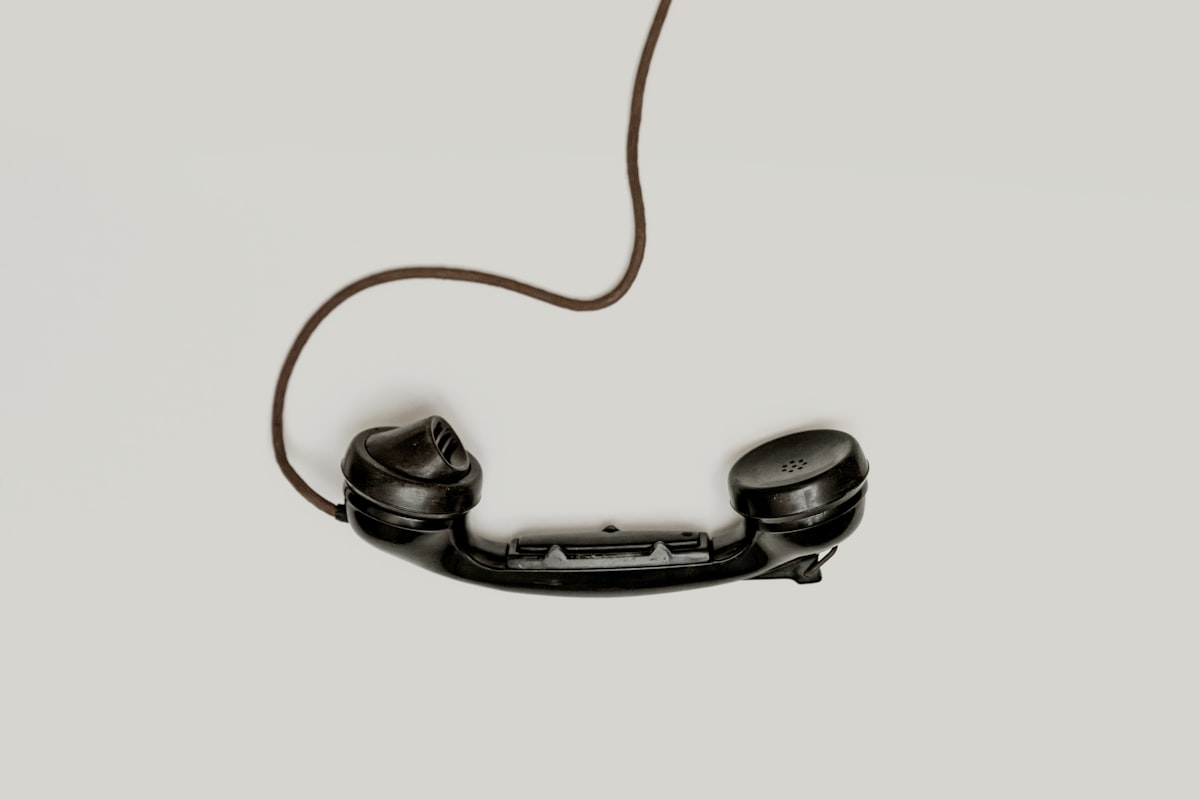
Picture a woman who found your practice on Google, liked your reviews, and called to book. Instead of a friendly hello she gets a recording. Press 1 for appointments. Press 2 for billing. Press 3 for prescription refills. Press 4 for the nurse line. Please listen carefully as our options have changed. She only wanted to book a physical, and now she is holding her phone away from her ear, thumb hovering, hoping she guesses right.
Most owners never hear that moment because they never call their own line as a stranger. The menu felt like a smart upgrade the day it was installed. To the caller it feels like a locked door with a keypad. And a lot of callers just walk away from a locked door.
What a bad phone menu actually costs
The damage is easy to miss because it is invisible. Nobody files a complaint about a menu they abandoned. They just vanish, and your schedule has an empty gap where a new patient should have been.
The numbers behind that gap are not gentle. Across call centers, roughly 60 percent of callers hang up after waiting more than a minute, and healthcare callers are usually less patient than most because they are anxious, in pain, or calling on a lunch break. Worse, once someone hits a wall on the first try, they rarely come back. Patient engagement research cited by firms in the space finds that about 85 percent of callers will not attempt a second call after an unanswered first one. One miss, one lost patient.
And it is not just the person who never got through. A frustrating phone experience poisons the relationship even when the call eventually connects. Surveys of consumers have found that a large majority, north of 80 percent, will avoid a business after a poor automated phone experience. In healthcare, where trust is the whole product, a caller who feels like they are fighting a machine starts to wonder what the visit will feel like too.
Put a dollar figure on it and it stings. If a new patient is worth even a few hundred dollars in first year visits, and far more over a lifetime, then a handful of abandoned calls a week is a real income leak. We walk through that math in how your front desk loses patients on the phone, and the takeaway is blunt: the phone is the most expensive place in the practice to be sloppy.
Why press 1 pushes people away
Phone menus were built for the practice, not the patient. They sort callers into buckets so staff spend less time transferring. That is a fine goal. The problem is that every layer you add to make routing tidier makes the caller work harder, and callers do not care about your org chart. They care about one thing: reach a human, or book the visit.
The deeper the tree, the worse it gets. Call center analysts consistently find that abandonment climbs with every extra menu level, and systems that bury the useful option three or four presses deep leak callers at each step. By the time someone has pressed 2, then 1, then 4, then been told to hold, a big share have already hung up. They are not lazy. They are busy, and you gave them a puzzle when they wanted a person.
This is the part practice owners most often get wrong. The frustration is not really about technology. It is about being stuck. A rigid touch tone menu and a clumsy robot that only understands yes or no fail for the same reason: the caller cannot just say what they need and get an answer. You can read more about how those expectations are shifting in the healthcare communication trends coverage from Becker's Hospital Review. Patients now expect the phone to feel as easy as texting a friend.
The menu is not the villain. The dead end is.
Let us be fair to the humble phone menu. A short, clear menu that instantly routes a caller to the right person is genuinely helpful. A dental office that says press 1 to book and 0 for anything else, then connects to a live human in seconds, is doing nothing wrong.
The villain is the dead end. It is the menu that never offers a way to reach a person. The option that loops back to the start. The after hours message that drops a first time caller into a voicemail box nobody checks until Monday. Those are the moments that lose patients, and most practices have at least one of them hiding in their system without knowing it. If your line goes dark after five o'clock, you are almost certainly losing patients after hours to whoever answers.
Speed is the other half. A patient in pain is calling down a list until someone says come in this week. If your menu adds thirty seconds of friction before they reach a human, the practice with a shorter path books the appointment. It is the same reason we harp on answering fast in how long patients will actually wait on hold. Every second of the menu is a second they are deciding whether you are worth it.
What actually works
You do not need to rip out your phone system this afternoon. You need to make three things true, and none of them are complicated.
Cut the menu to the bone. Three or four options, maximum, on the first level. Lead with the two things almost everyone wants: book or reschedule, and reach a person. Kill any layer that stacks a menu inside a menu. If a caller can reach a human by pressing 0 at any moment, keep that and say it out loud early.
Never end in a wall. Every path, including the after hours one, must lead somewhere a patient can actually book or get a callback. A generic voicemail is not a destination. It is where new patients go to disappear. At minimum, offer a way to book online or text, so the caller has an exit that does not require waiting on hold.
Answer every time, day or night. The single biggest win is simply picking up. A practice that answers live during the day and has a smart assistant catch calls nights and weekends captures the patients everyone else sends to voicemail. This is exactly why so many owners are rethinking their whole approach to voice AI on the practice phone, and why a plain answering service can be worth it when the alternative is a machine that hangs up on your best leads.
Our honest take
Here is where we plant a flag. At EtherealMinds we are not anti automation. We are anti dead end. The reason patients hate phone menus is not that a computer answered. It is that the computer could not help and would not let them reach someone who could. Solve that, and the objection mostly disappears.
That is the whole idea behind our AI receptionist. It is not a press 1 maze and it is not a robot that barks yes or no. It answers every call in natural language, day or night, understands what the patient is calling about, books simple requests on the spot, answers the common questions, and hands anything sensitive or complex to your staff with the context already gathered. Callers get the thing the survey says they want, which is a helpful conversation and a fast path to a person, without your front desk drowning in the phone.
We do not treat the phone as a standalone gadget either. It is one piece of the patient acquisition system we build: get you found when patients search, convince them in one glance on a fast website, and then catch every call and message so the marketing you paid for actually turns into booked visits. A brilliant ad campaign that funnels people into a broken phone menu is money set on fire. The whole chain has to hold.
A five minute test for your own practice
You can check this yourself before lunch. Pull out your personal phone, turn off wifi so you are on a normal cell connection, and call your main line as if you had never seen it. Count the seconds and the button presses it takes to reach a human or book an appointment. Anything past twenty seconds or three presses is losing you patients.
Then do it again after you close for the day. Does a person or a smart assistant answer, or does a first time caller land in a voicemail box? Finally, pull your call reports and look at two numbers: missed calls and voicemails left. If you get a lot of missed calls and very few voicemails, that gap is not people who did not need you. That is people who needed you, hit a wall, and called someone else.
The fix is rarely dramatic. Shorten the menu. Add a clear path to a human. Make sure no call ever dies in a voicemail box. Do that, and the phone stops being the place your marketing goes to leak and starts being the place it pays off.
Find out what your phone is really costing you
Book a free strategy call. We will call your line the way a new patient would, count exactly where callers get stuck, and show you what it takes to answer every one of them, day or night, without burying your front desk. Healthcare only, no jargon, no pressure.
Book a free strategy call →